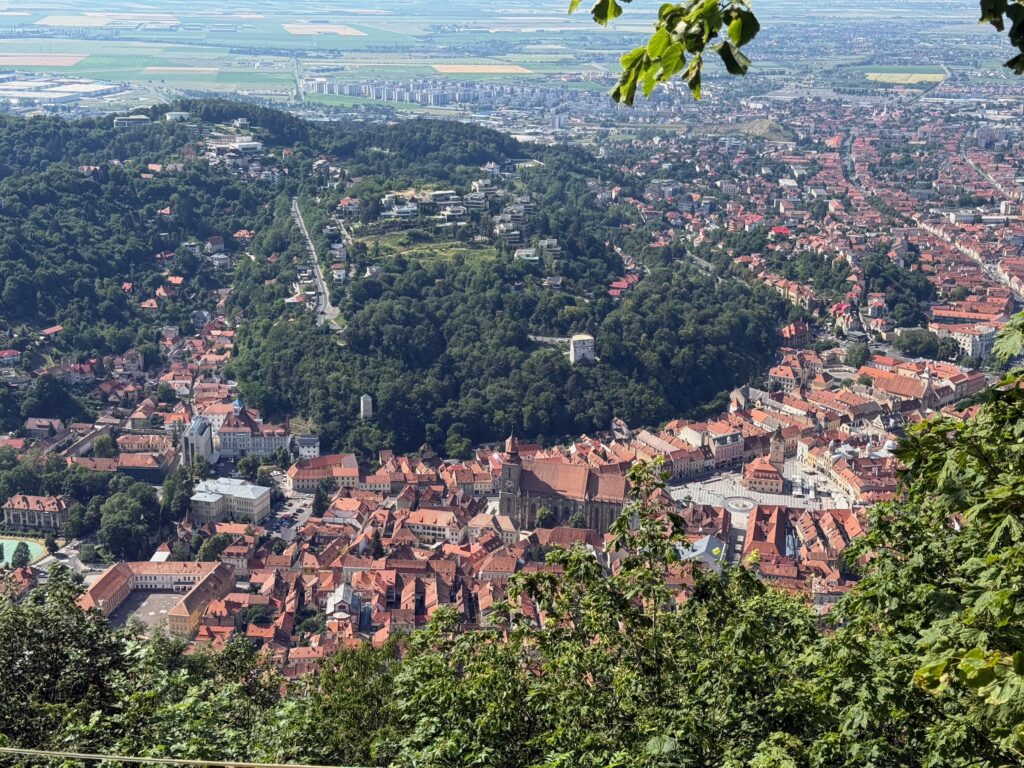
This beautiful medieval town is one of the most visited places in Romania. It needs some time to fully appreciate. Fortunately, we had a walking tour and were given free time to also explore it on our own.
Day 4-5, Friday & Saturday, June 26-27: Brașov
Friday’s late afternoon and early evening, and the afternoon on Saturday were the times devoted to the discovery of Brașov.
I’ve been to this town previously with my students from Dunajská Streda, Slovakia, in the early 1990s, but as with my short visit to Sighişoara in the late 1970s, my memories of the trip are not very clear. So, I was happy to be here again and re-discover its landmarks.
Brașov (in Hungarian: Brassó) is ringed by the Carpathian Mountains. More than 200,000 people live in this historic town, founded in 1211 and settled by the Saxon merchants, who obtained good wealth and political influence of the region.
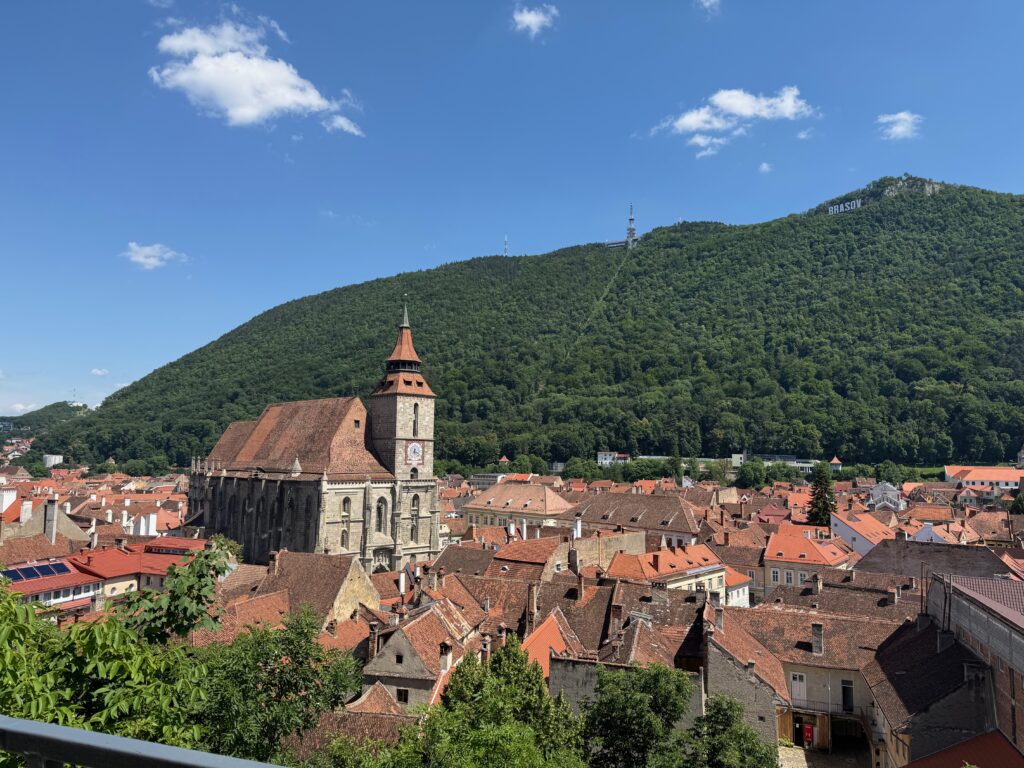 On Friday, after checking into our hotel, the Central Residence Annapolis Braşov, which was across from the Black Church, we went out for our first exploration of the town.
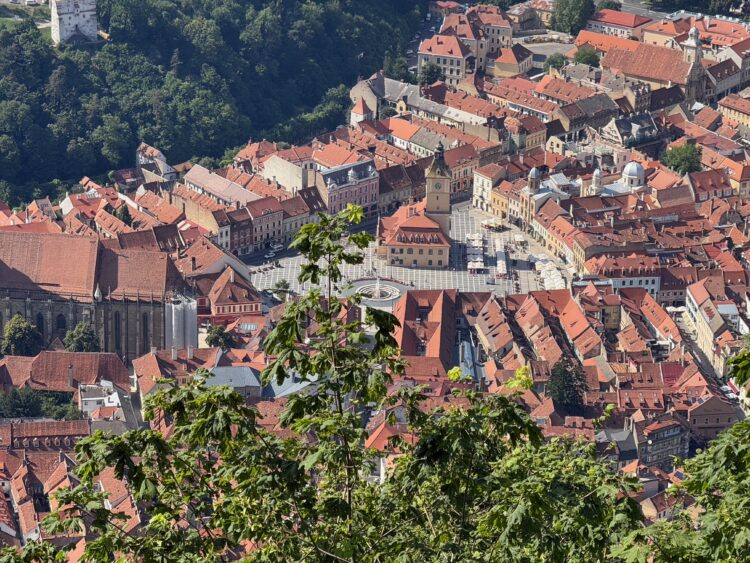
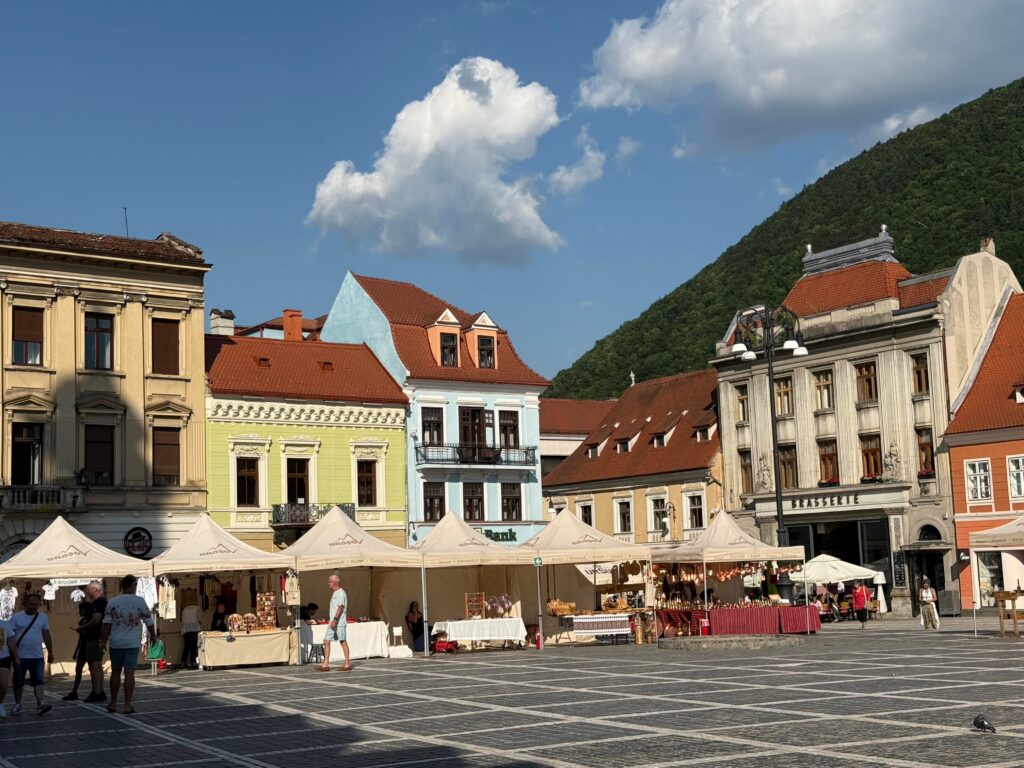
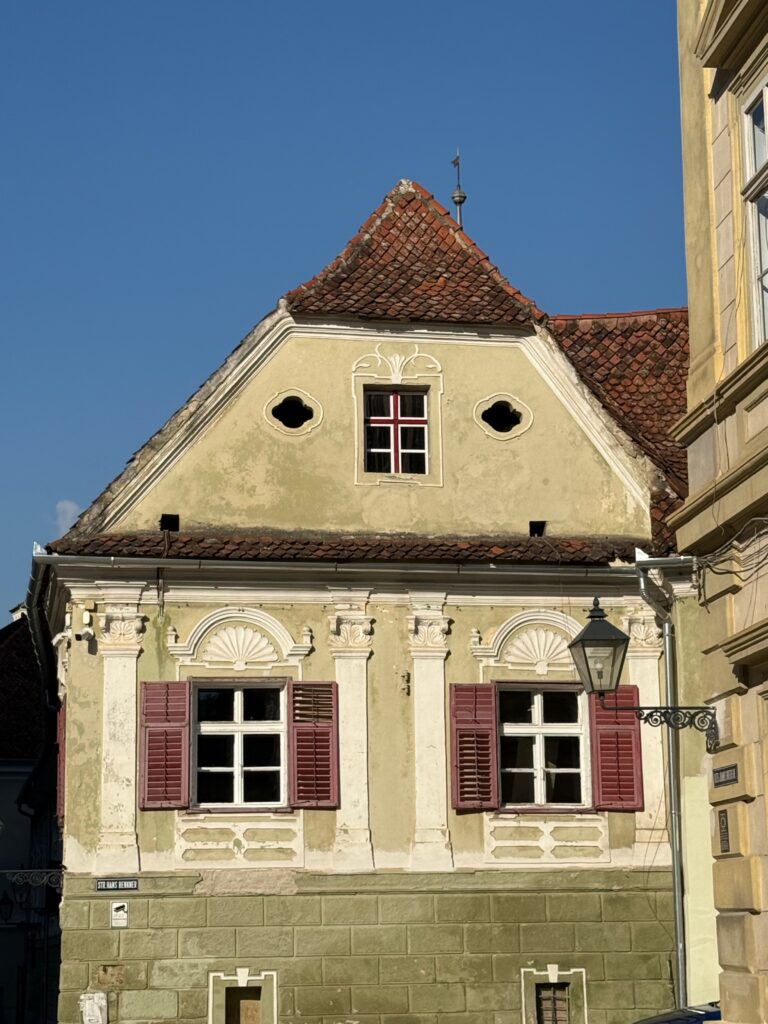
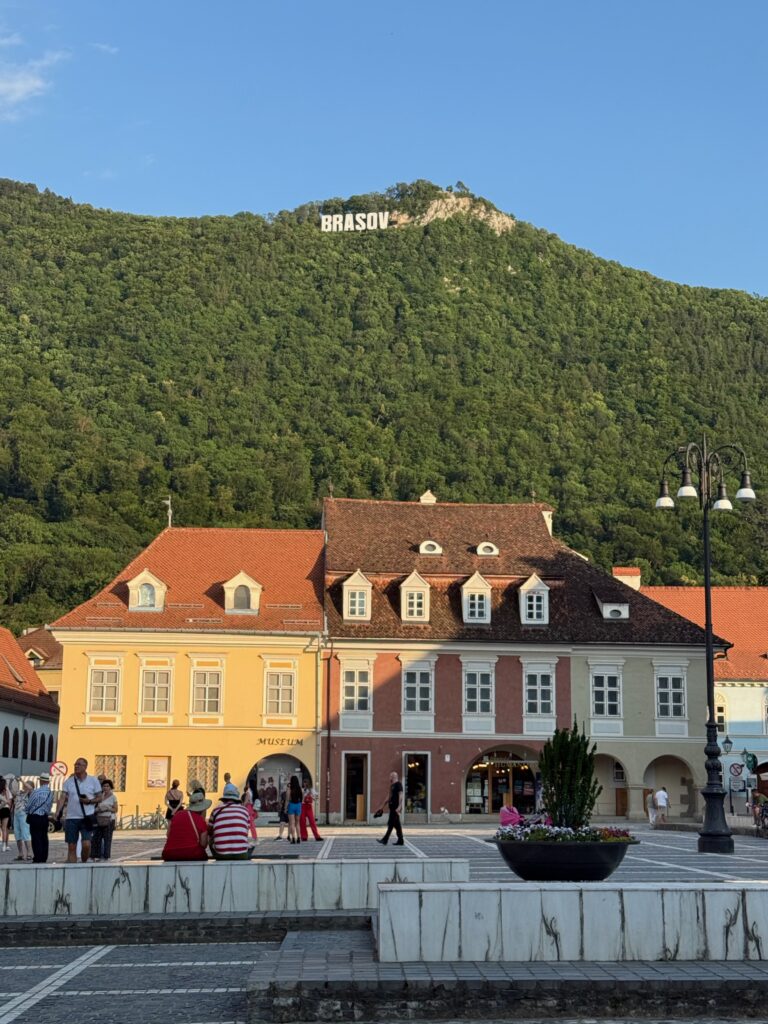
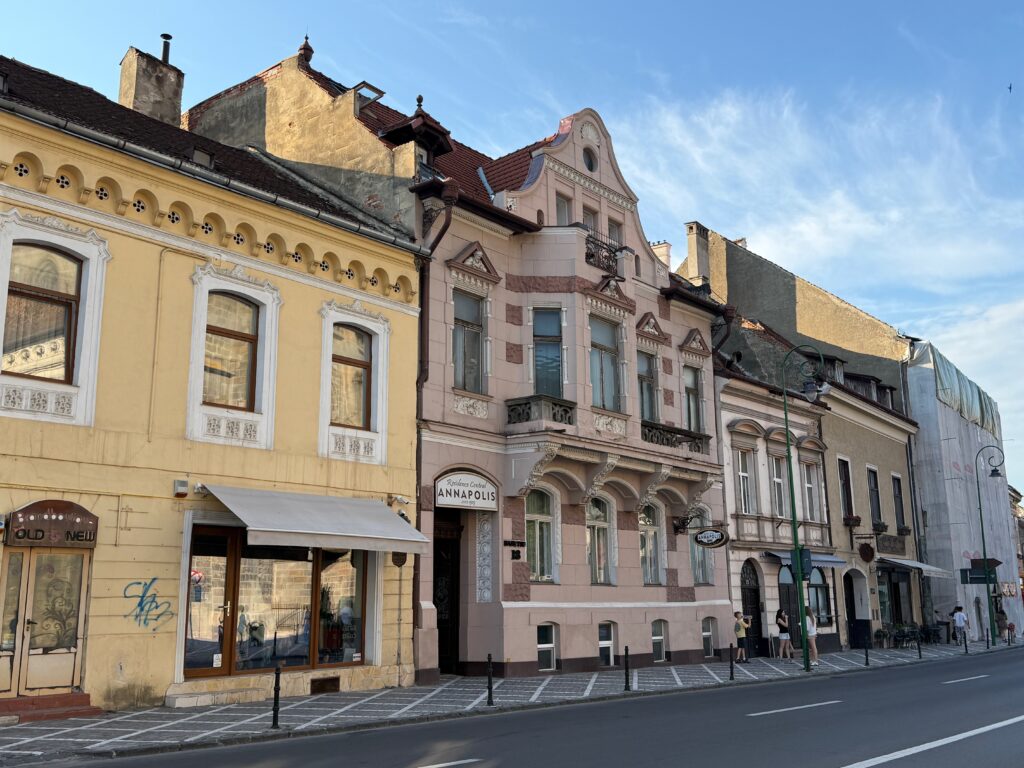 Our group’s CEO, Flavia, led an hour-and-half long walking tour. We started in the beautifully preserved Old Town, on the Council Square (located conveniently very close to our hotel), which is surrounded by colorful, decorated, red-roofed buildings.
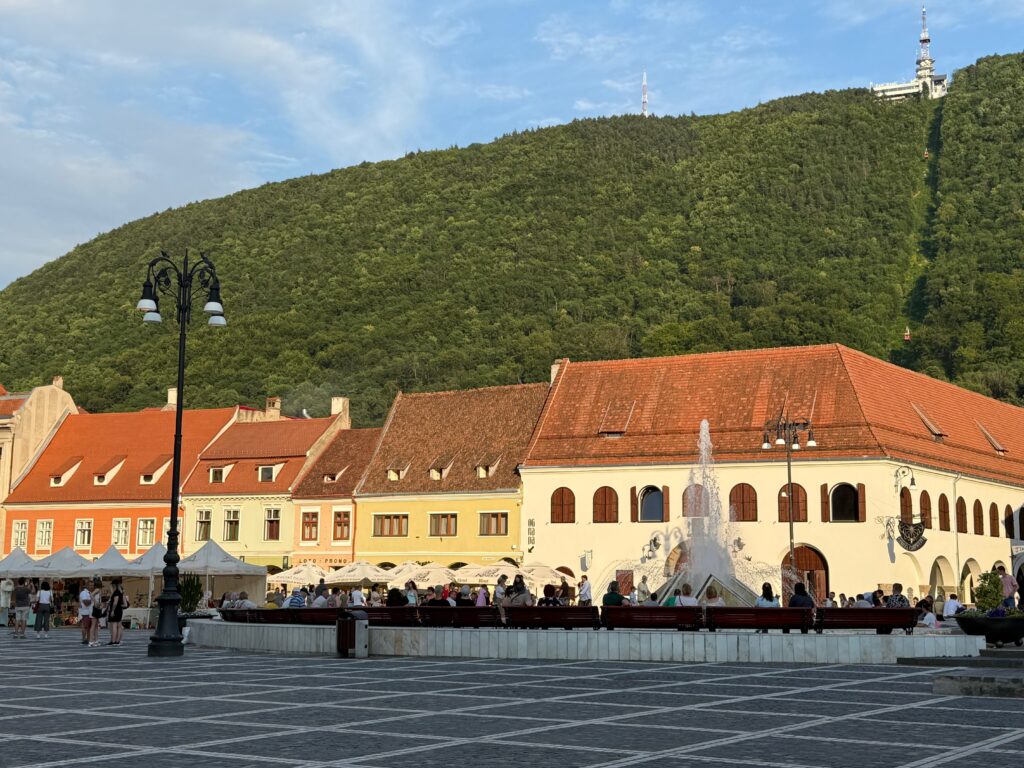
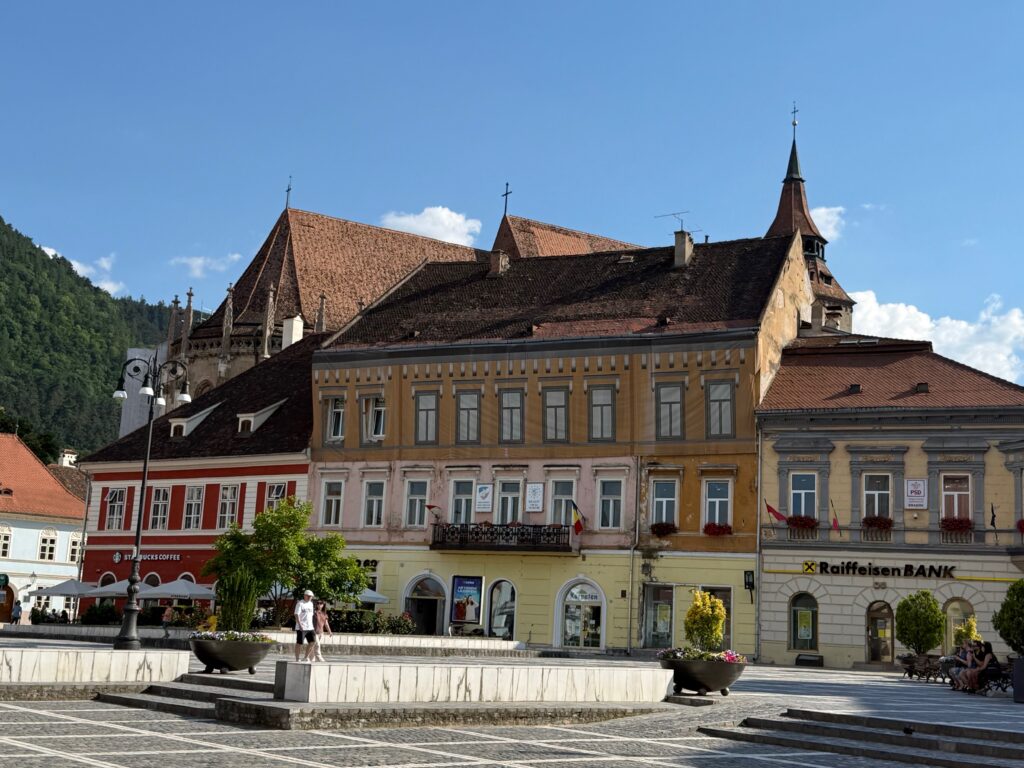
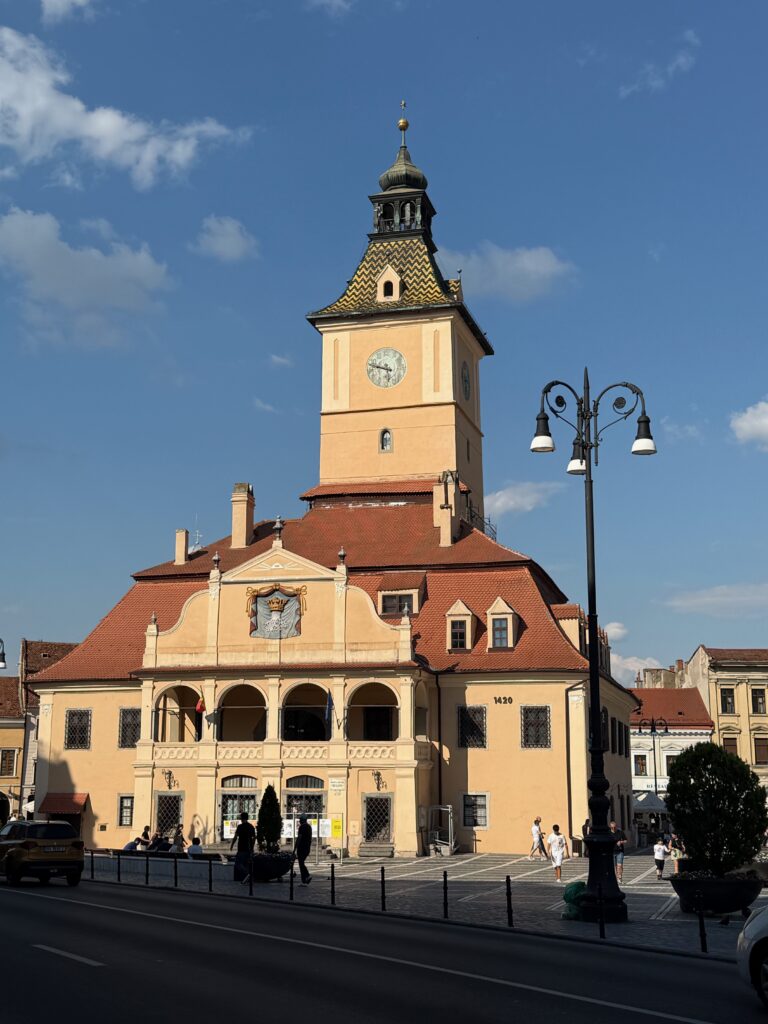
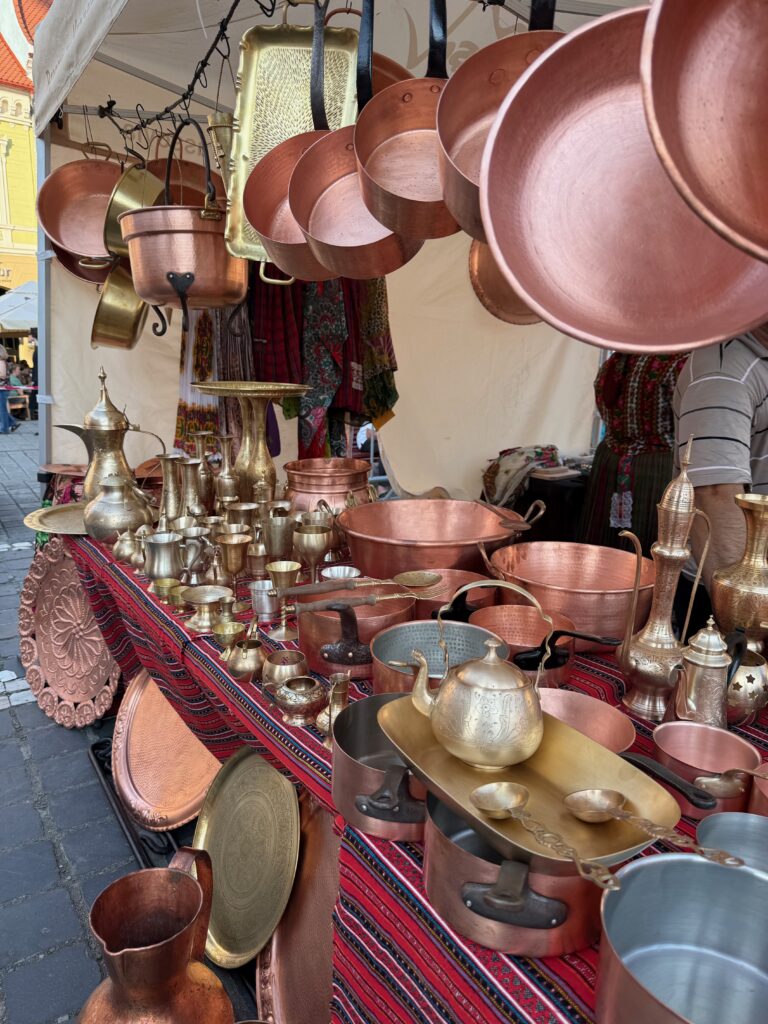
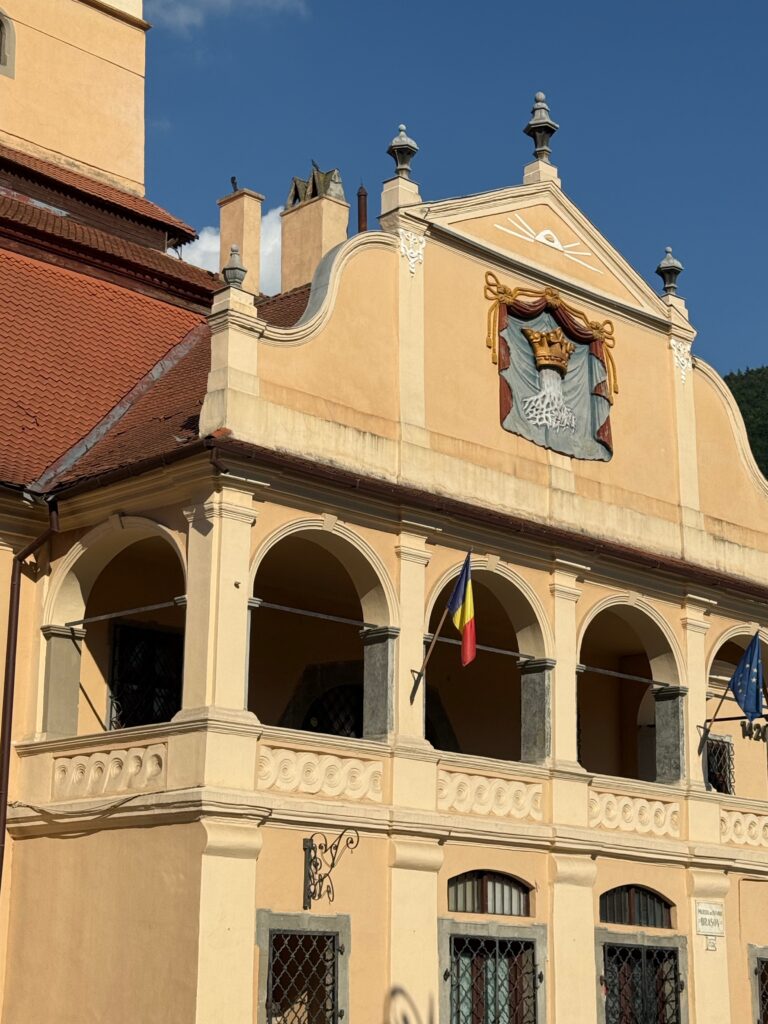 We checked out the marketplace and walked on the cobbled streets of the Old Town filled with cozy cafes and restaurants.
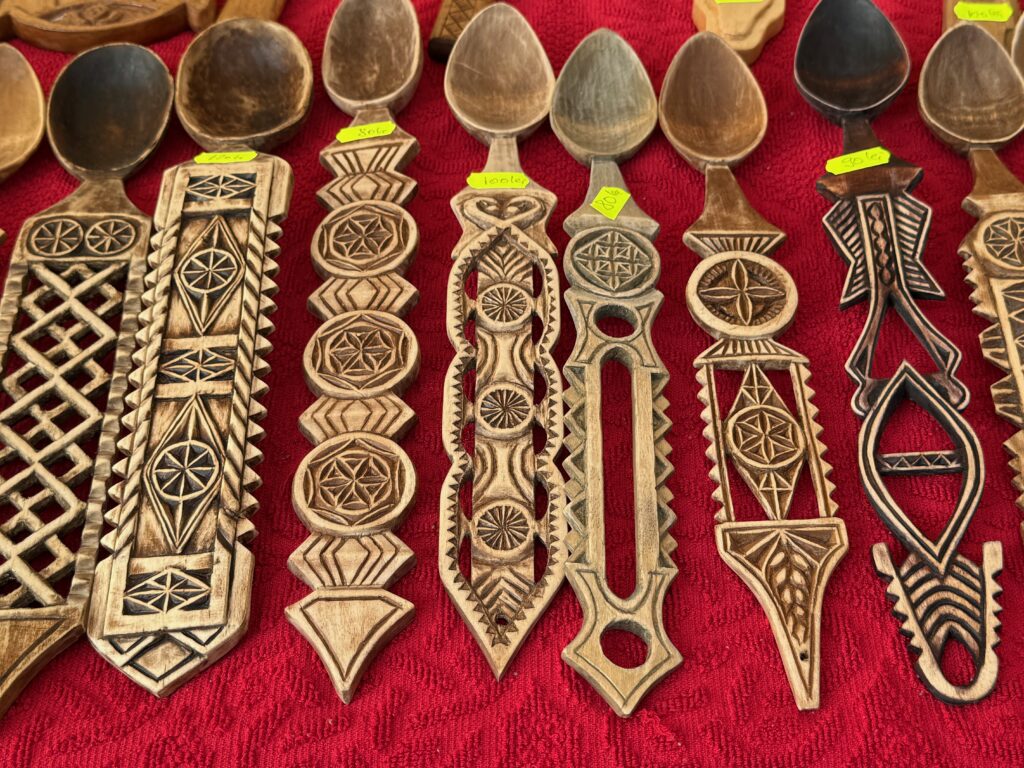
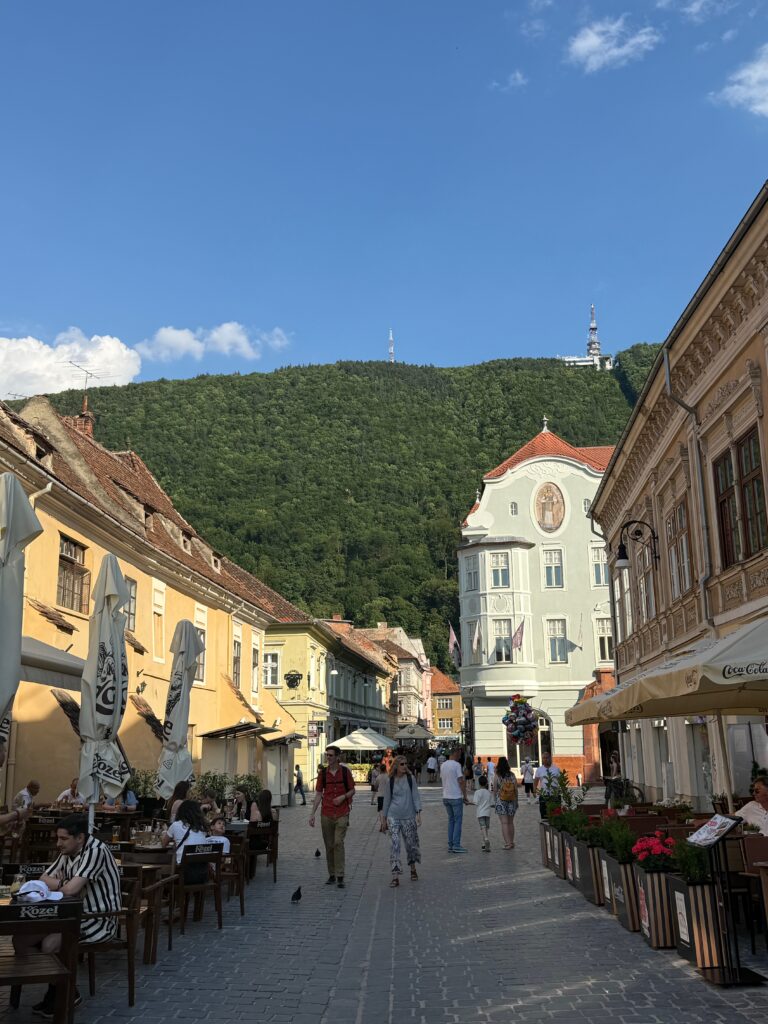
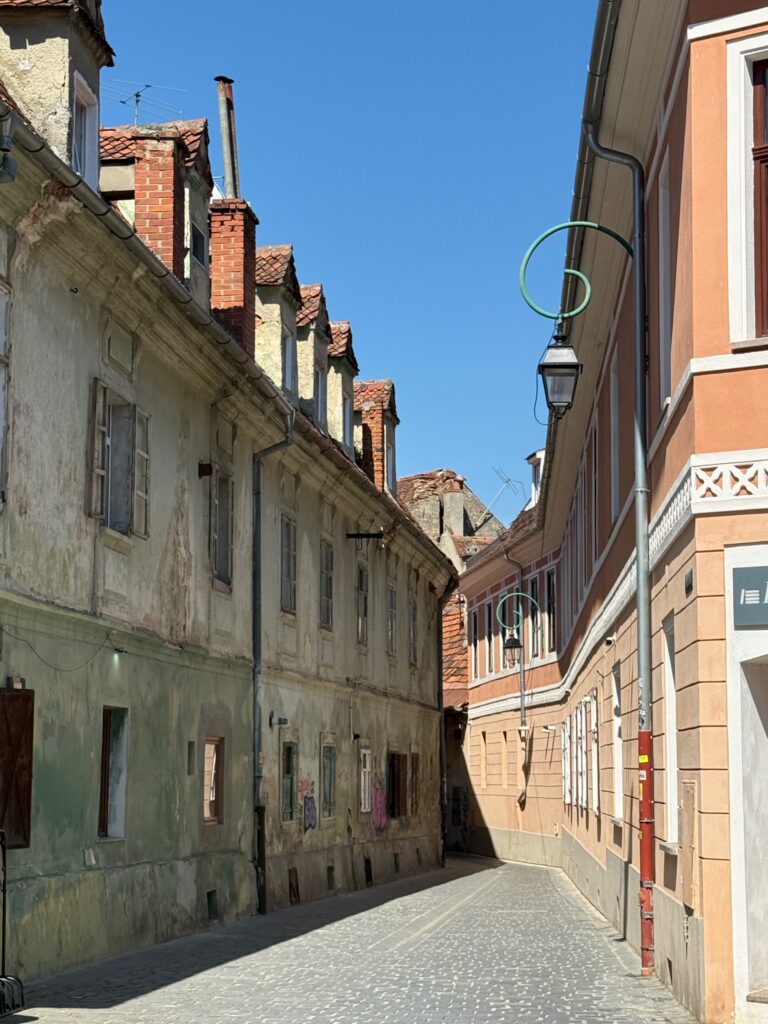
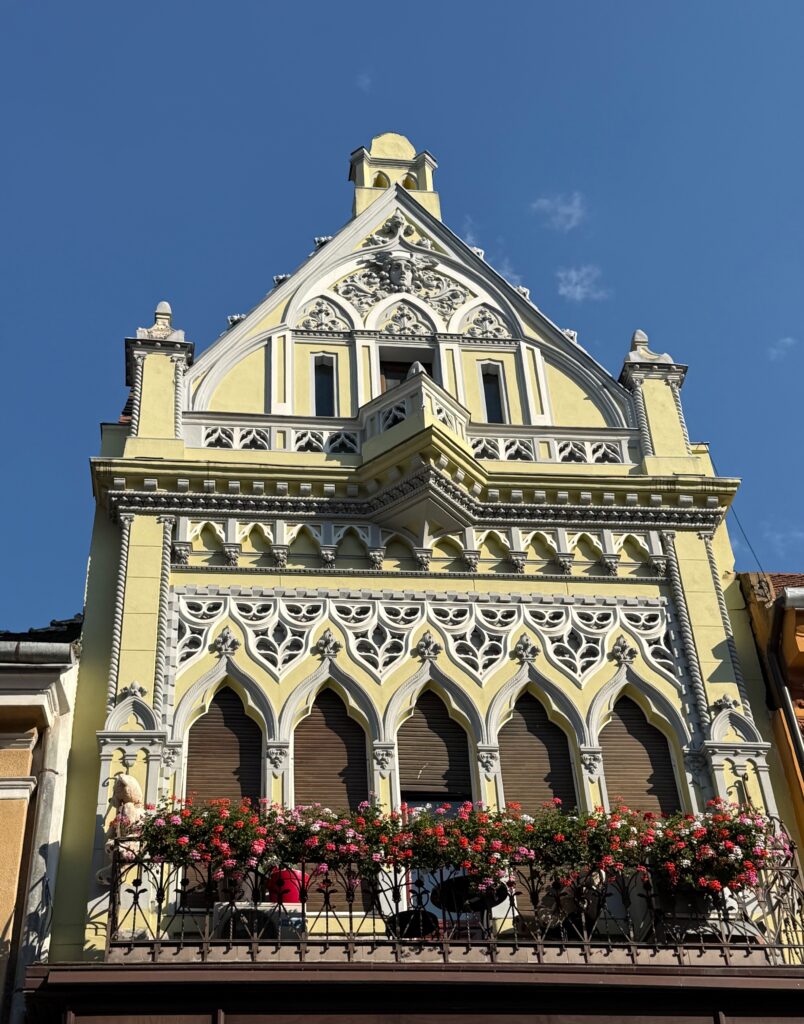
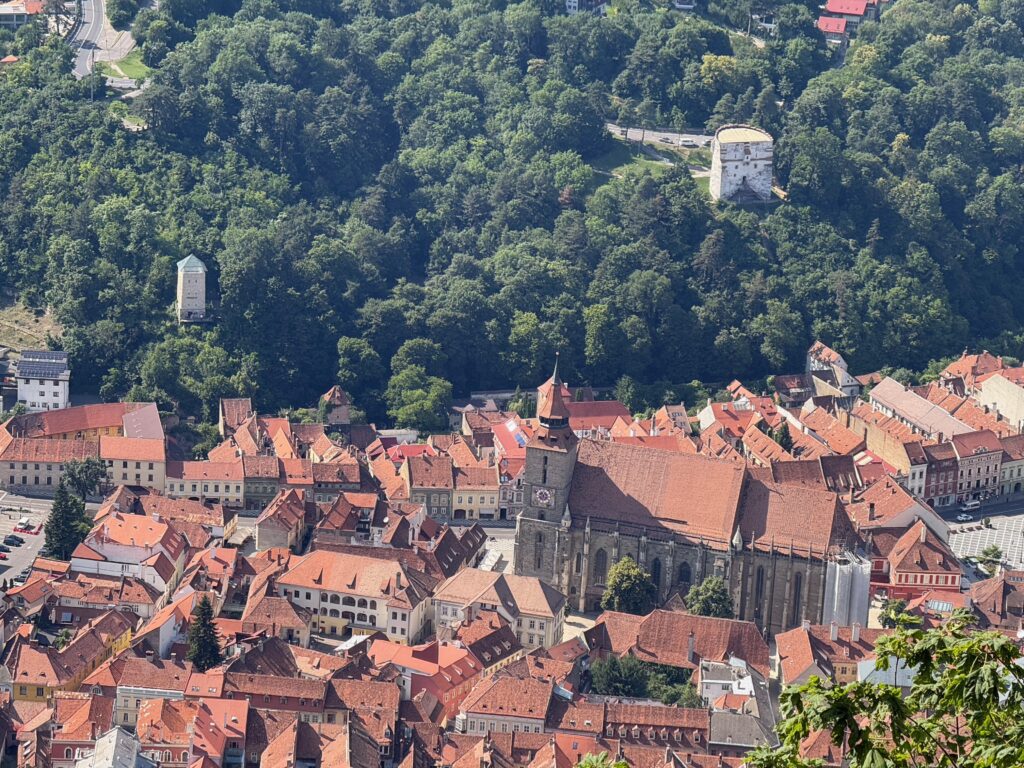
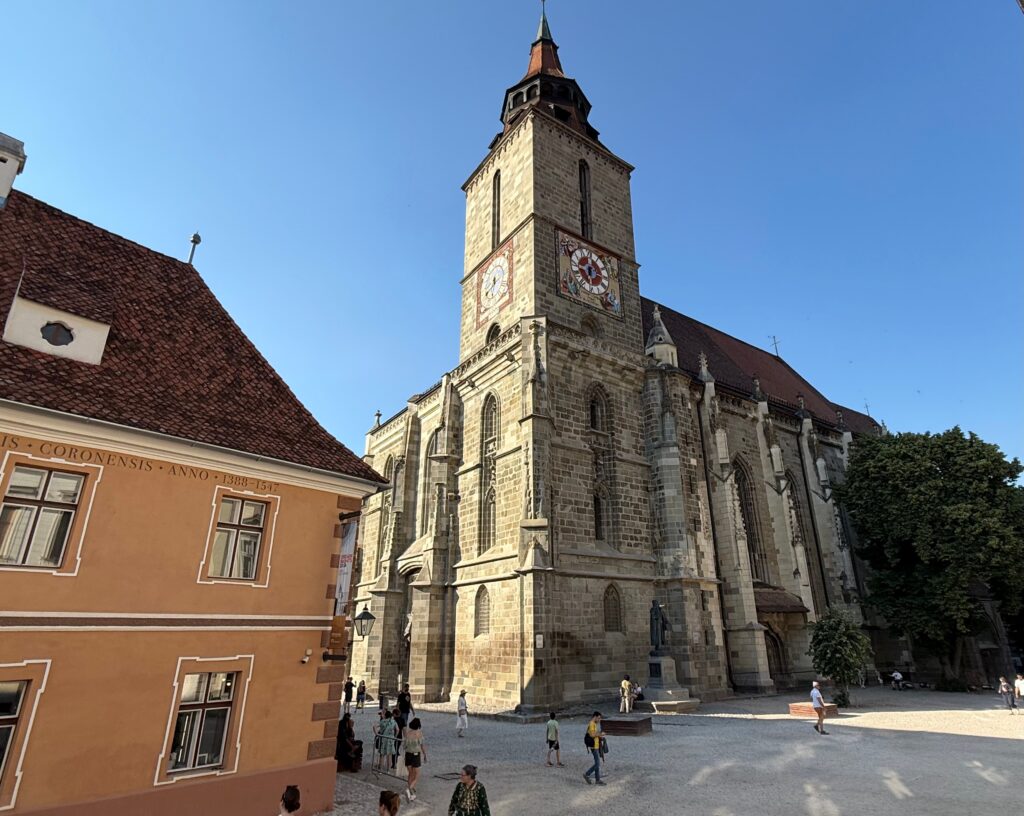
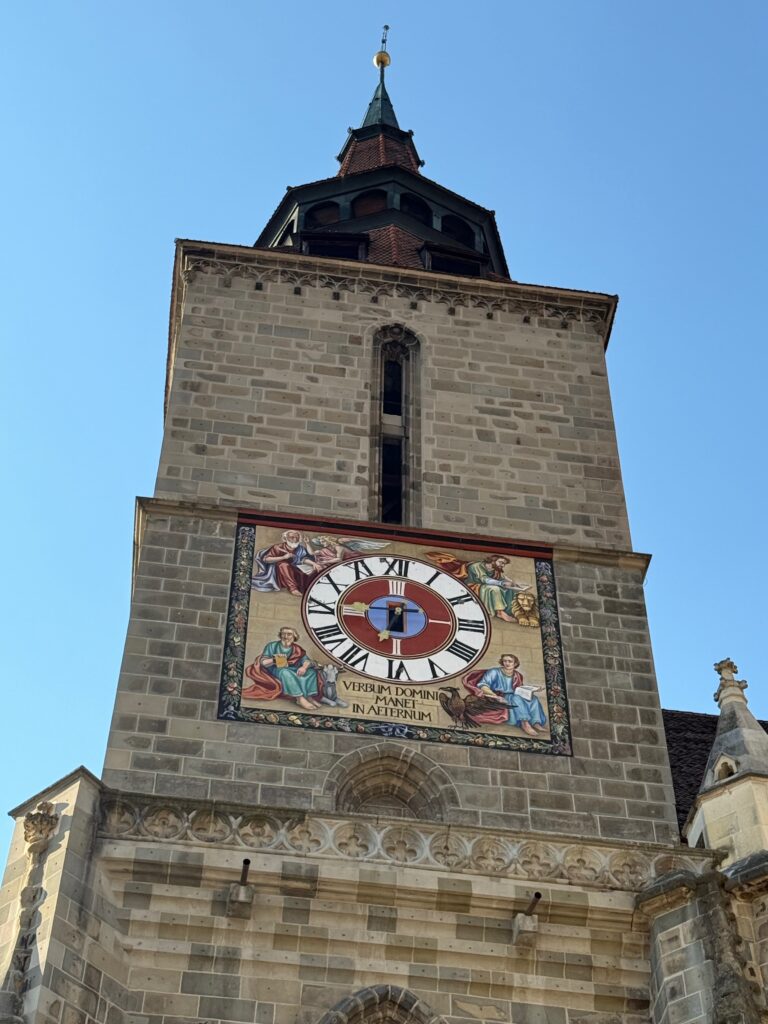
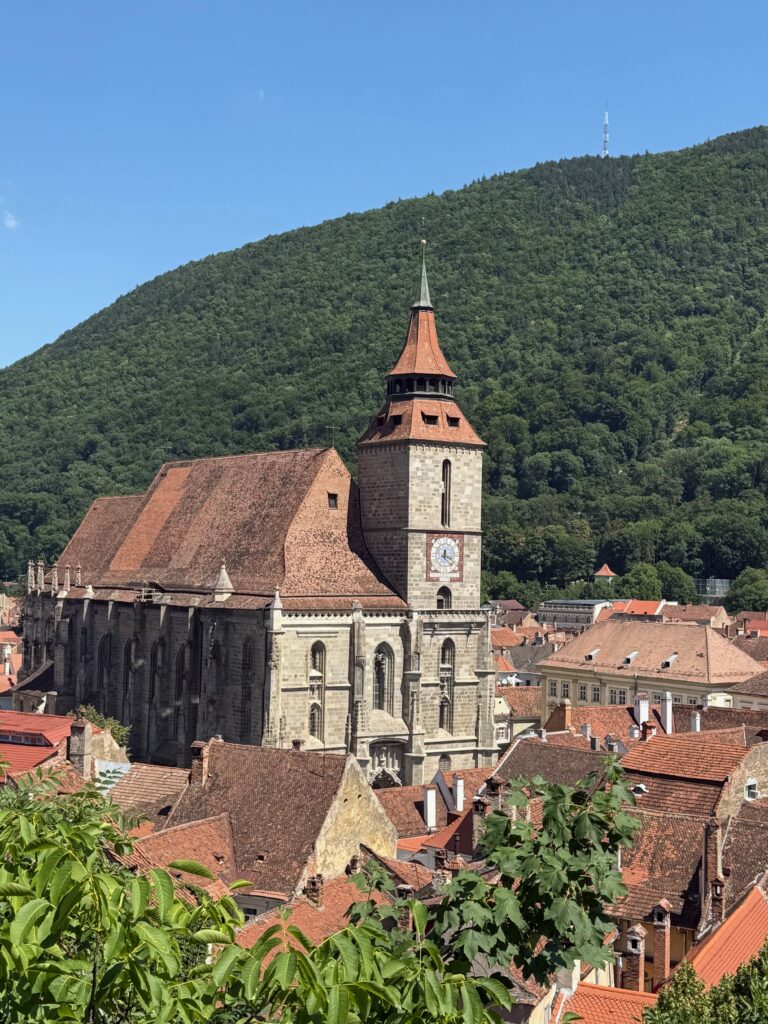
 Our tour took us to the famous Black Church, Brasov’s most recognizable landmark, which this time we just admired only from outside.
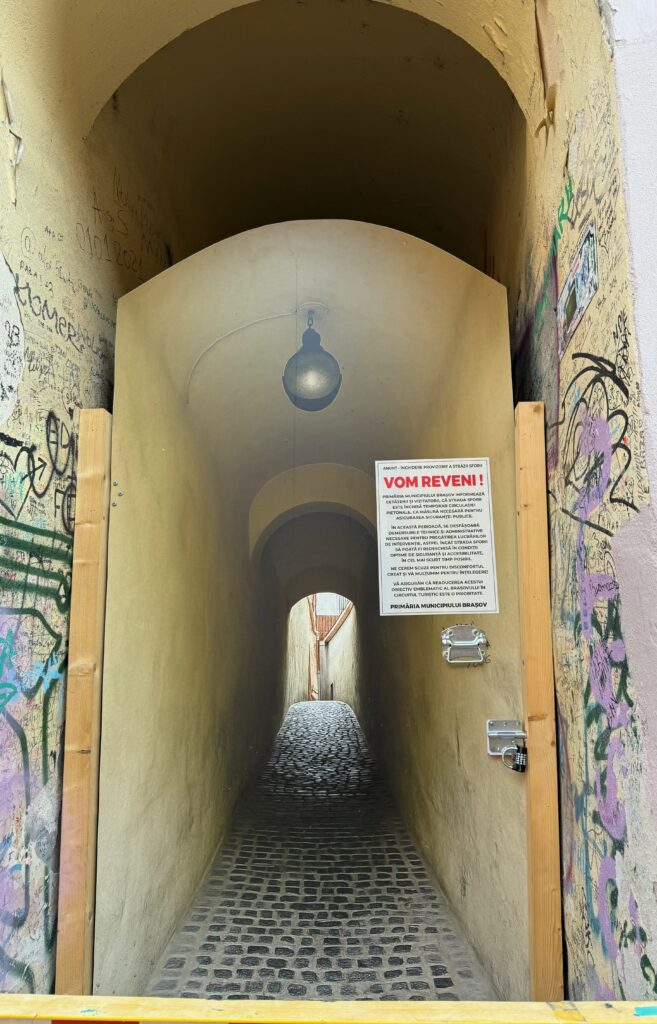
 Later we got to the Rope Street (Strada Sforii), one of the narrowest streets in Europe. It’s a 80 m (265 feet) long passageway with a 111-135 cm (3.6 to 4.4 feet) width. Since the 15th century until early 20th century firefighters used this passageway. It became a tourist site, but now it’s closed.
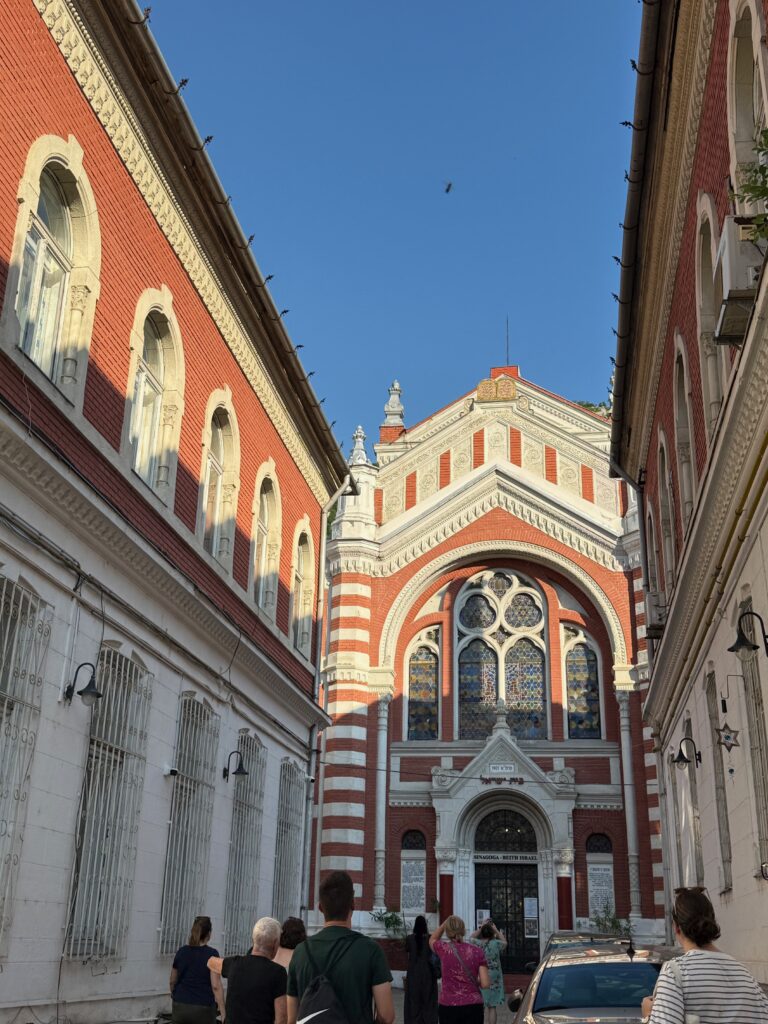
We also saw the Jewish synagogue.
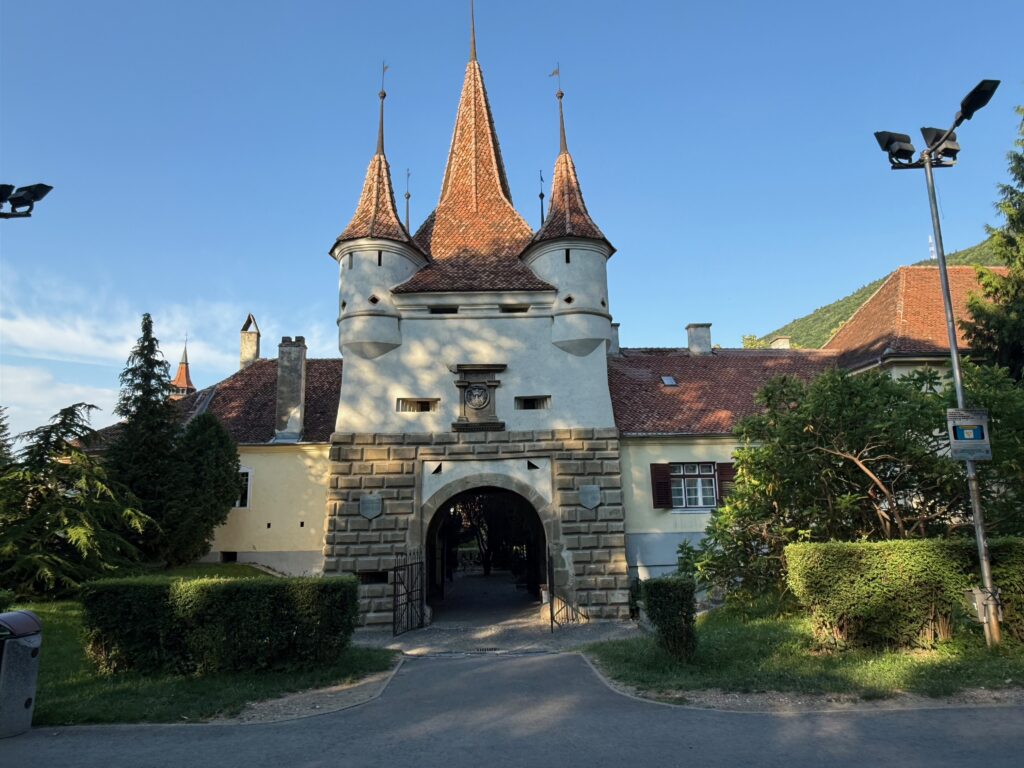
 The walking tour ended at the town’s only original gate, the Catherine’s Gate that survived from medieval times.
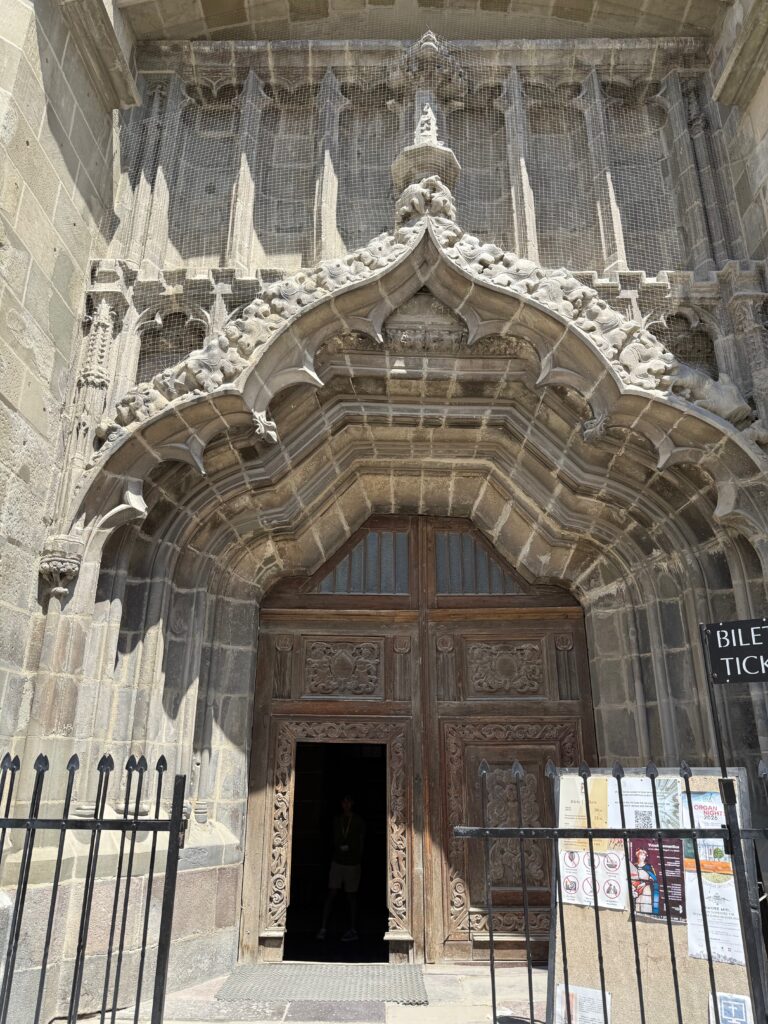
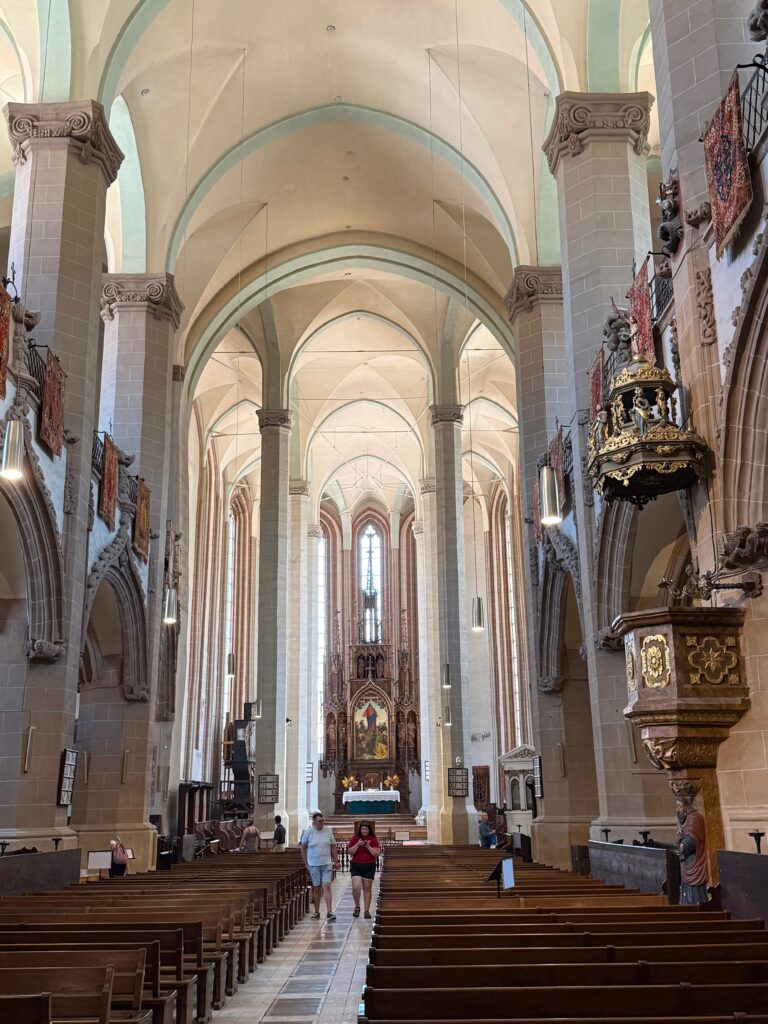
 Saturday afternoon, we got free time to continue the exploration of Brașov. Steve and I went to the Black Church, the largest Gothic church in Romania, to see its interior. The church was built between 1385 and 1477. In 1689, the flames and smoke of a raging fire blackened the exterior walls – hence the name of the church.
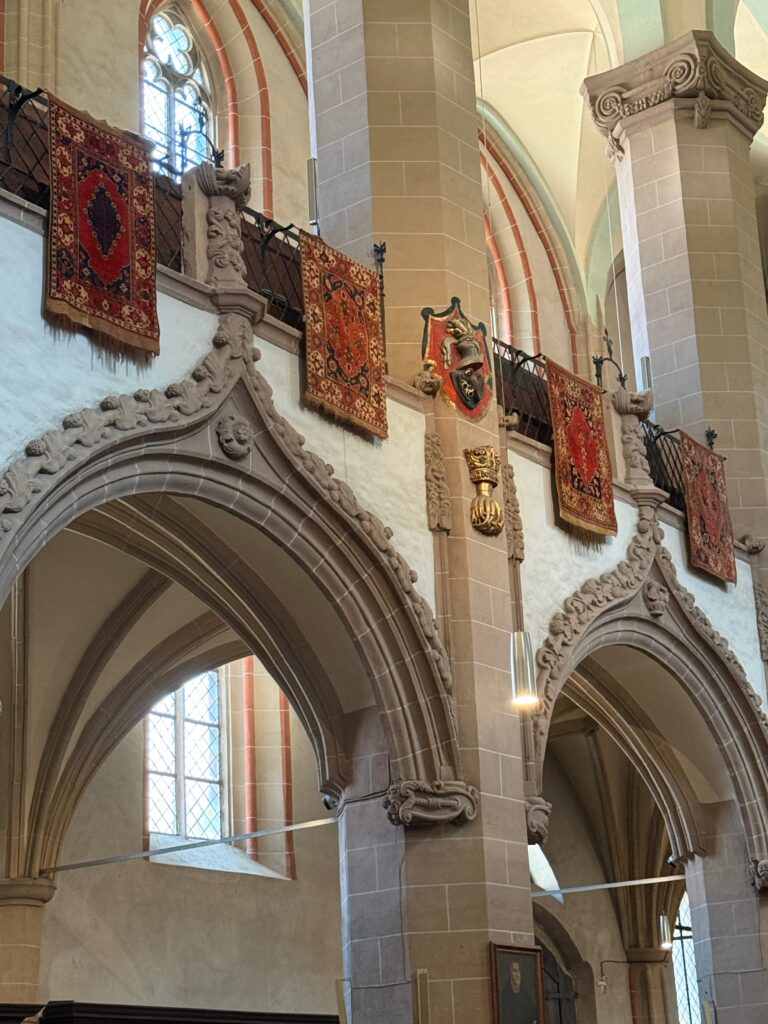
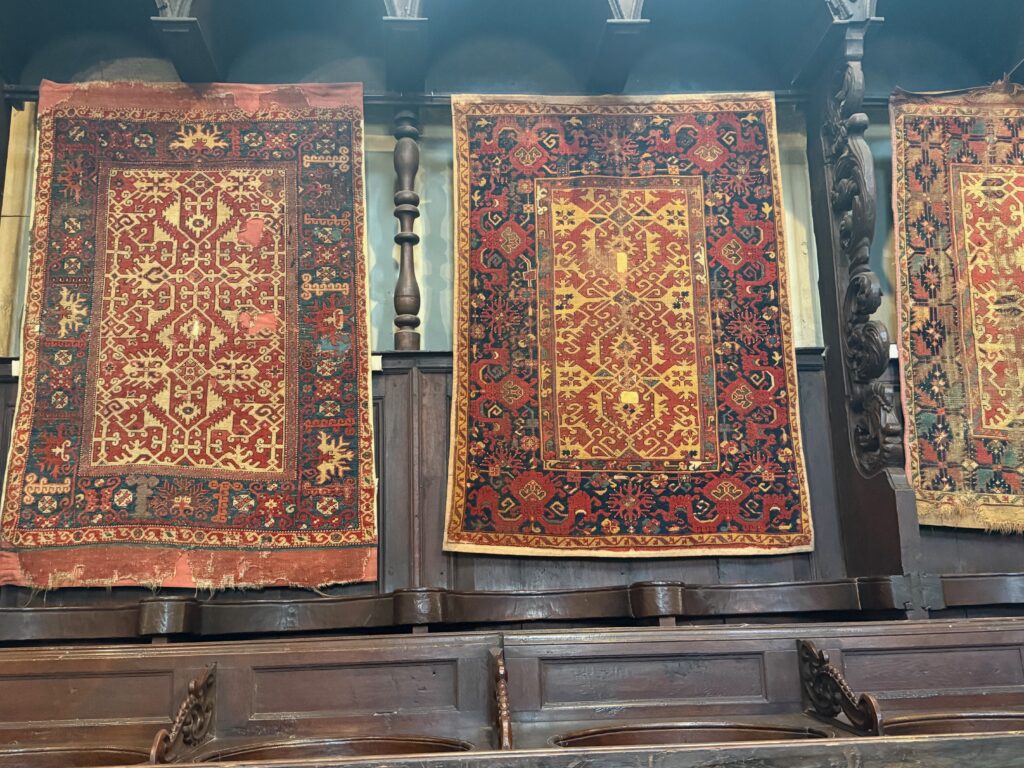
 The beautiful interior has stained glass windows, stone columns, and balconies with antique Turkish carpets. These textiles reached Brașov in the 15th century and were used in daily life. Then in the 17th century, merchants donated them to the church. The collection of these unique carpets is the second largest in Europe.
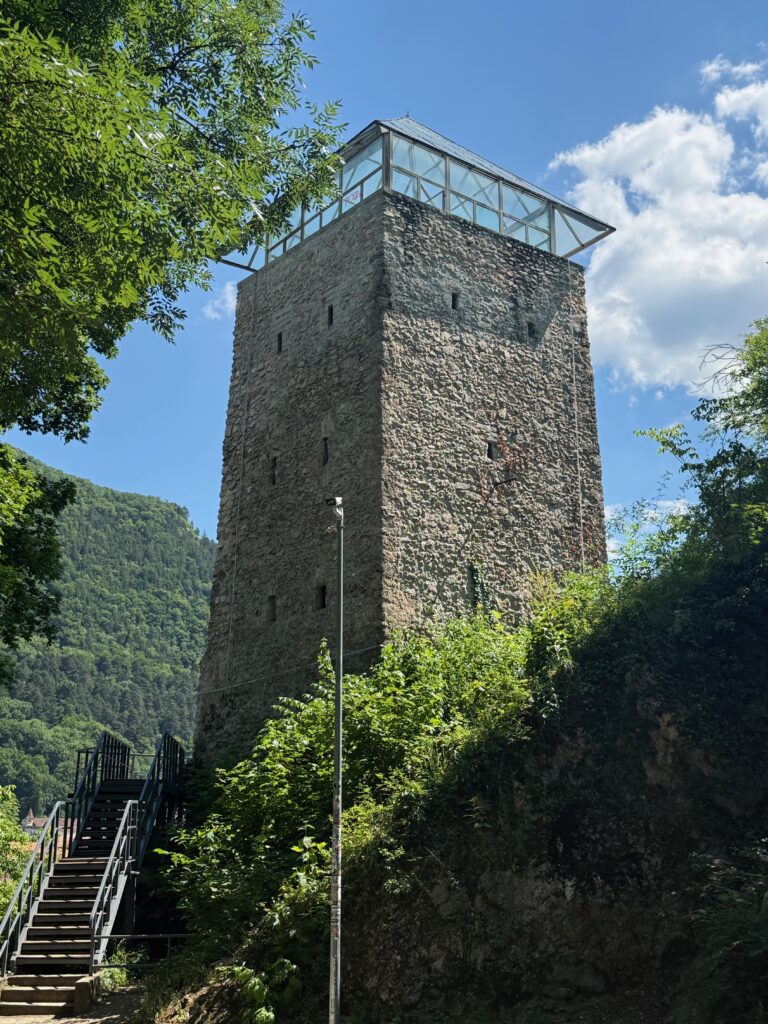
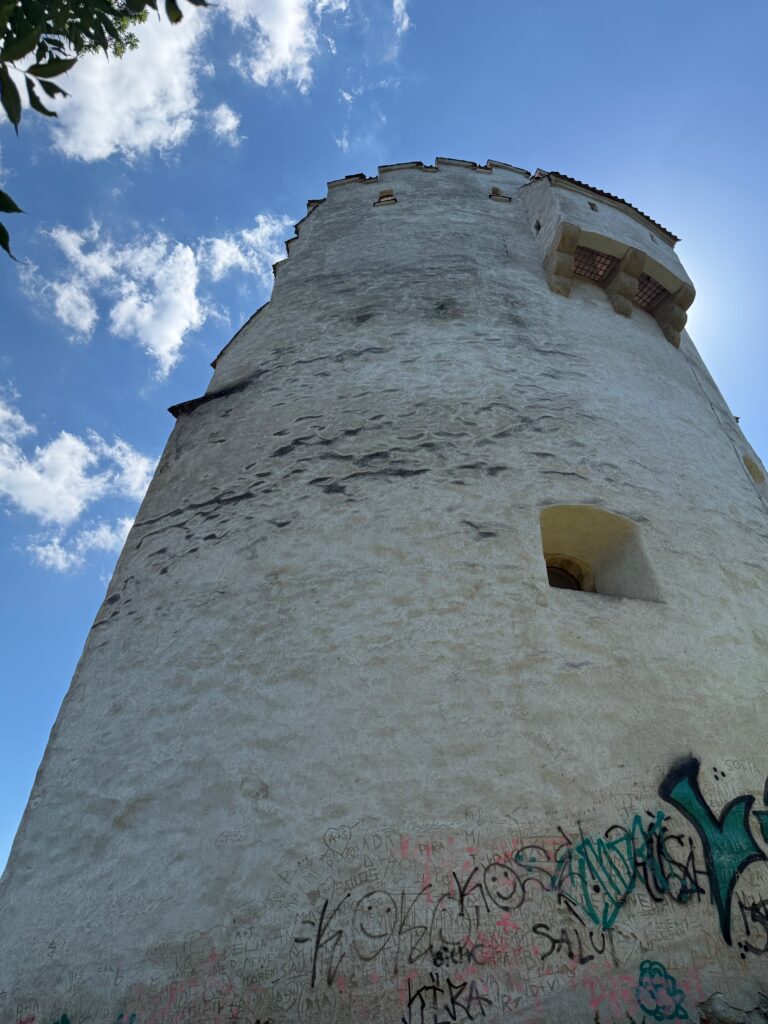
 Brașov is also known for its medieval stone walls and bastions (there were seven of them), built between 1400 and 1650. From the original four observation towers only two, the squared Black Tower (11 meters tall) and the semicircular White Tower survived. To reach the White Tower, we had to climb some 200 steps.
 From the town, the Hollywood-like BRASOV sign is very visible. But to see it closer and to marvel at the panoramic view, we had to get to the top of Mount Tâmpa. Because of the hot weather, we didn’t feel like hiking for an hour (only Kevin, from our group, did it). Plus, we were warned that the area was home to bears! So, we took the cable car.
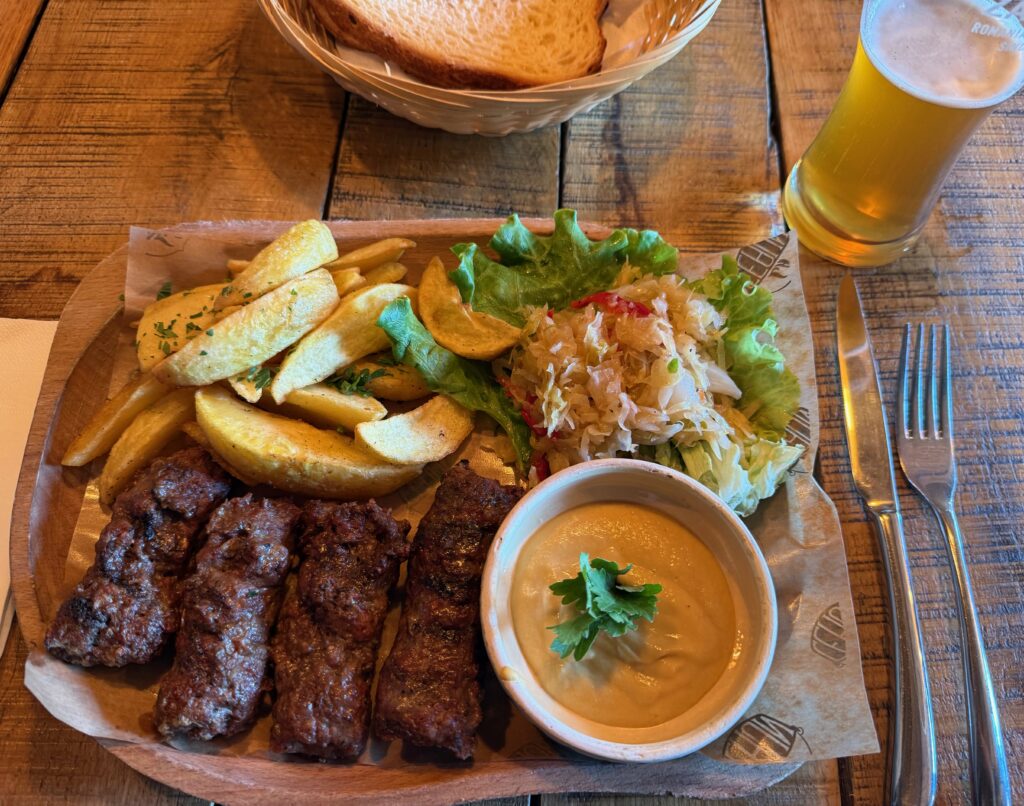
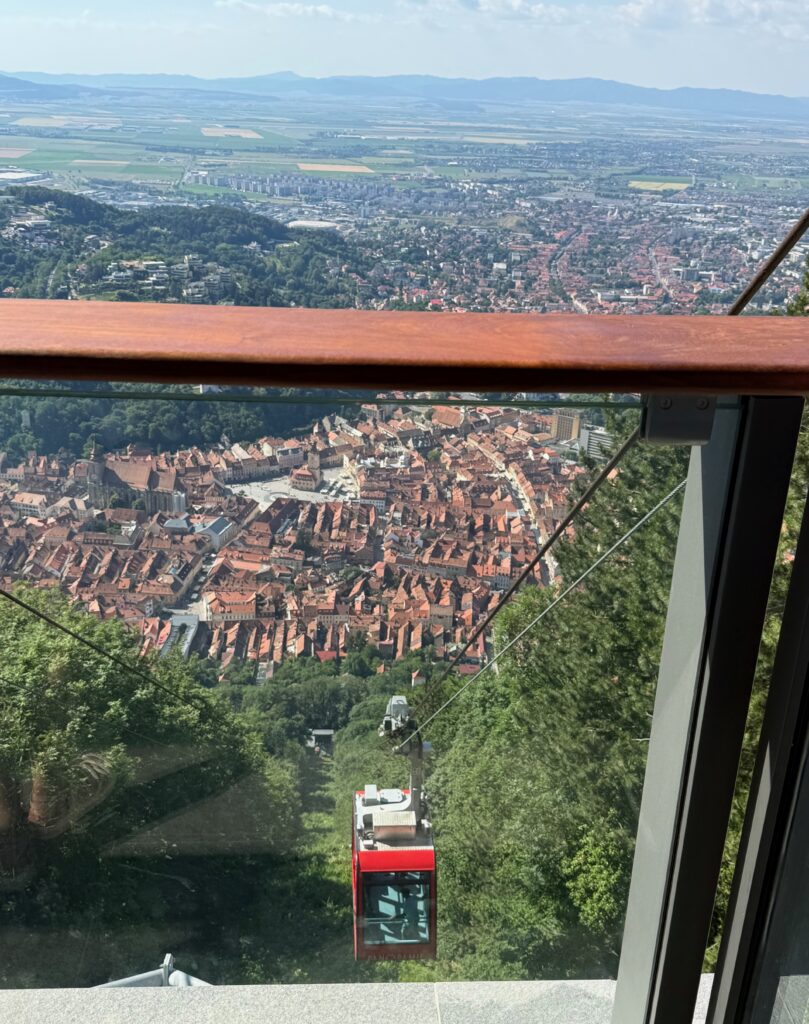 We enjoyed the spectacular view, then ended the day with a traditional dinner at one of the restaurants on Council Square.