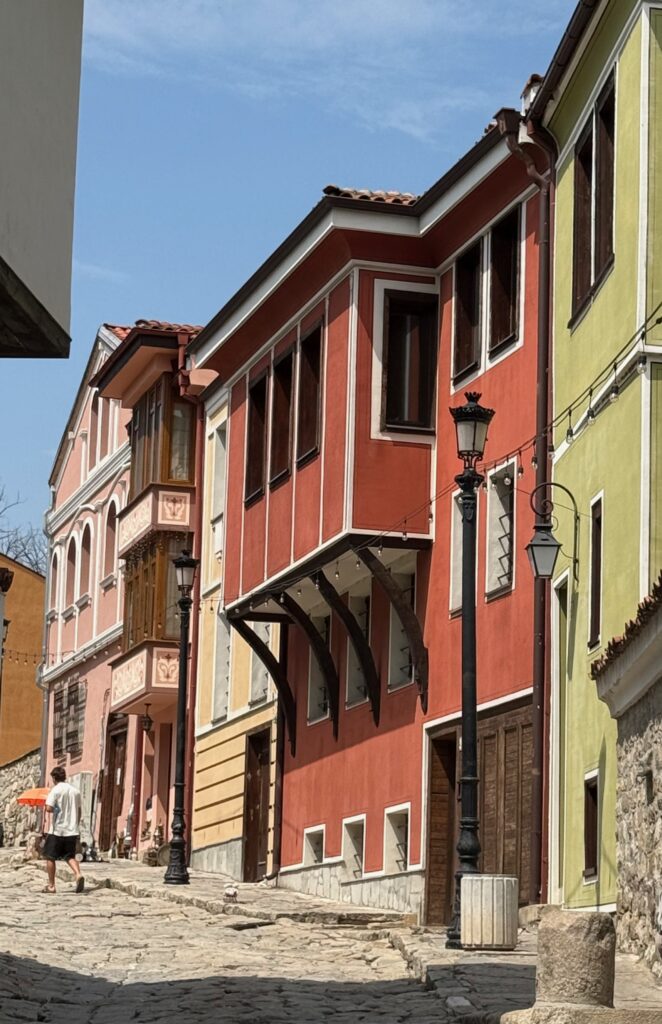
Bulgaria’s second largest city is a perfect destination for those interested in history and culture. The charming hilly Old Town with its cobblestone streets, many Roman ruins, colorful multi-story houses with balconies offers visual pleasure.
Day 10, Thursday, July 2: Plovdiv
For a change, we took a public bus today from Sofia to Plovdiv. The bus station was only a 10-minute walk from our hotel. On the bus each of us had an assigned seat, and we departed at 10 am.
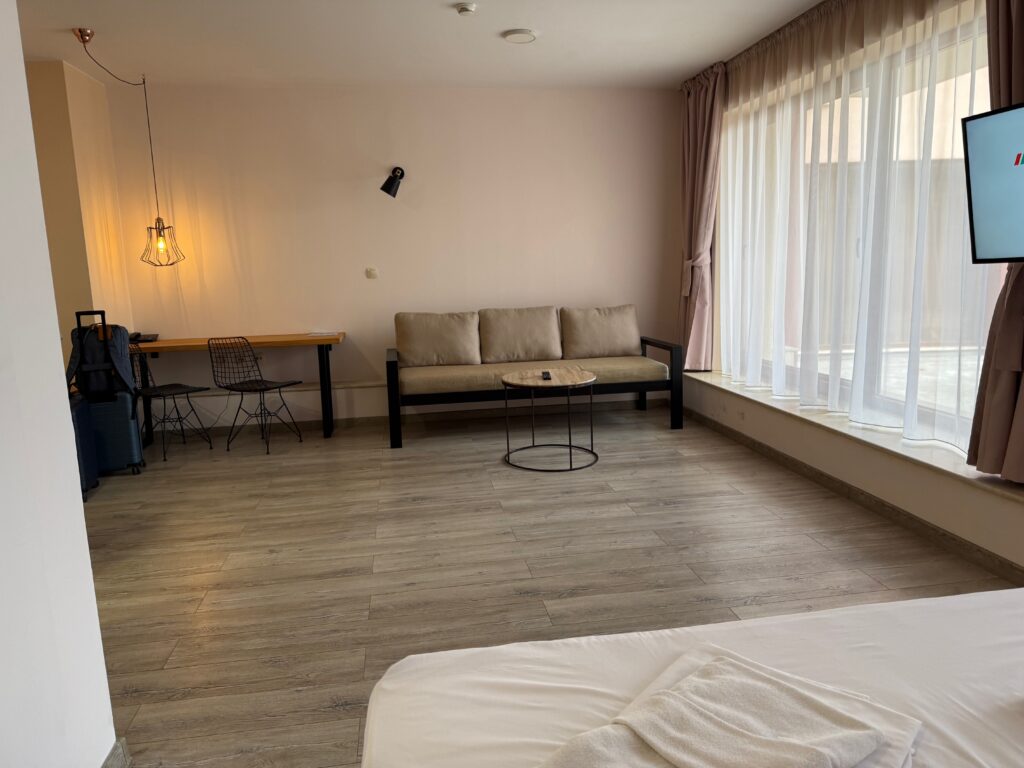
After a two-and-a-half-hour ride, we checked into our hotel, the Clepsydra Residence. After all these years of travel I’m not surprised by hotels or hotel rooms anymore, but the room Steve and I got this time deserves a mention. It looked like a ballroom, a place that perhaps wasn’t designed for sleeping – maybe a conference room? I was glad we were here for only one night.
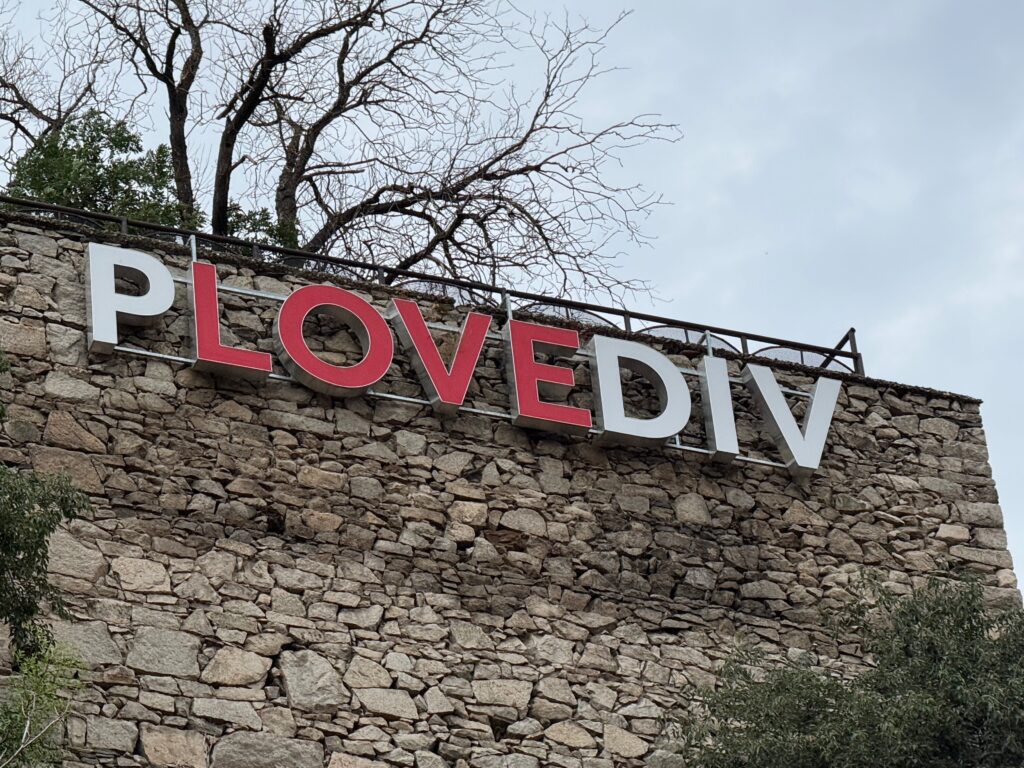
 Plovdiv dates back as far as 4000 BC. It’s recognized as Europe’s oldest continuously inhabited city. We started exploring it early afternoon.
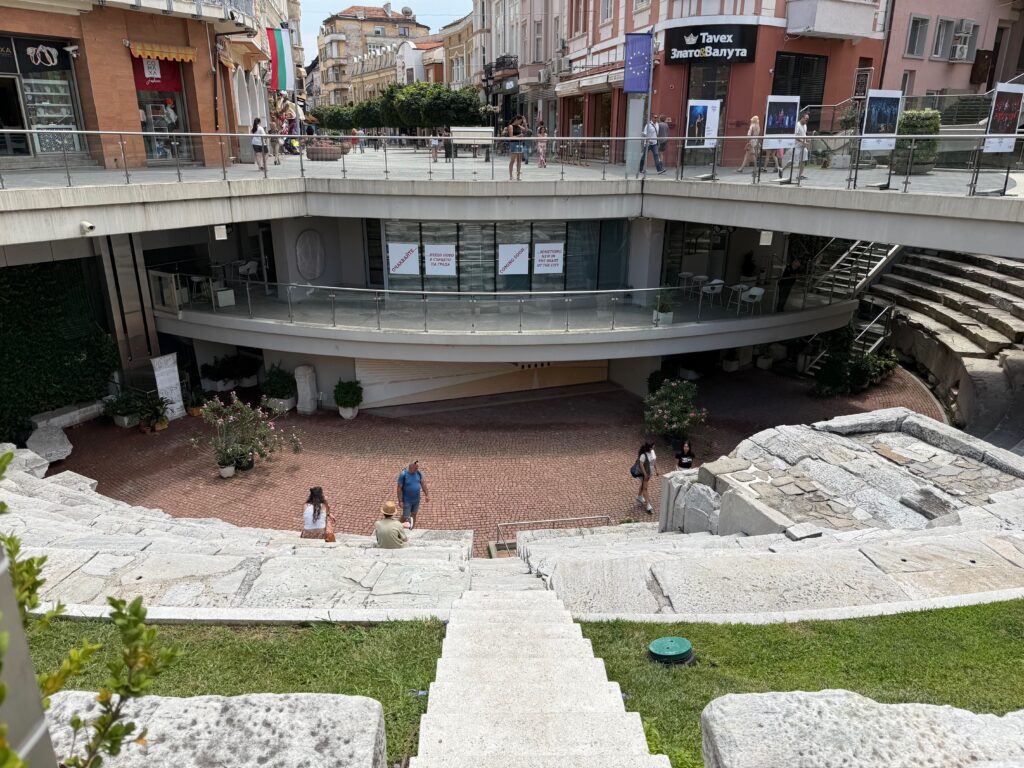
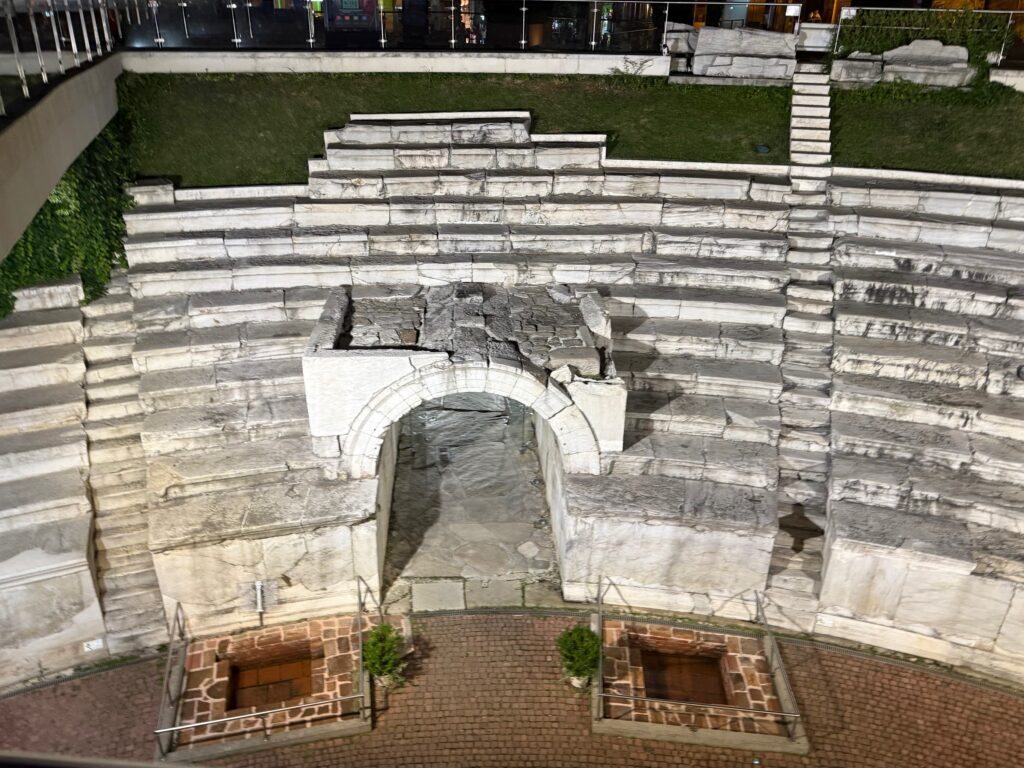
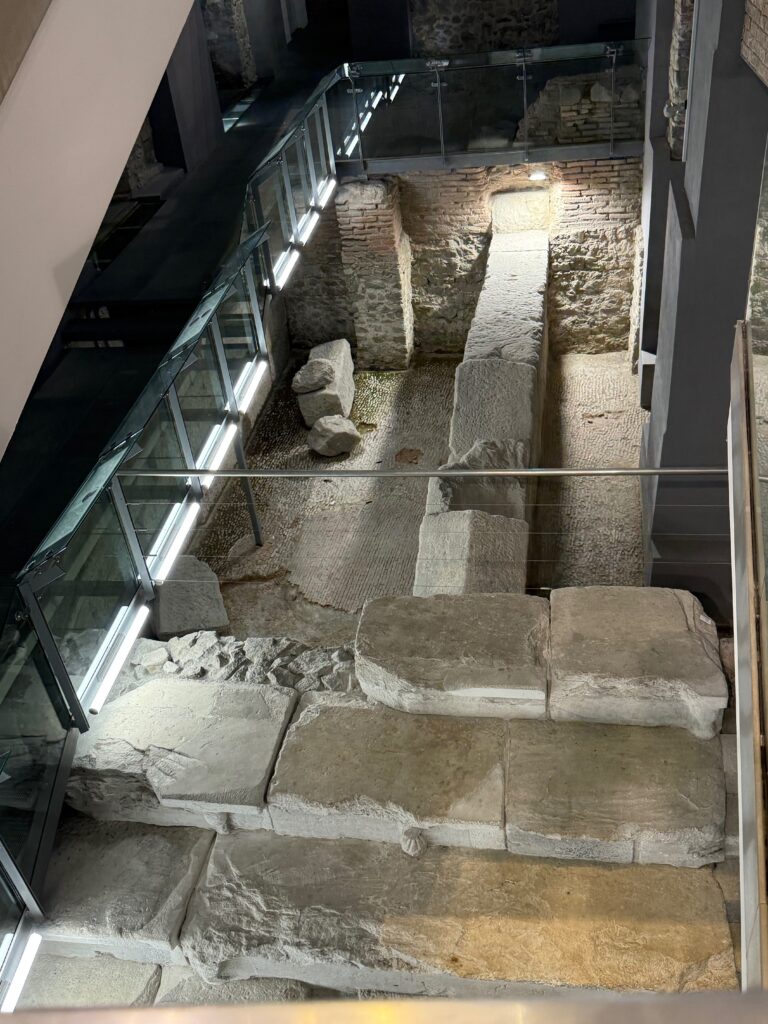
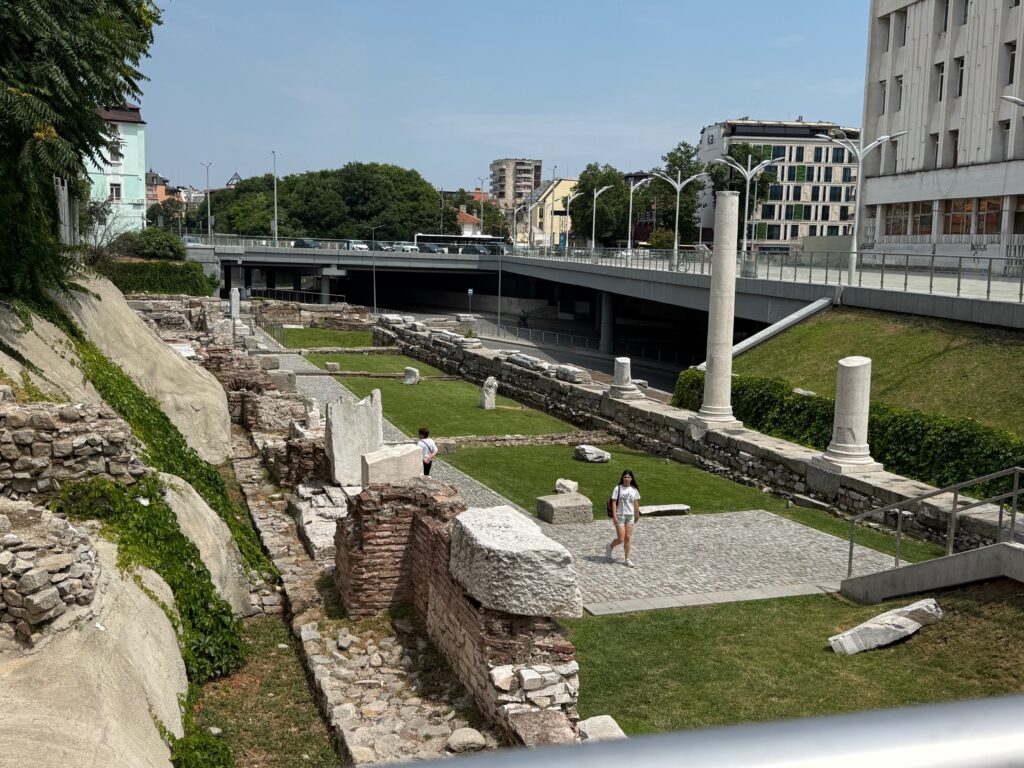
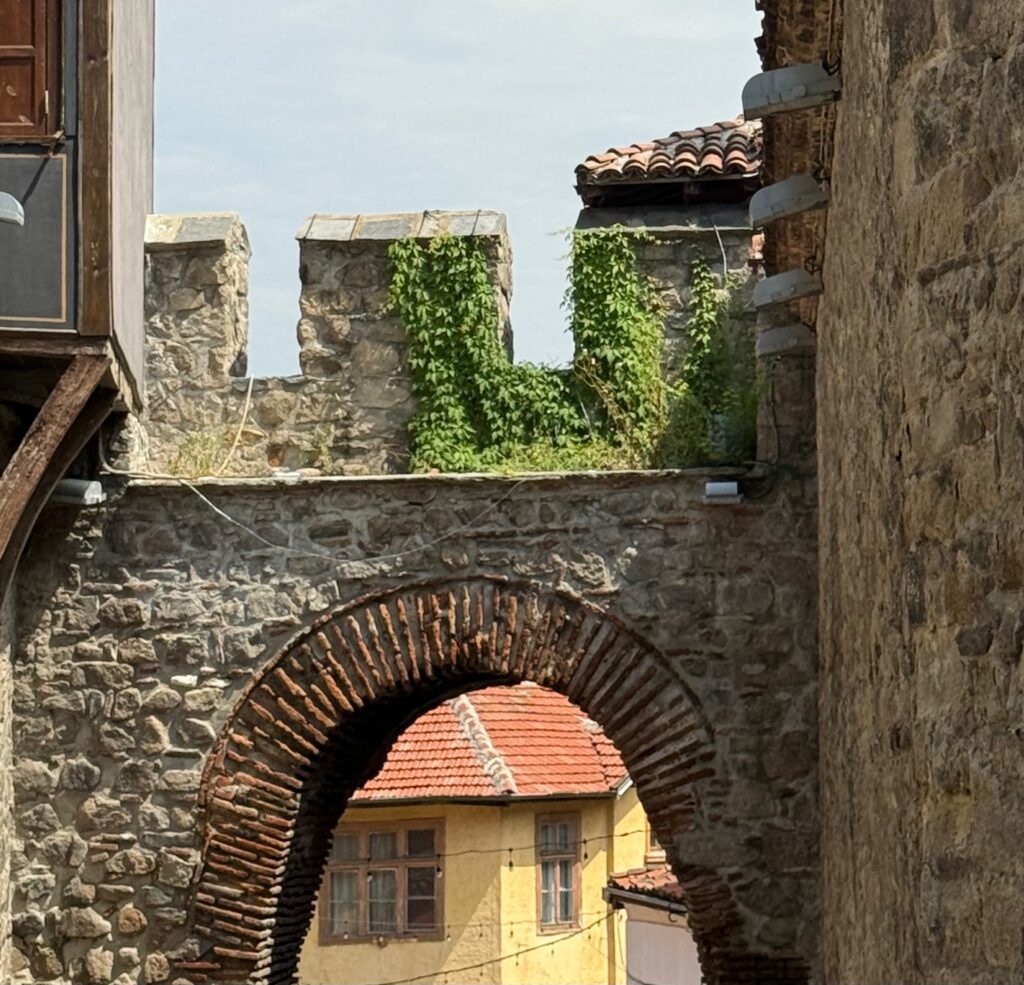
 Saw the ruins of the Roman Stadium of Philipoppolis, built at the beginning of the 2nd century AD, and numerous other ruins.
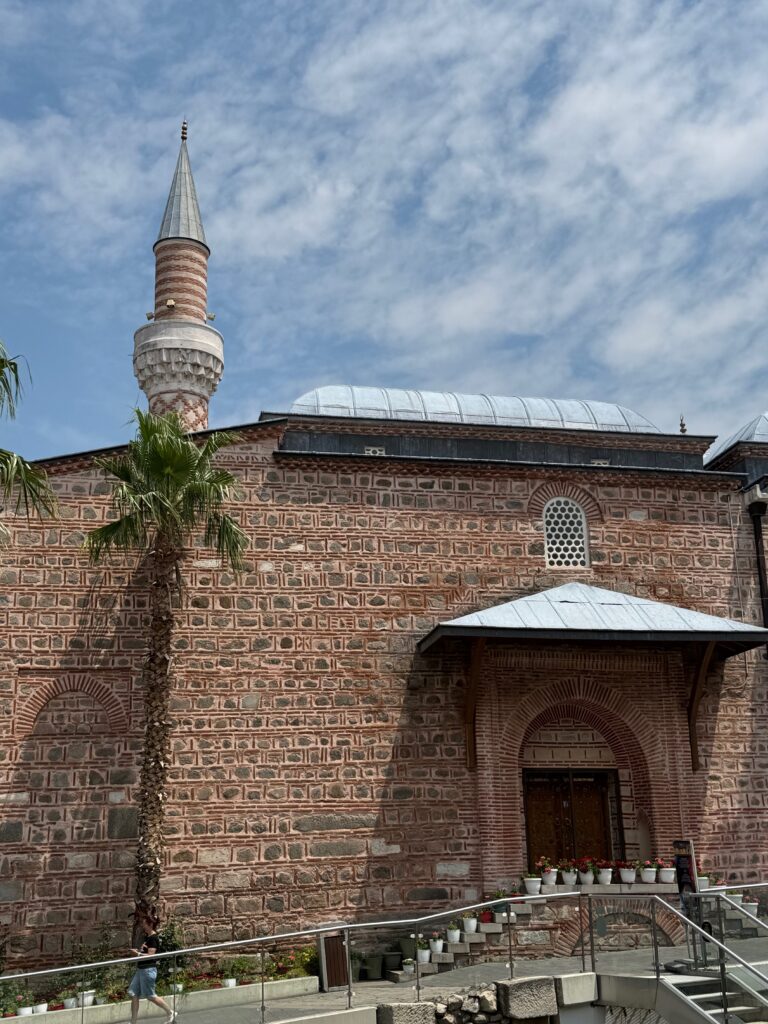
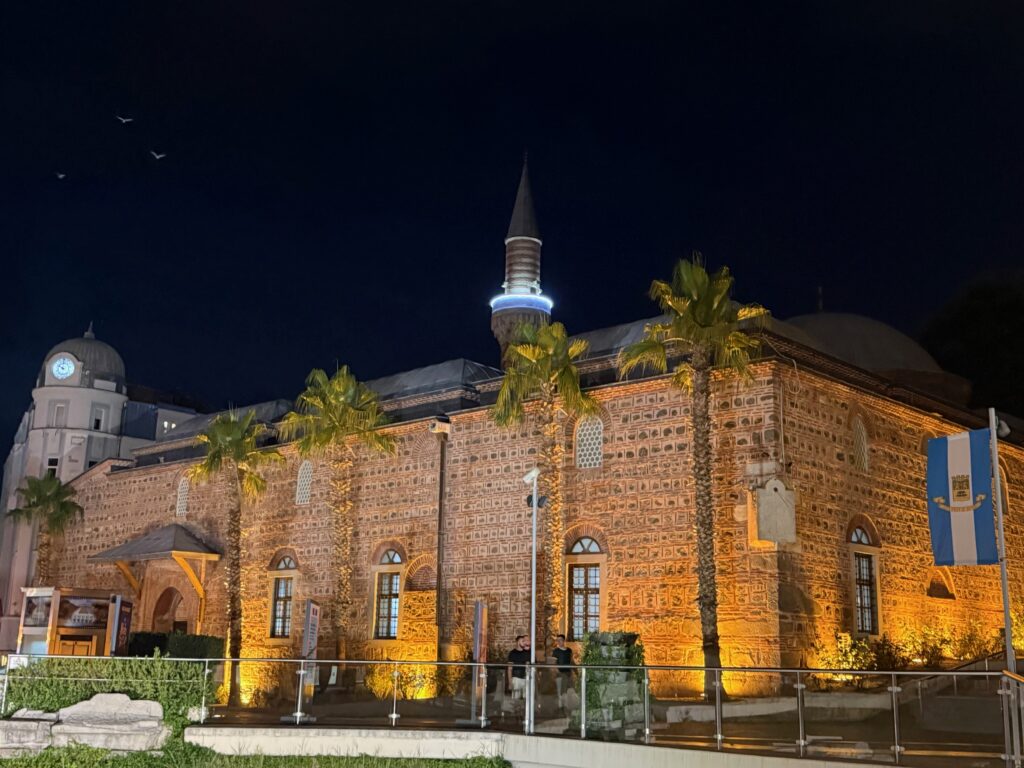
 Admired the Dzuhumaya Mosque.
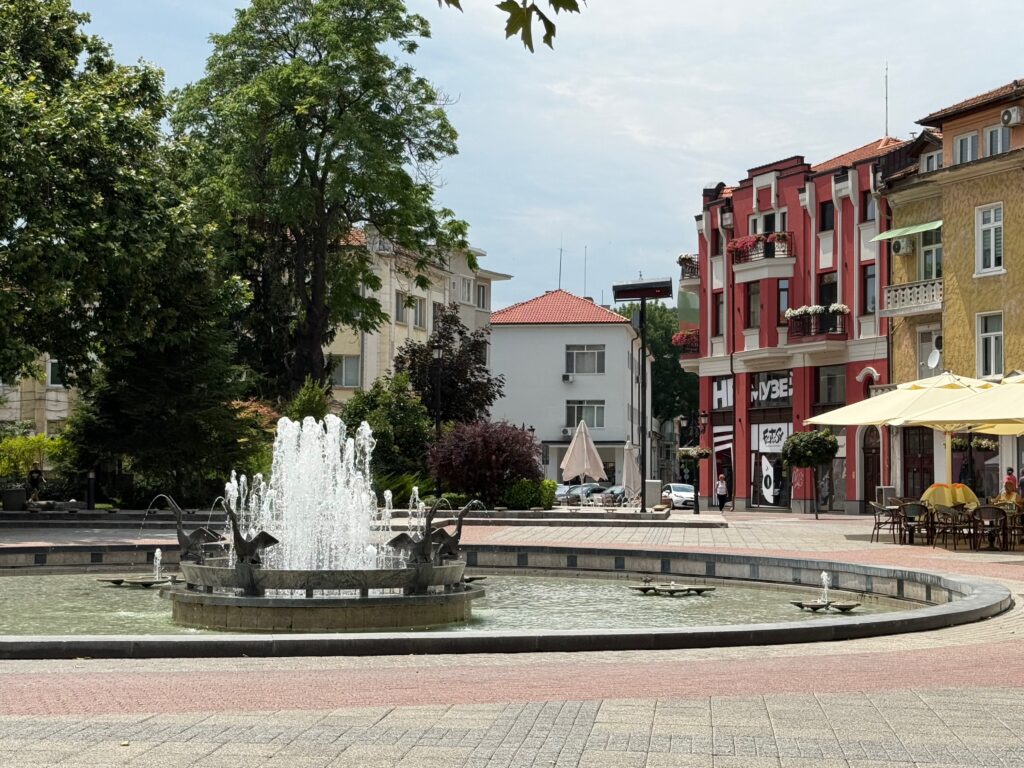
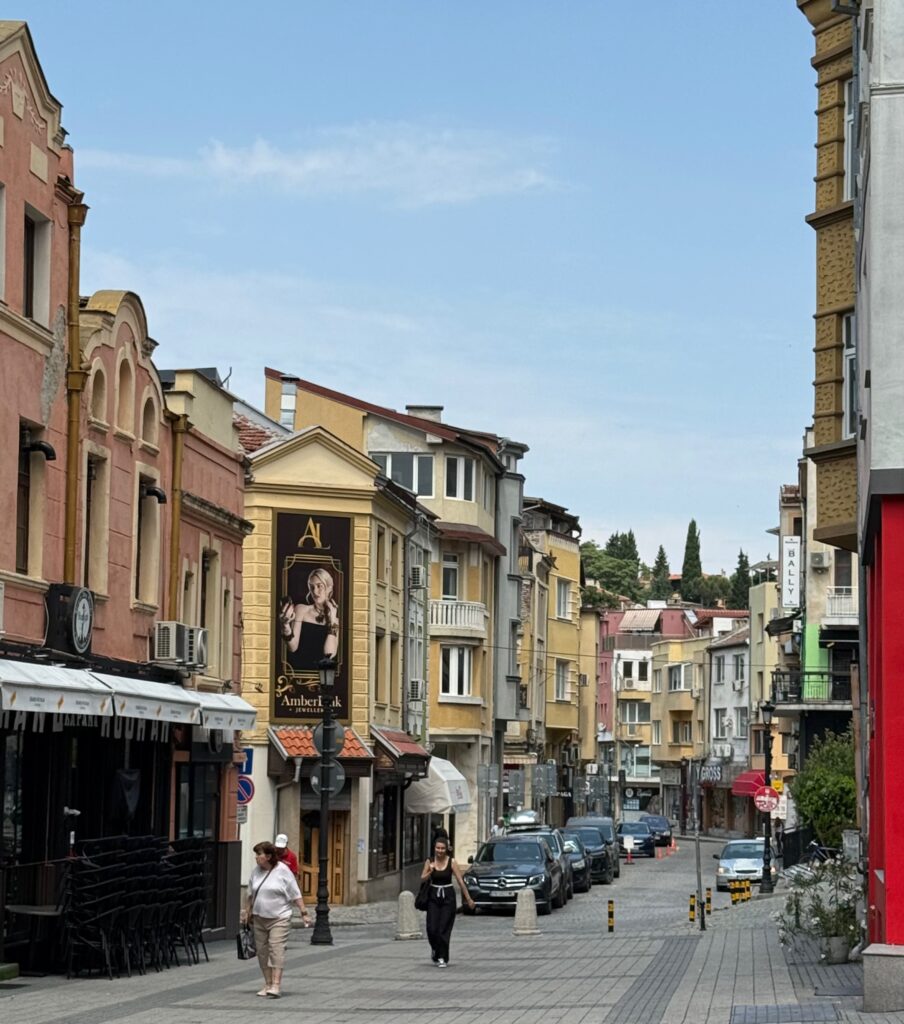
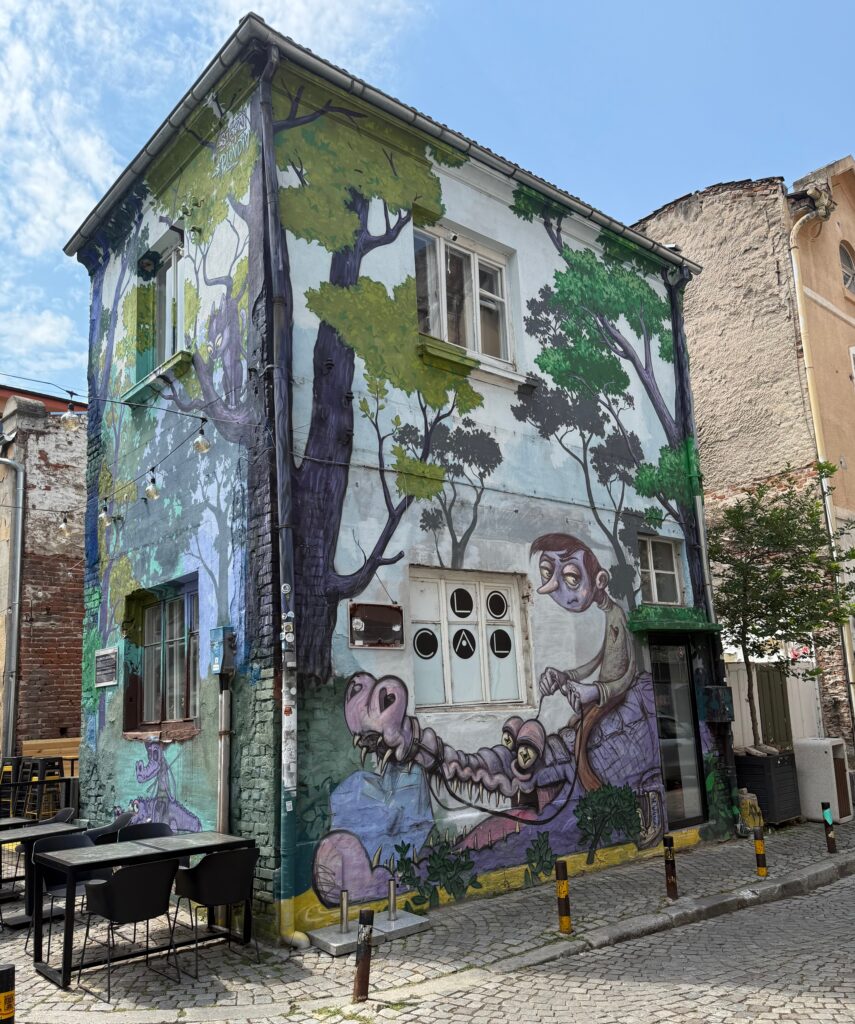
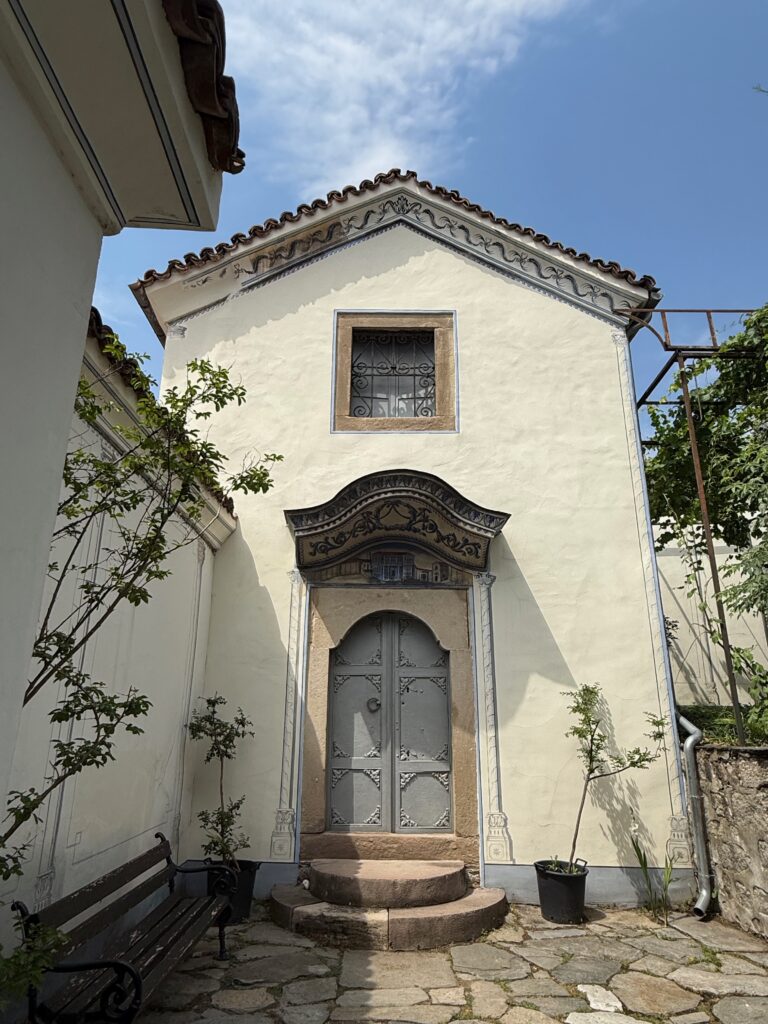
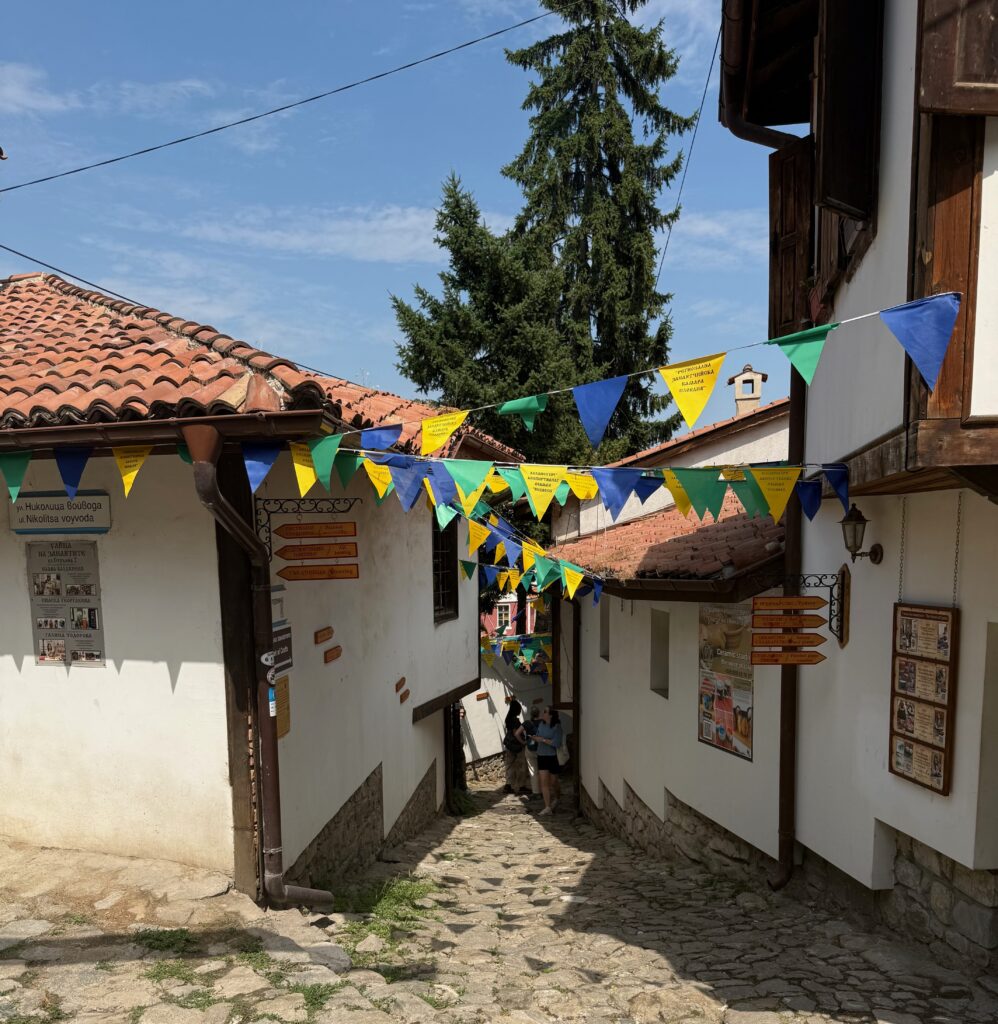
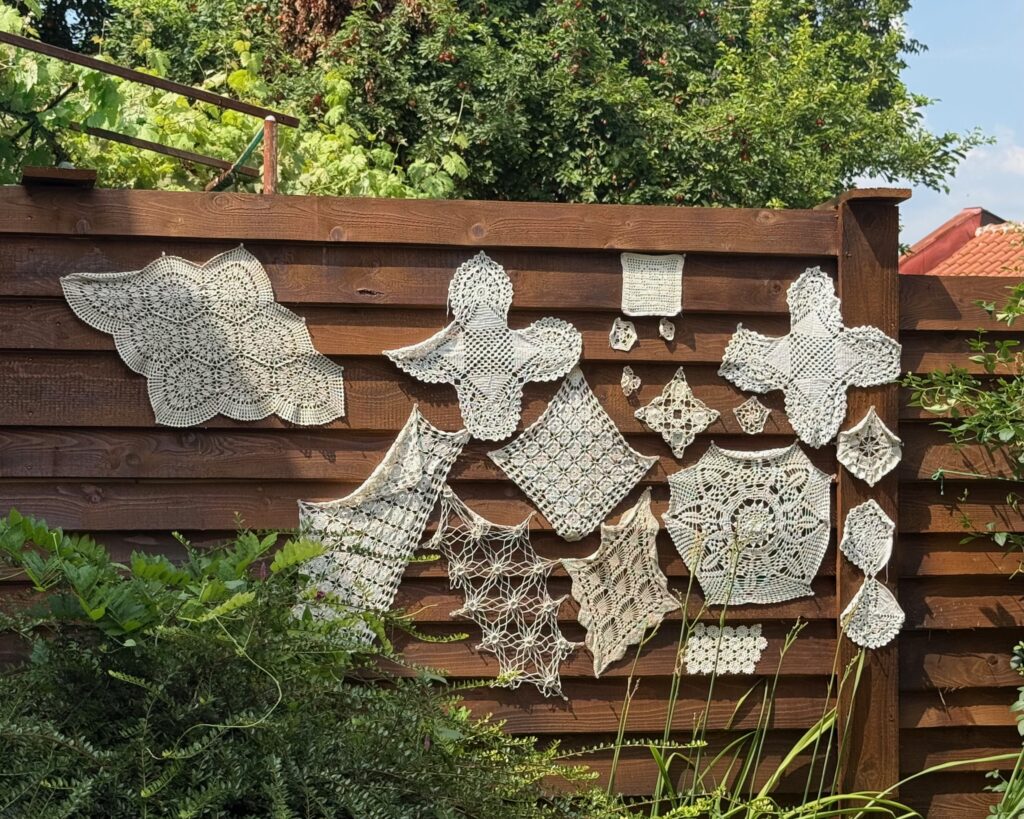
 Enjoyed walking the streets of Plovdiv – especially in the Old Town – admiring the houses, courtyards, doors, windows, colorful murals.

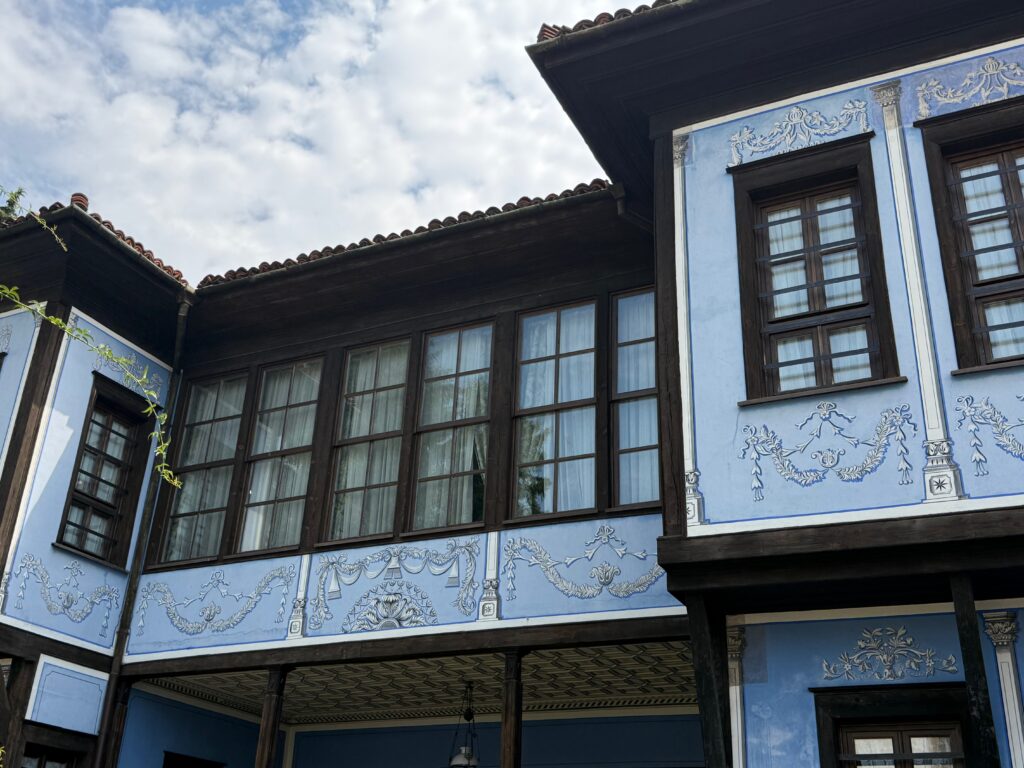
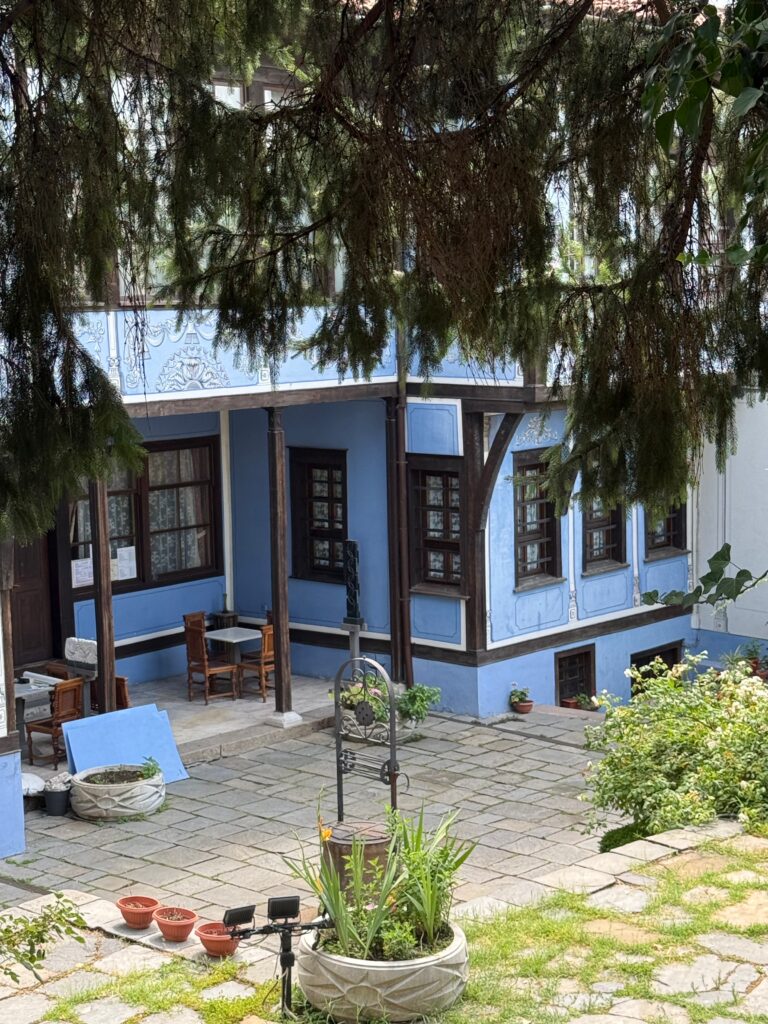
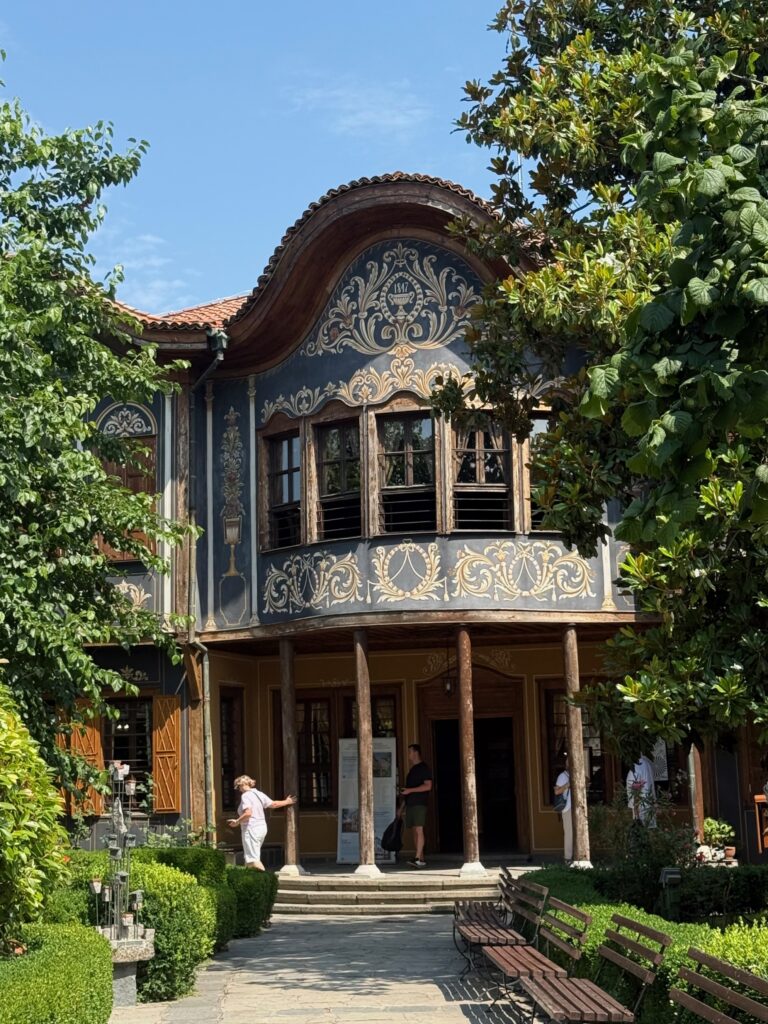
 Very much liked the 19th century Hindliyan House, the most beautiful and best-preserved building in the Old Town.
 The Street of Crafts in the Kapana district offered many interesting sites and artisan workshops.
 Because of our short time in the city, we didn’t get a chance to go inside the Regional Ethnographic Museum to see the collection of traditional Bulgarian costumes, but at least we got a glimpse of its exterior.
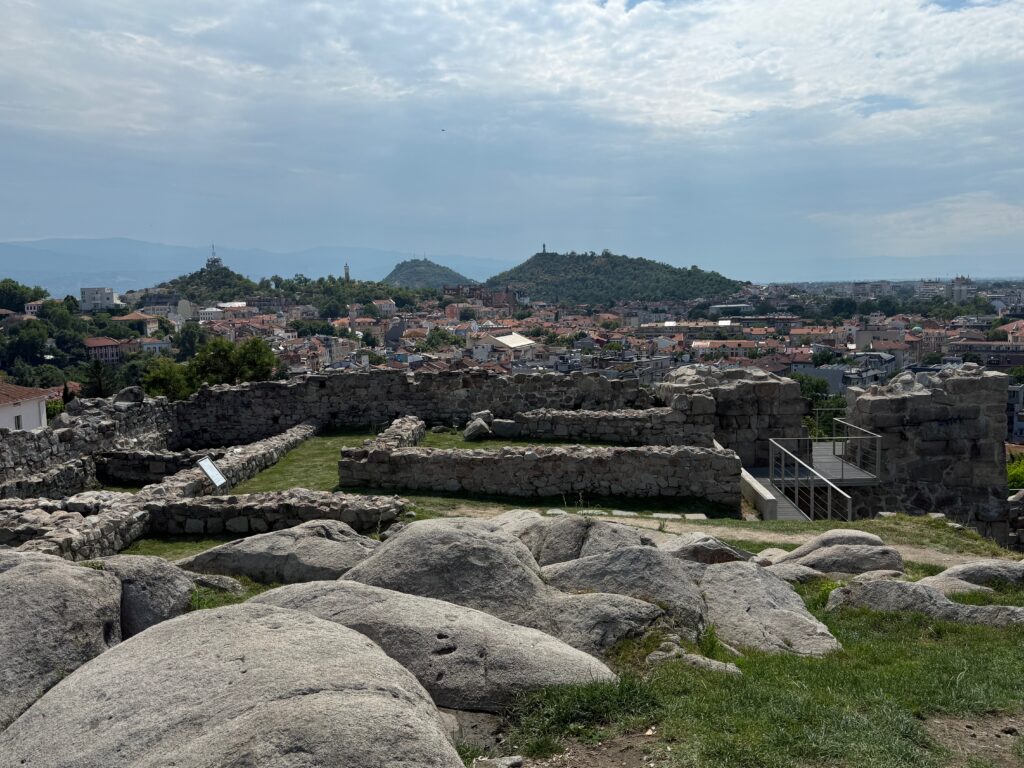
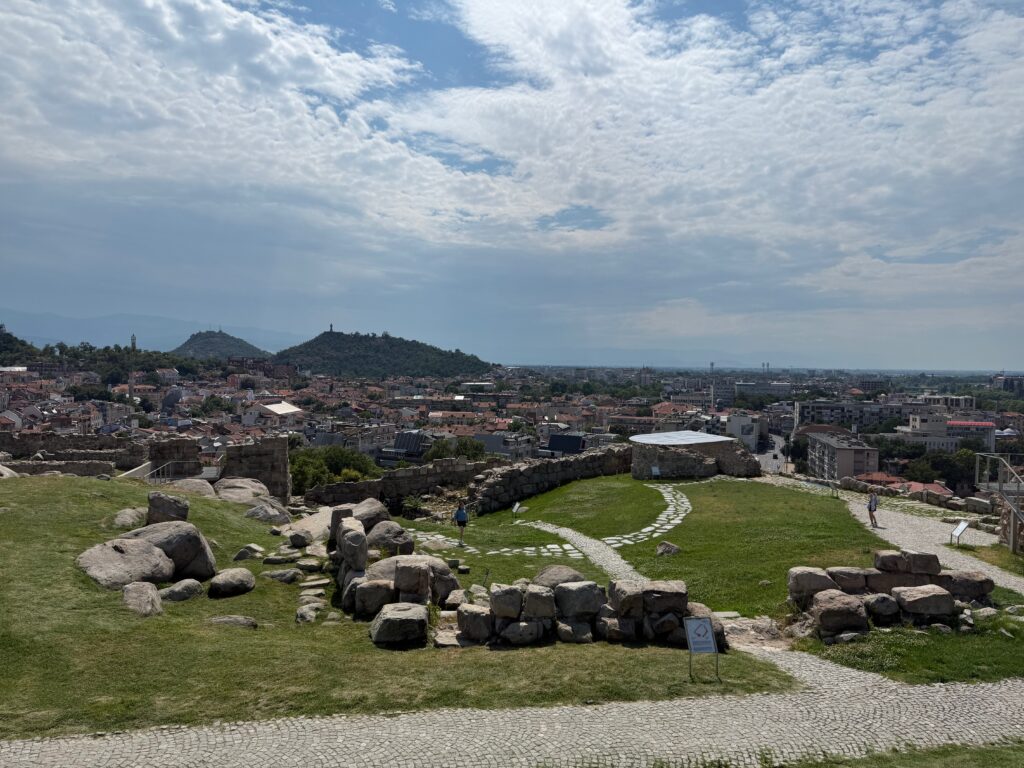
 Then we climbed up to the archeological complex of Nebet Tepe on a hill, which served “as an observatory of traffic along the Maritsa River from the deepest antiquity.” Indeed, from here, there was a great view of the city.
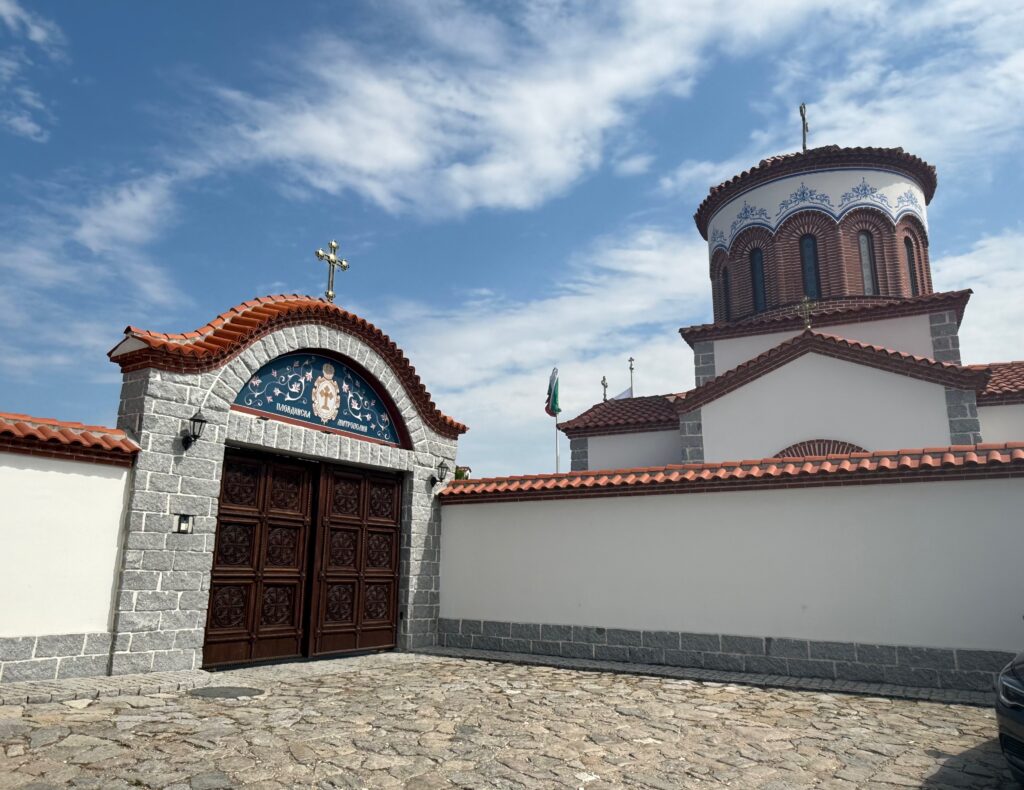
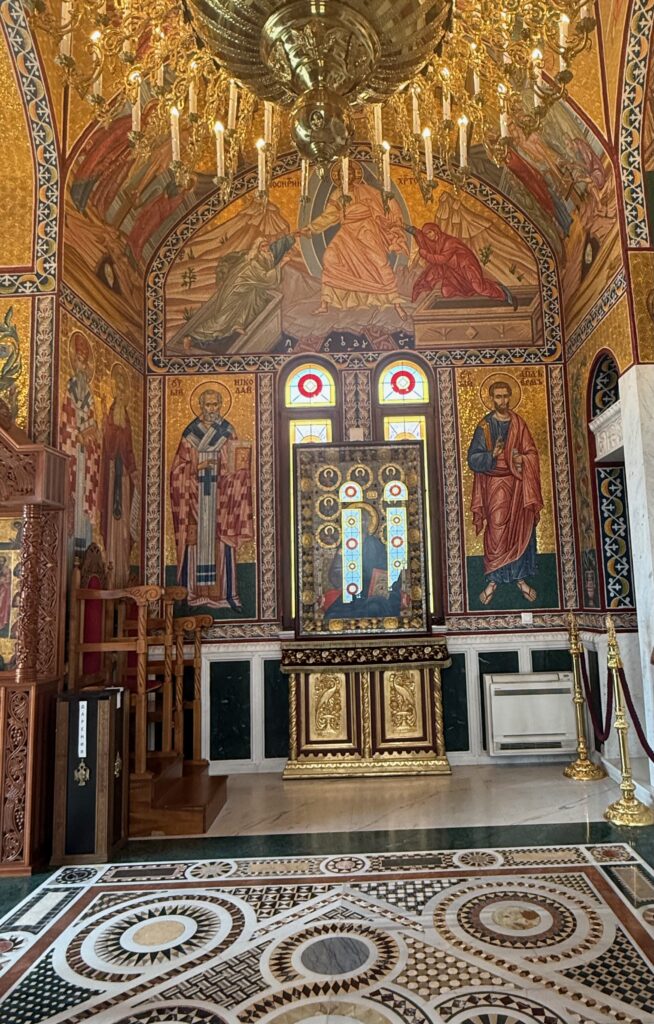
 Next on our list was a visit to a lovely church overlooking the city below.
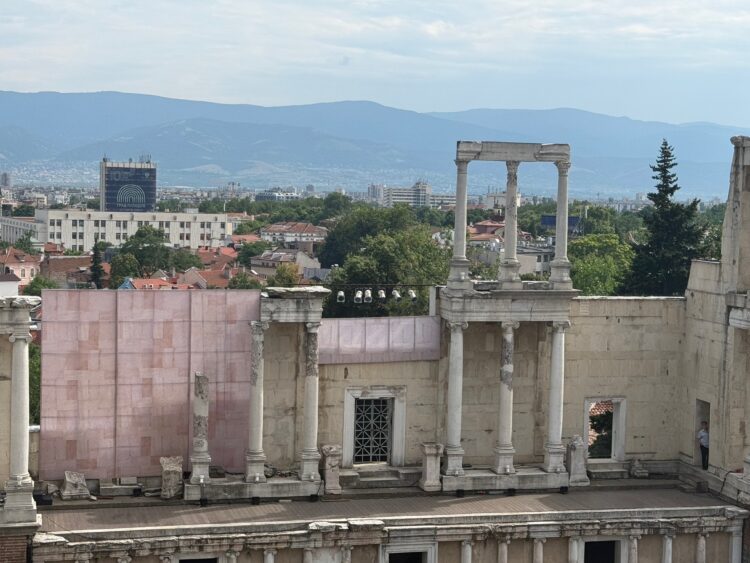
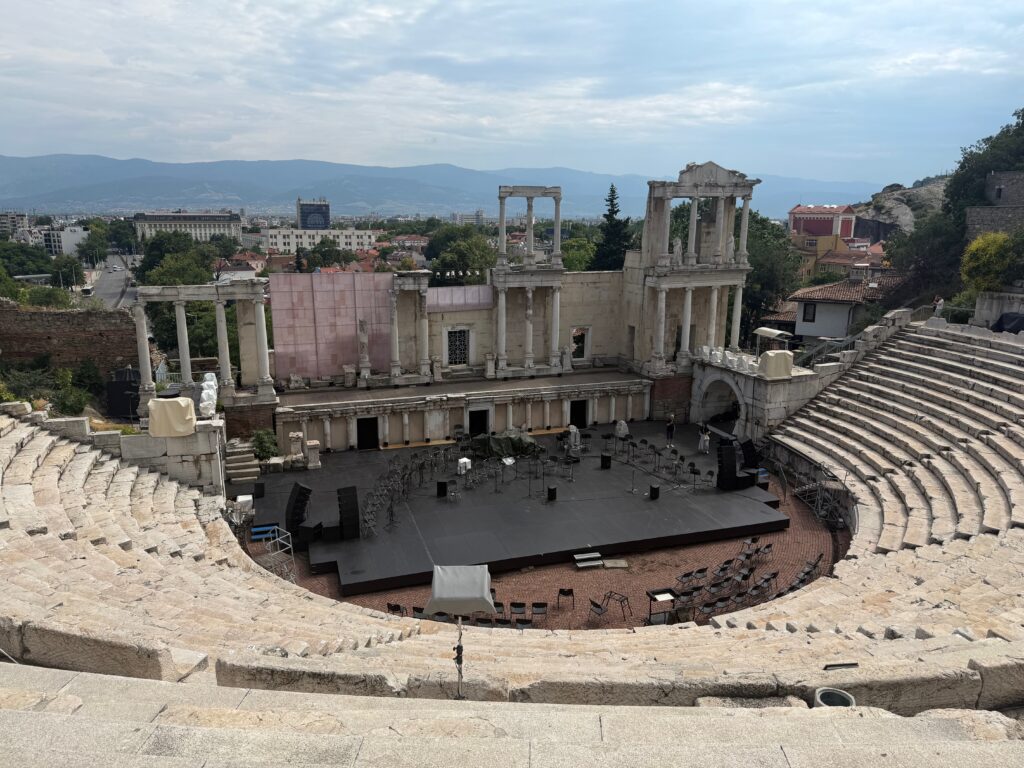
 Finally, we went to the Ancient Theatre of Philippopolis, nearly 2000 years old (built in the 1st century). It’s one of the best-preserved Roman theaters in the world. Has a semicircular shape, consists of 28 rows, and can accommodate 5000 spectators.
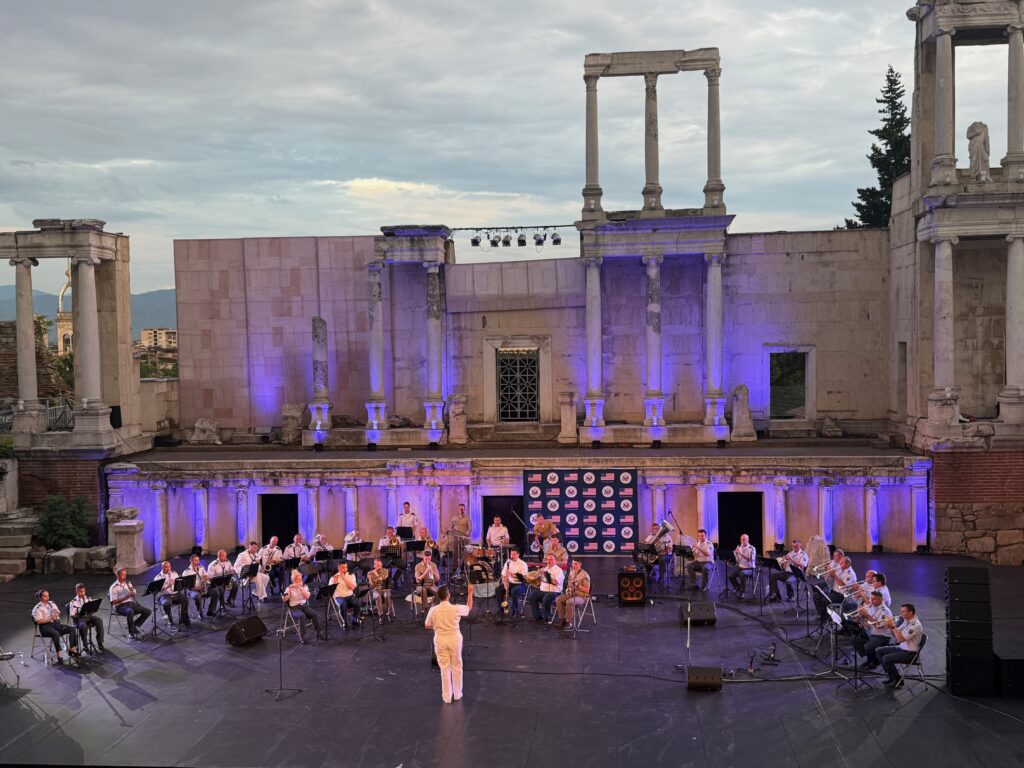
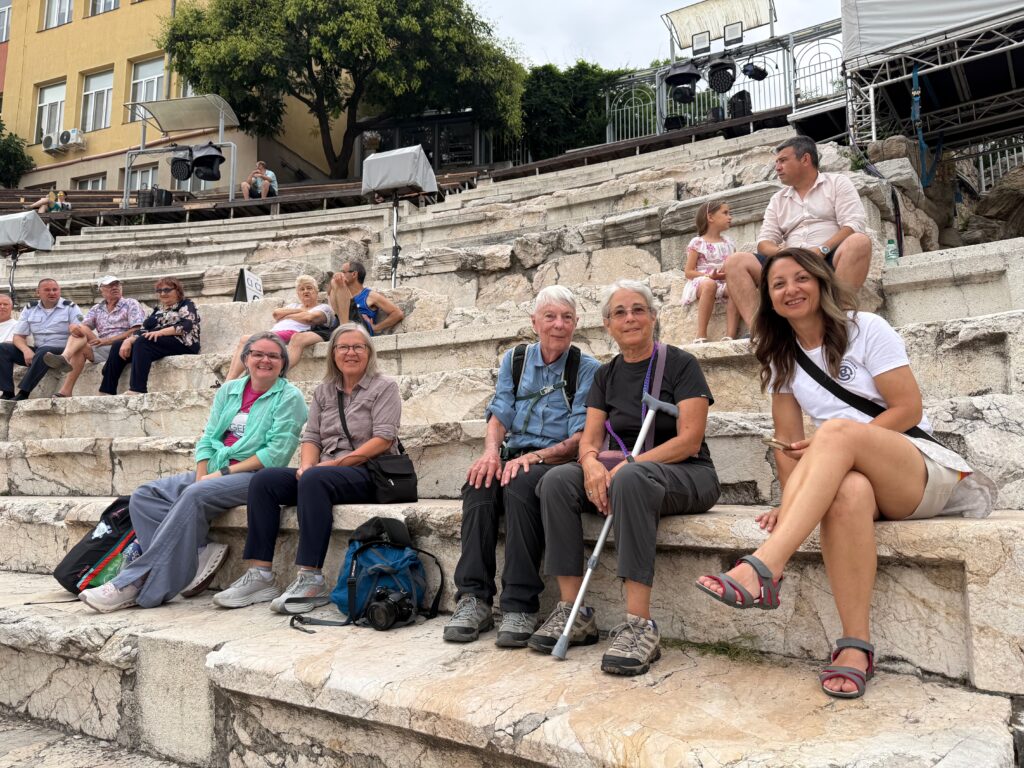 We came back here in the evening for a free concert that started at 7 pm. It was the Celebration Concert 250 Years of the United States. The participants were the U.S. Naval Force Europe Band, the Tennessee National Guard – 129th Army Band Representative Wind Orchestra, and the Orchestra of the Bulgarian Air Force. (All this info courtesy of our tour leader’s research.) It was a quite likeable show in a spectacular setting.
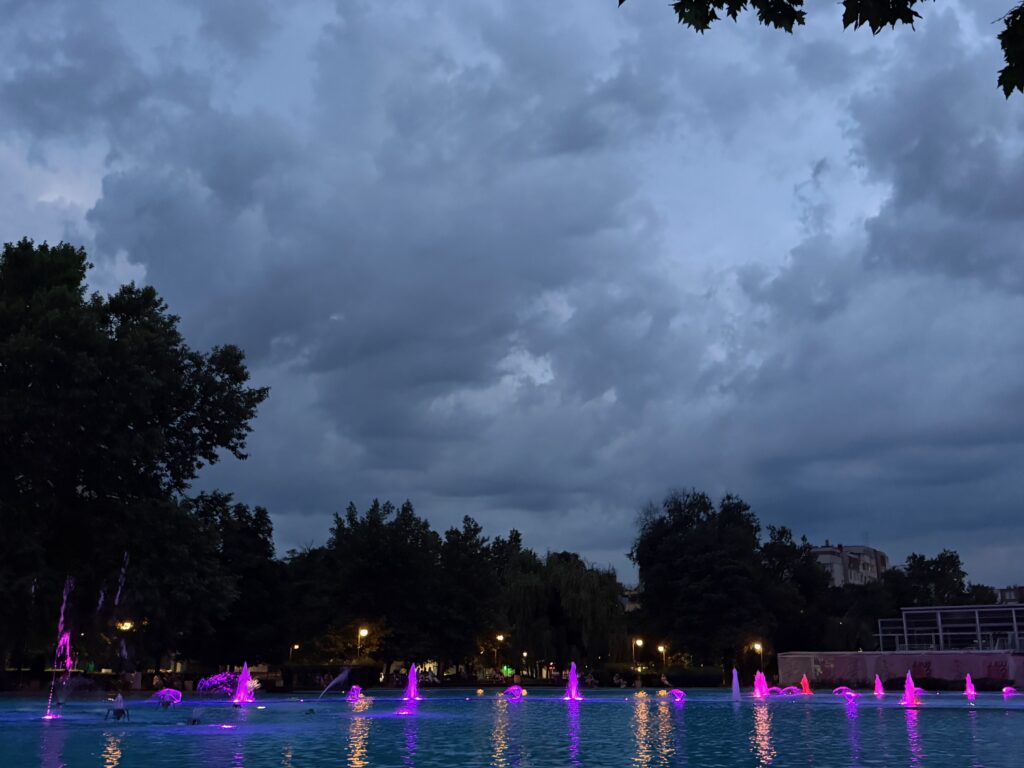
 But the day wasn’t over yet. We wanted to see the Singing Fountains, a 25-minute long water and light attraction in the historic Tsar Simeon’s Garden, starting at 9:30 pm. We waited for the show, but the performance didn’t happen – we didn’t know why. So, just enjoyed each other’s company before going back to the hotel.