If you are in a museum, you can walk quite a lot there. That’s what happened to us on this day. Out of the many museums of Paris we checked out two famous ones, plus walked along the vibrant Champ-Élysées. A total of 19.7 km. At times, we felt exhausted.
Day 4, Saturday, June 6: Paris
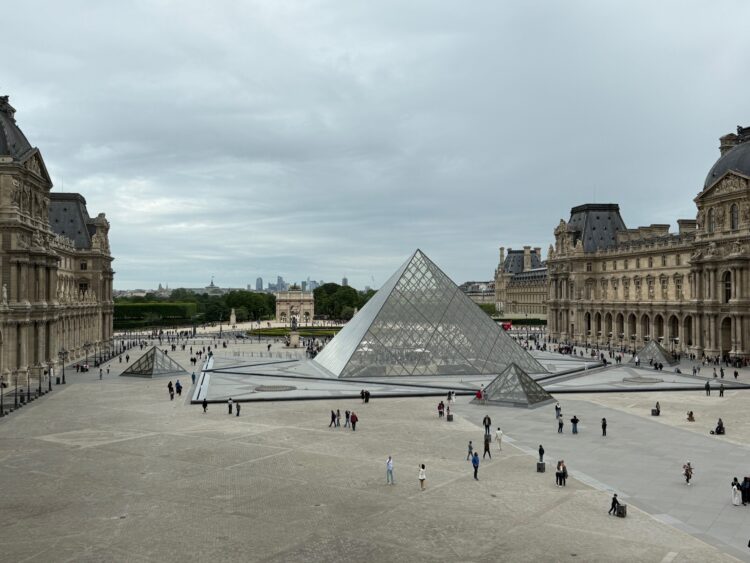
The morning was dedicated to exploring the world’s largest museum, the Louvre (Musée du Louvre). It dates back to the 1200s and was once a royal residence. It became a museum during the French Revolution, in 1793.
With nearly 9 million visitors a year, the Louvre is crowded. Three wings (Denon, Sully, Richelieu), 8 departments, 403 rooms, some 35,000 works of art on display, a possible 14.5 km walk in rooms and corridors – you truly have to pick and choose what to see.
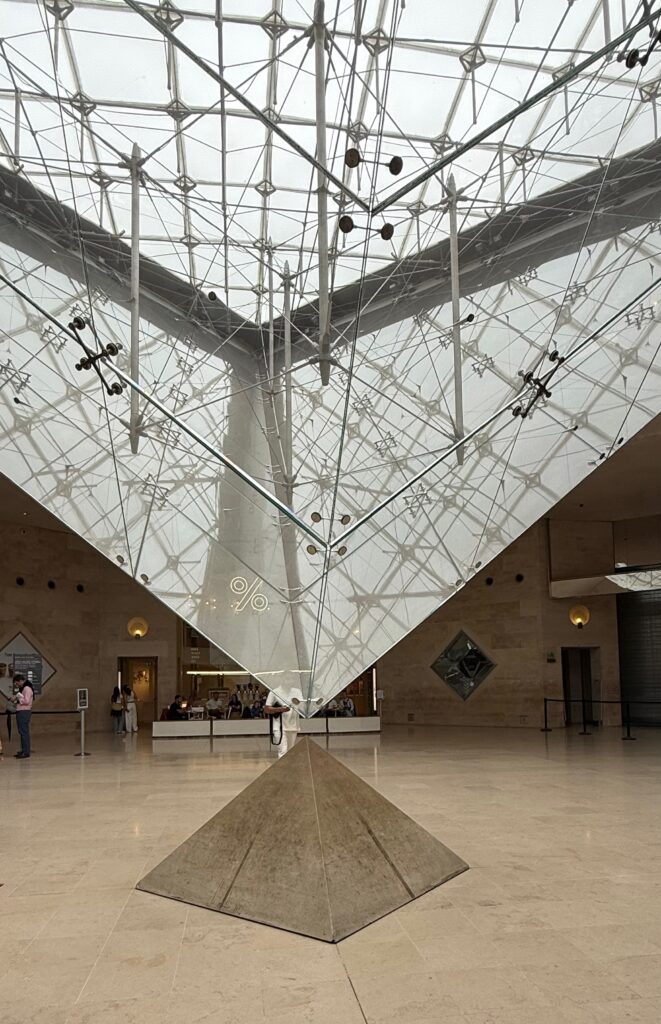
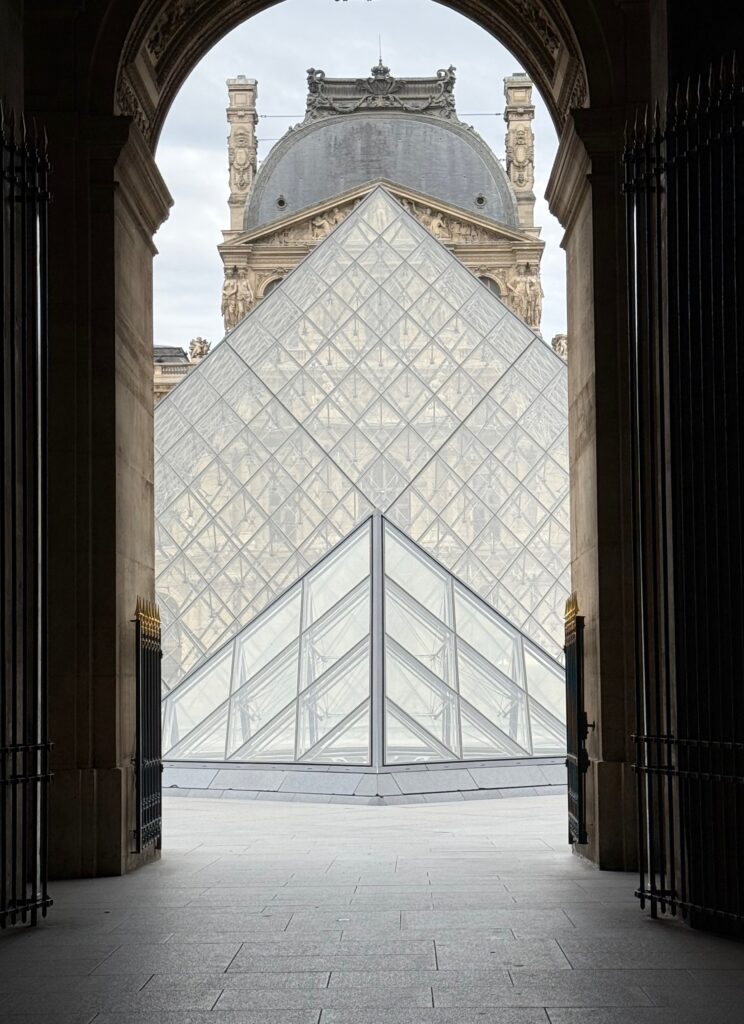 We bought our time entry tickets online for 9 am, five weeks before this day. A little after 8 am, we were already standing in front of the Louvre Pyramid, the main entrance. We got here easily on the metro (Lines 12 and 1).
Patiently standing in a queue (we were #16 and #17) it felt good that we were going to beat the crowds. It was chilly and windy (14 degrees of Celsius), but thankfully we had our layers on, including our rain jackets (not like those who were wearing shorts and short sleeve shirts). The number of visitors grew rapidly.
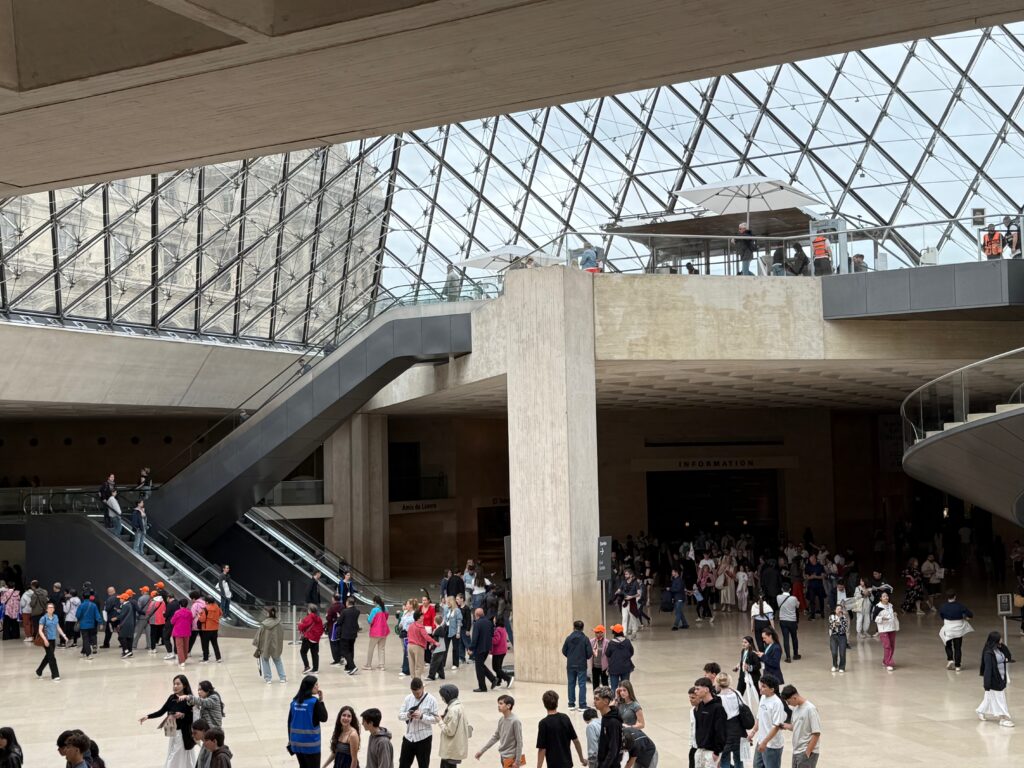
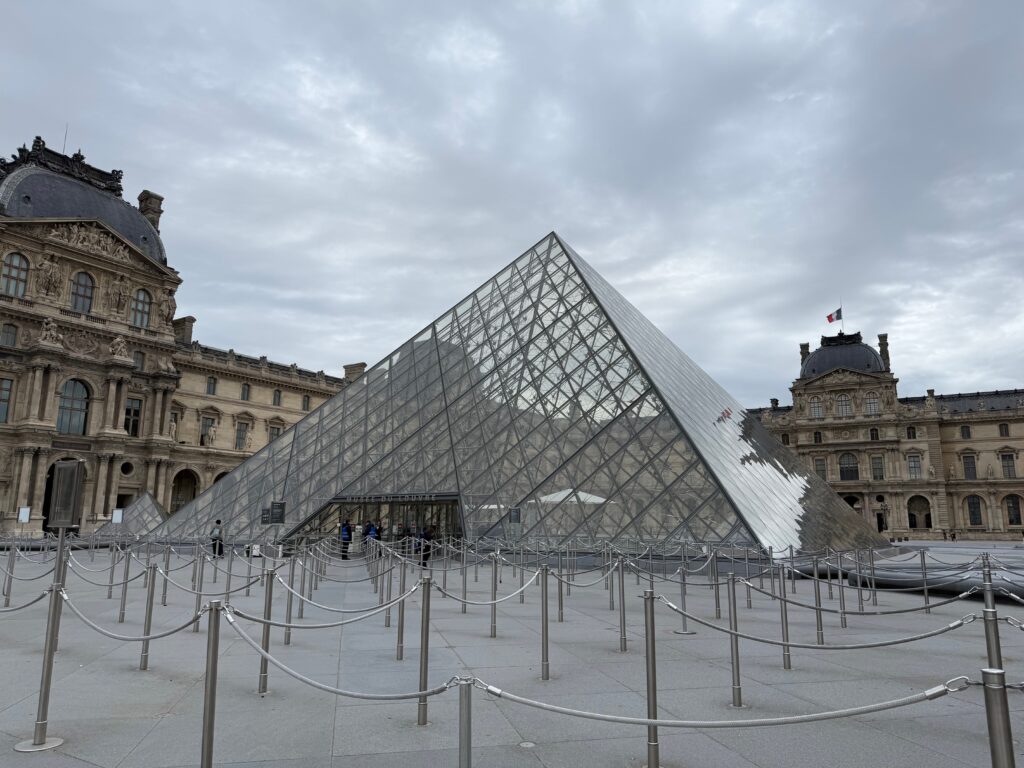 Promptly at 9 am, they let us into the museum. After the security check, suddenly there were so many people in the main hall. Where did they come from? We forgot about the other three entrances.
I quickly picked up the museum map (available in 9 languages) at one of the information desks, then we headed directly to see Leonardo da Vinci’s masterpiece, the Mona Lisa. Entering the Denon Wing, we showed our entrance tickets, and walked up to the first floor.
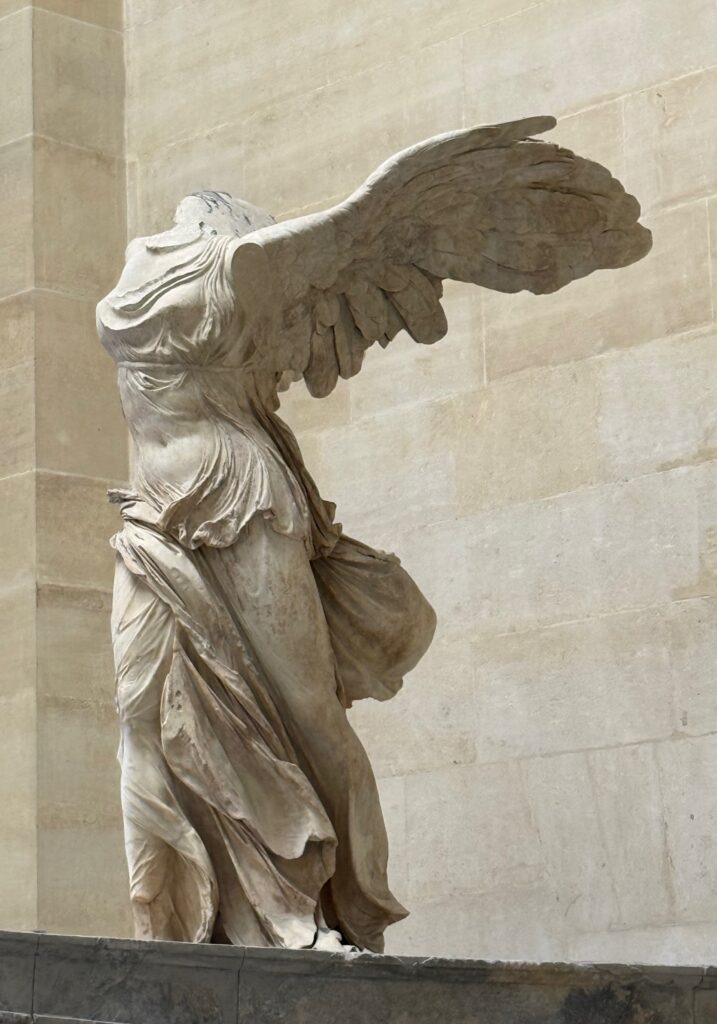
On the way, at the top of the monumental Daru staircase, we noticed one of the famous statues of the Louvre. The Winged Victory of Samothrace “seems to float through the air,” states the museum’s webpage. The ancient statue, made of marble from Paros, honors Nike, the Greek goddess of victory. It was created about 200 BCE, discovered in pieces, assembled into its original form, and placed in the Louvre in 1884.
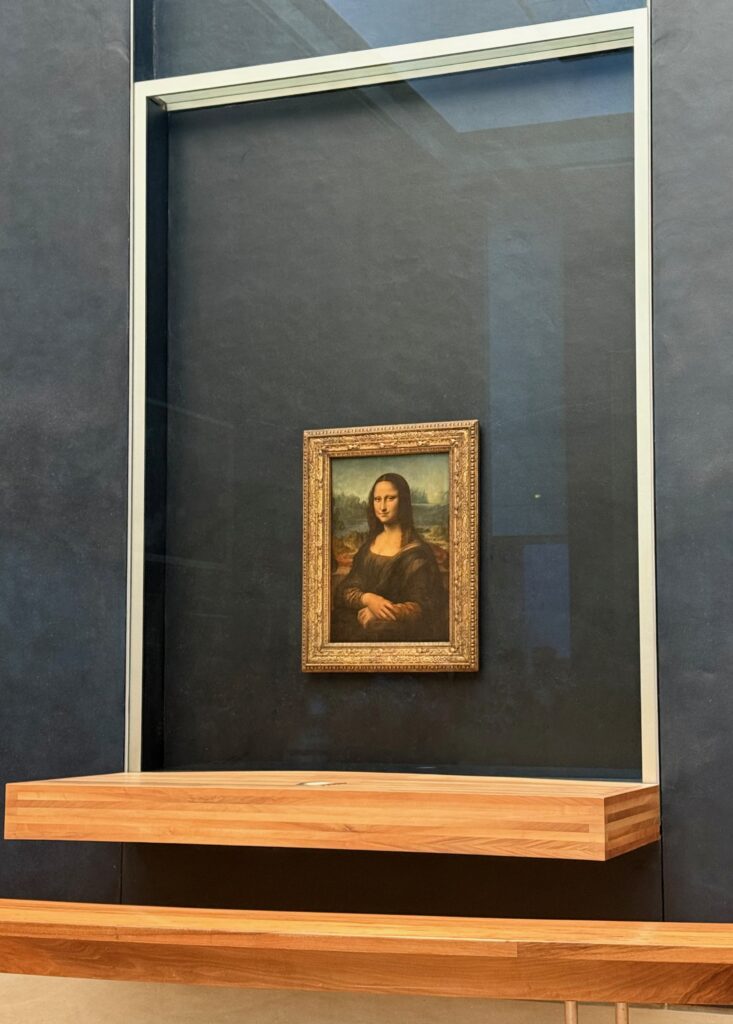
 And there we were, at 9:12 am, in room 711 (the largest in the palace) standing in front of the world’s most famous painting, the Mona Lisa. Over the centuries, her smile has fascinated many people.
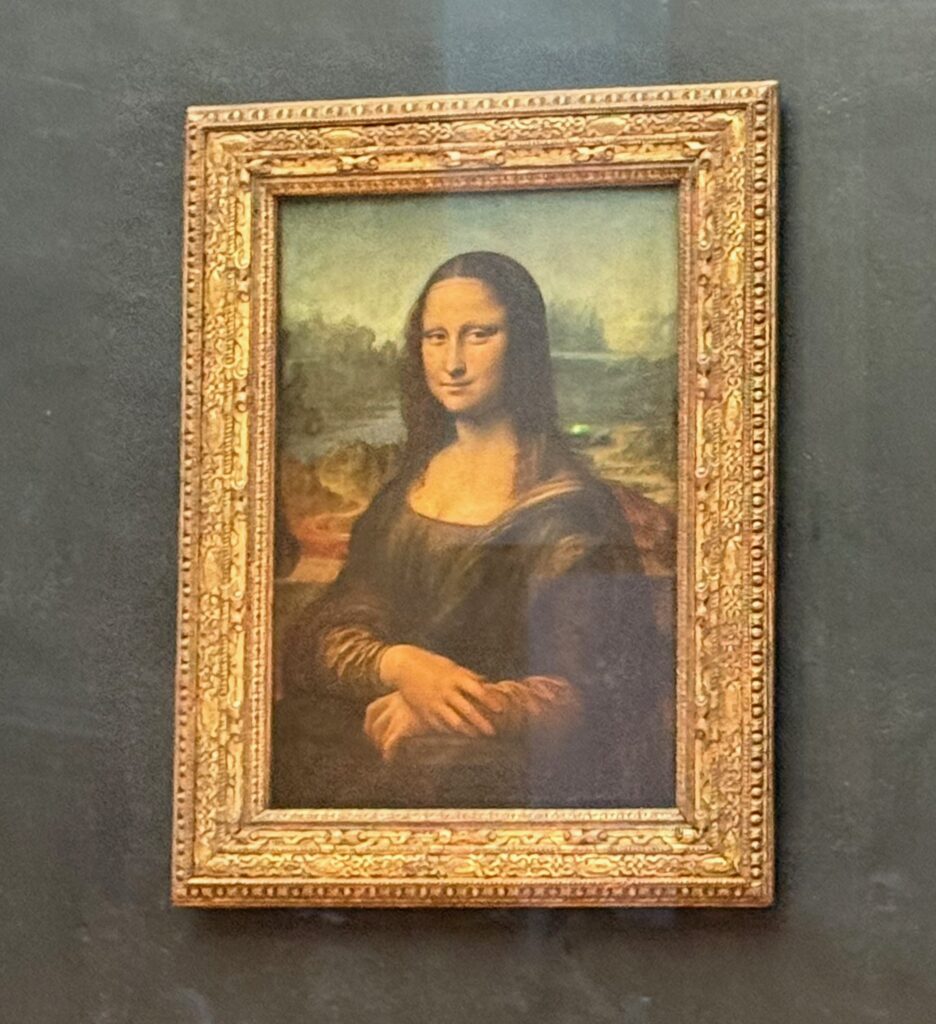 The painting displayed in a temperature and humidity-controlled glass case in the center of the room. Leonardo started to paint this portrait of Lisa del Gioconda in about 1504 in Florence, and King Francois I bought the painting from him in 1518. Since the French Revolution, the Louvre has been the home of this masterpiece.
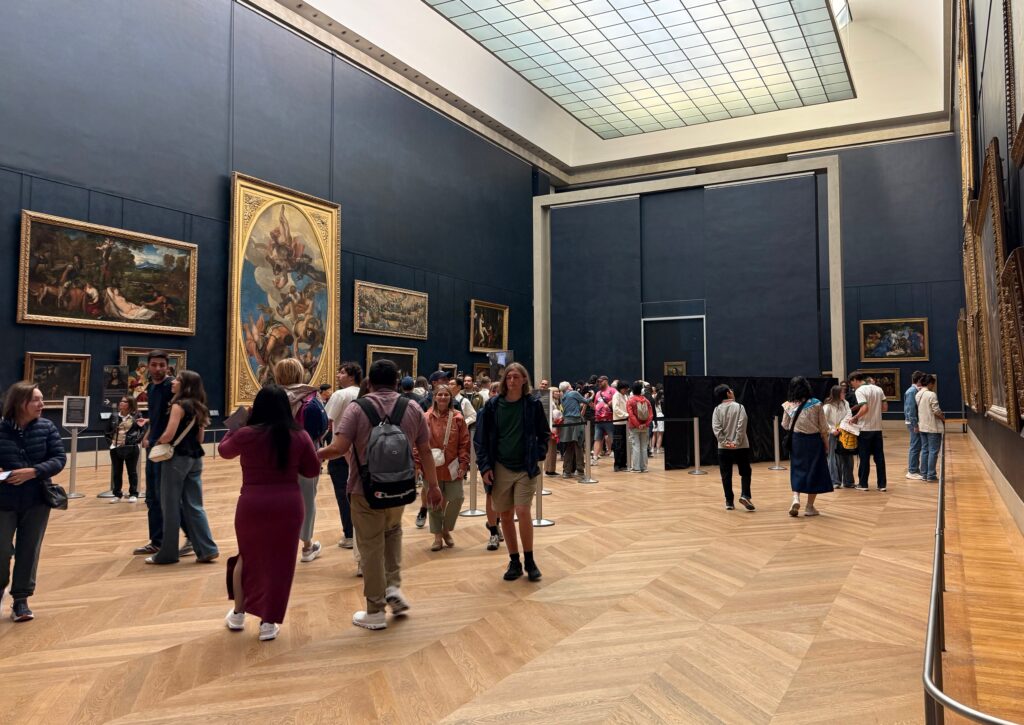
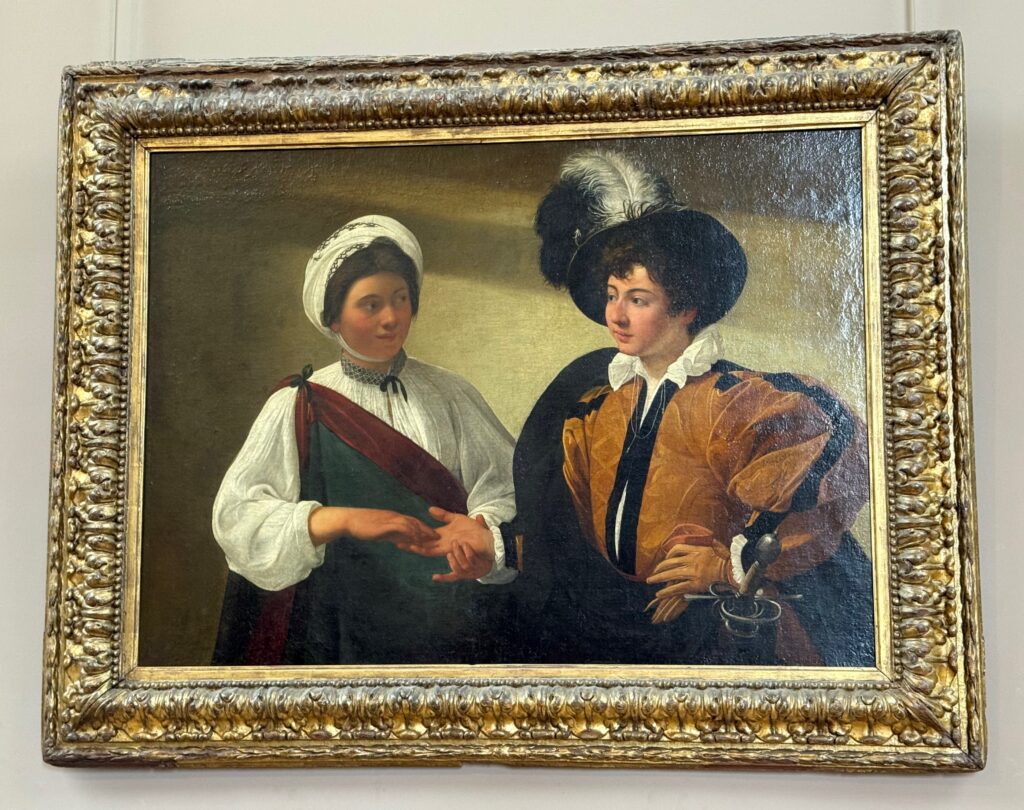
After admiring some more Italian paintings (for example from Michelangelo, Raffaello, Botticelli) and numerous paintings from Spain and France, we continued our tour to the Sully Wing.
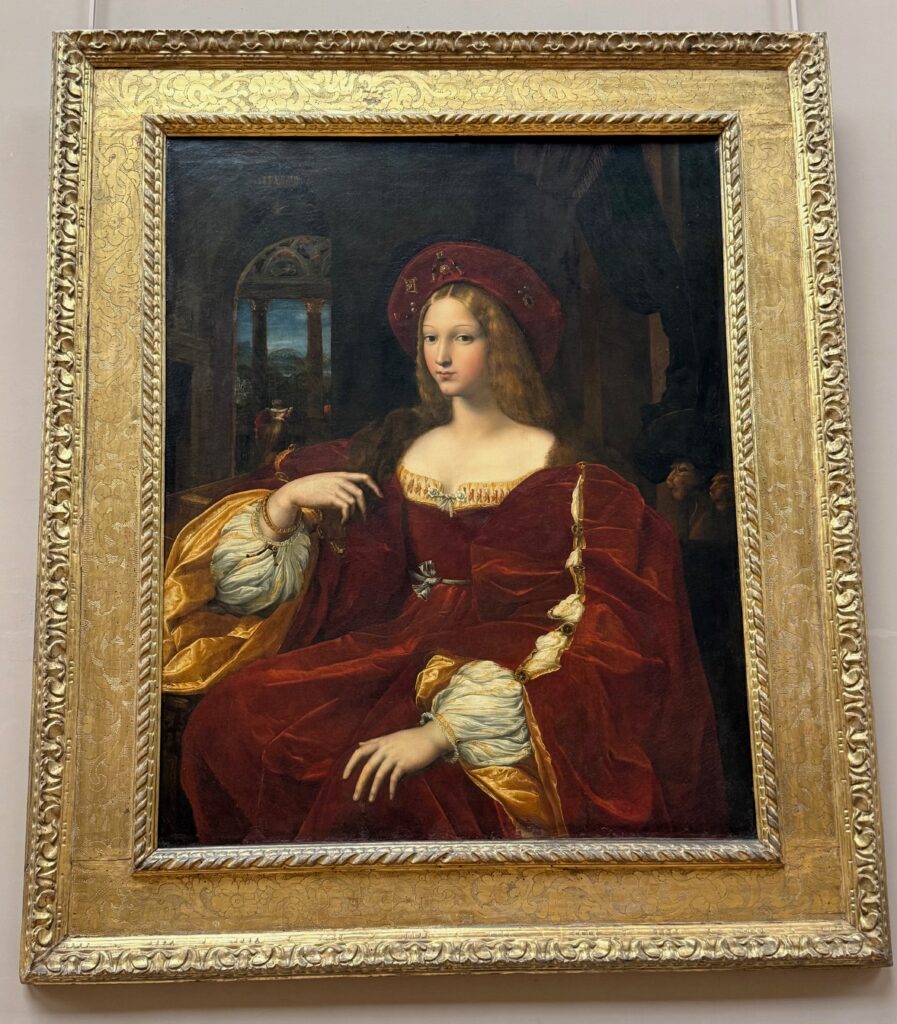
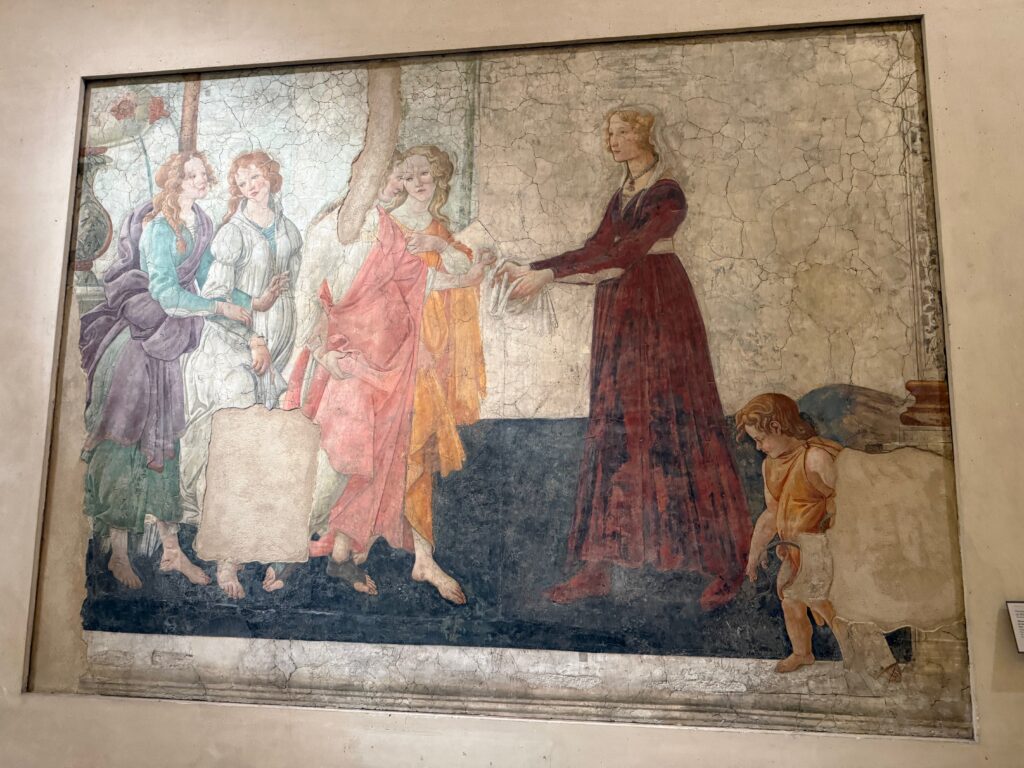
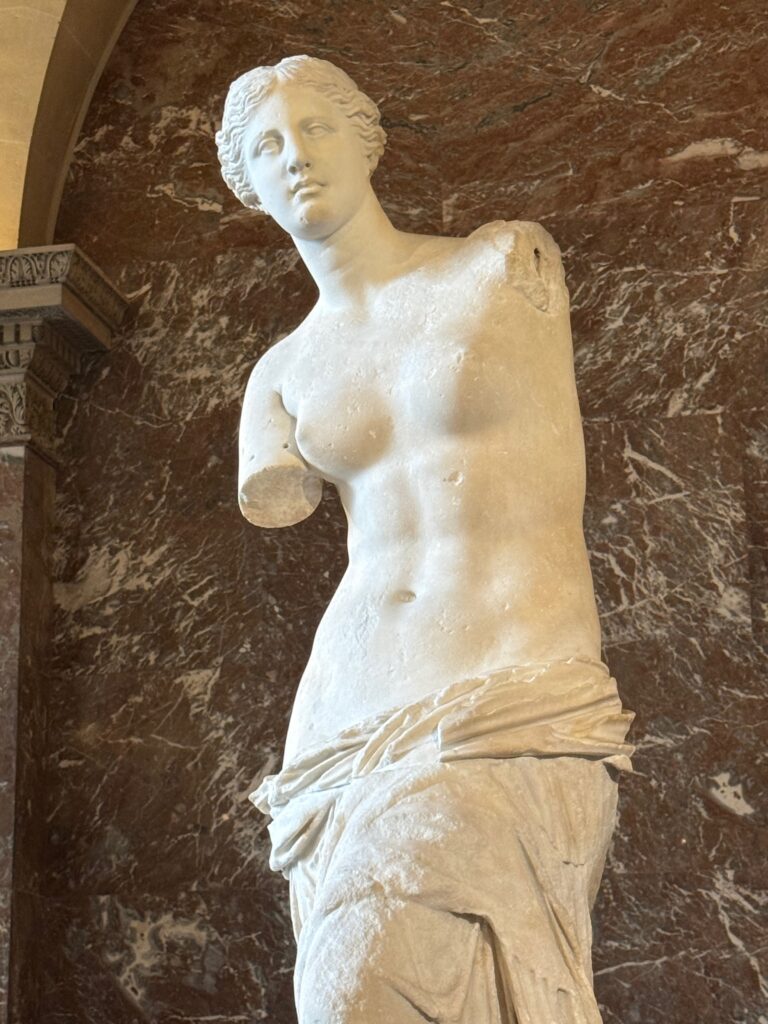
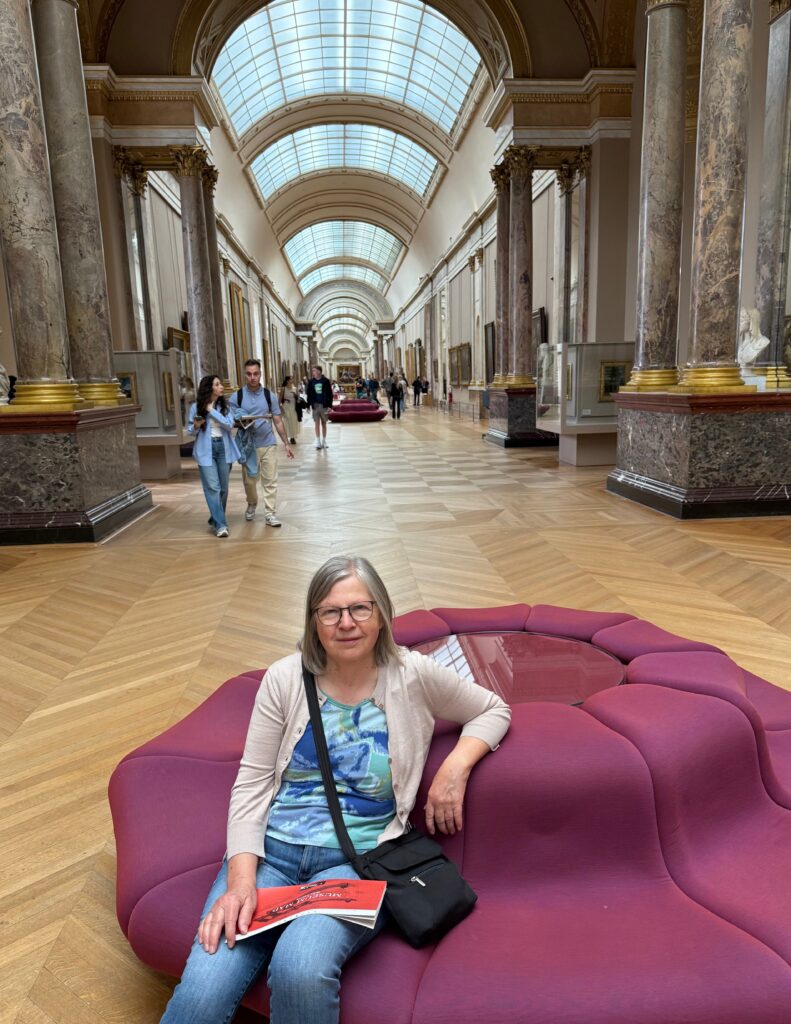 After viewing some Greek antiquities, we stood in front of the Venus of Milo. This statue, together with the Mona Lisa and The Winged Victory of Samothrace, is one of the three most famous female figures in the Louvre.
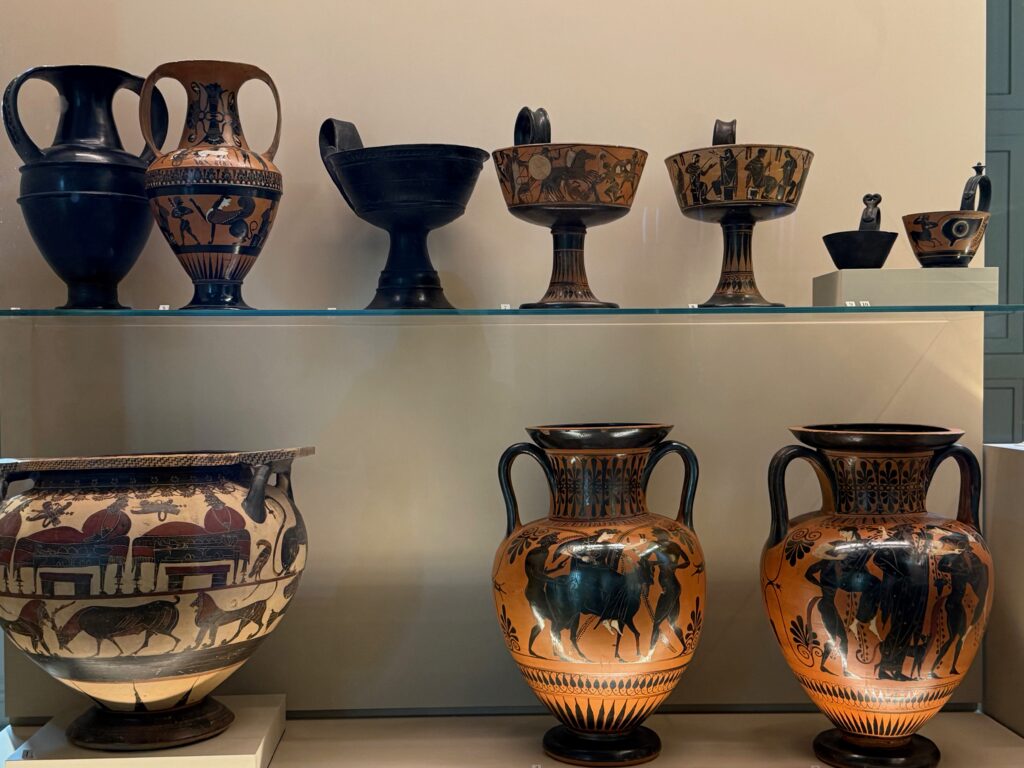
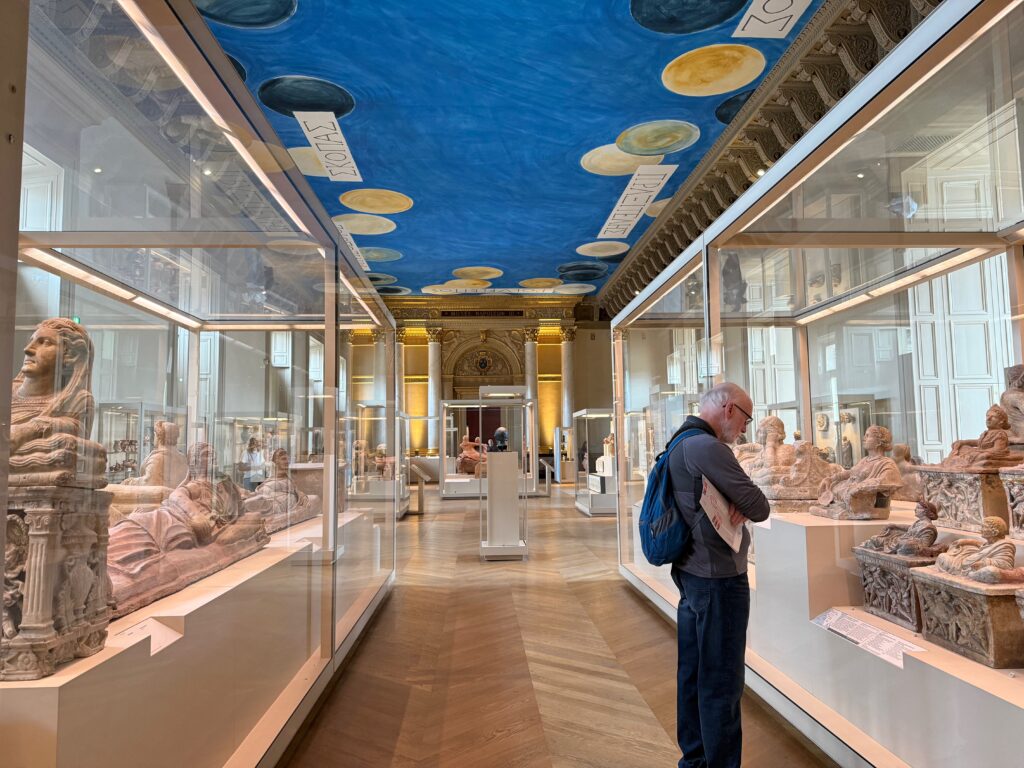
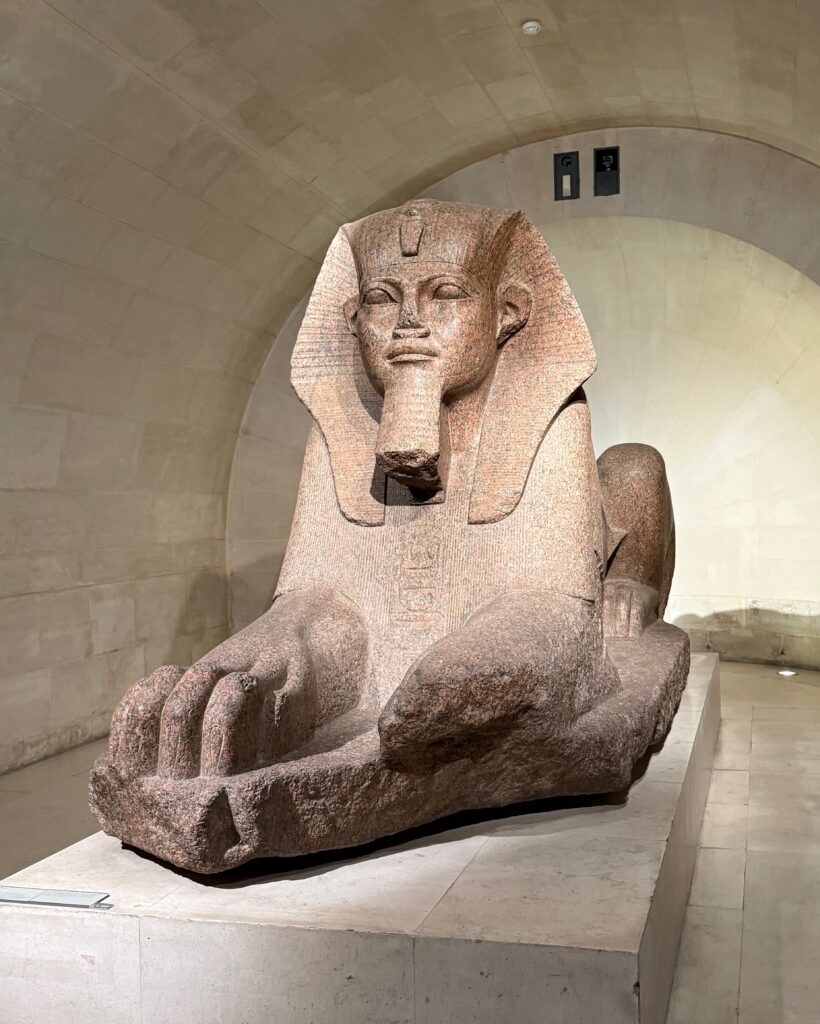
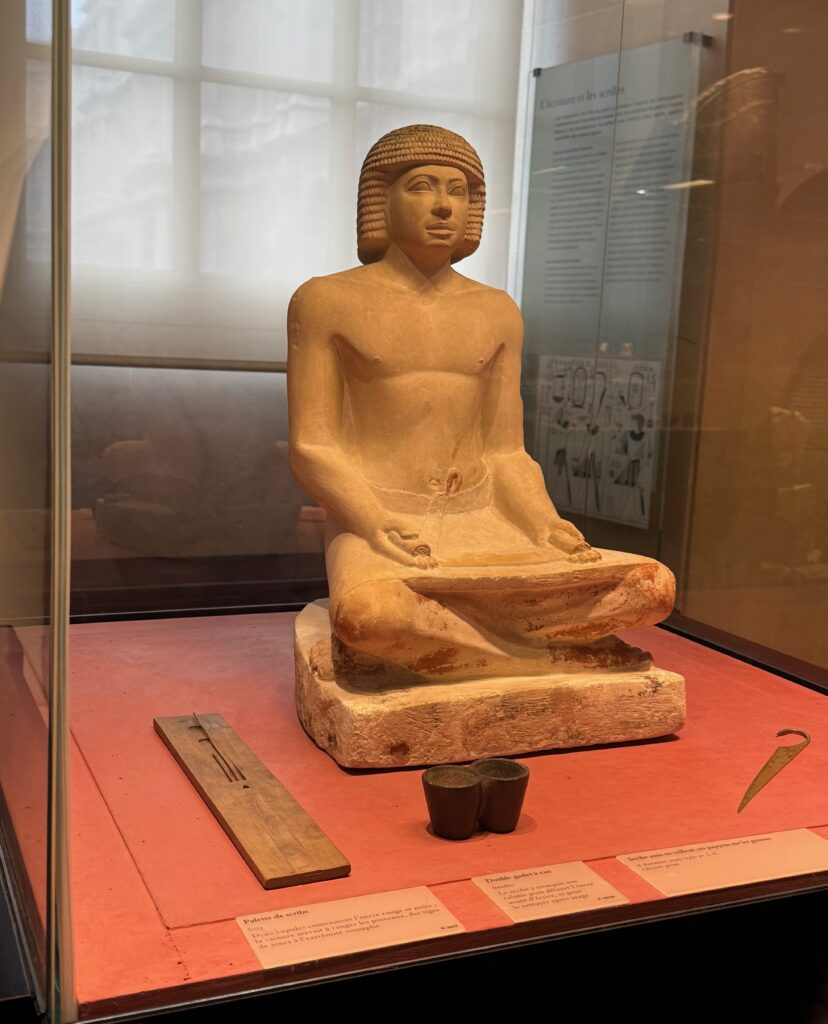
 We got a glimpse of Egyptian antiquities.
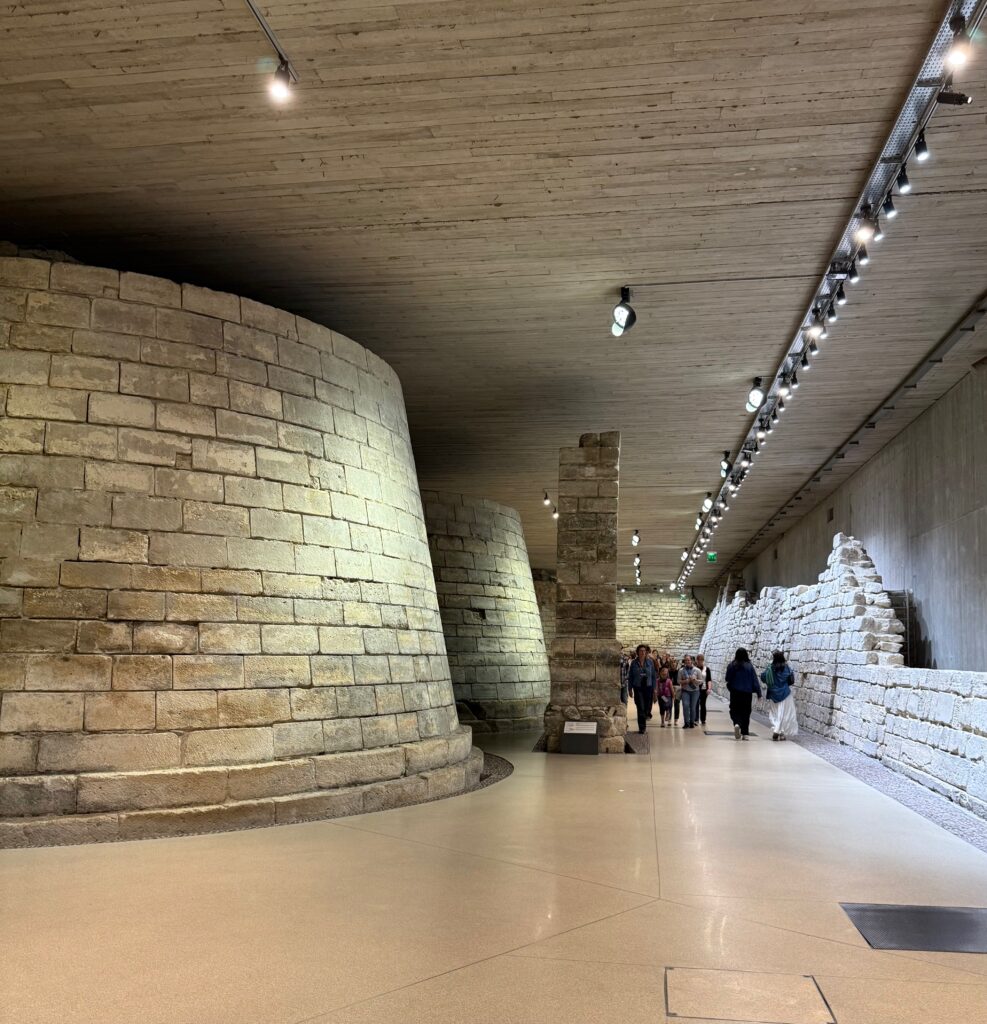
 On Level -1, we learned about the history of the Louvre.
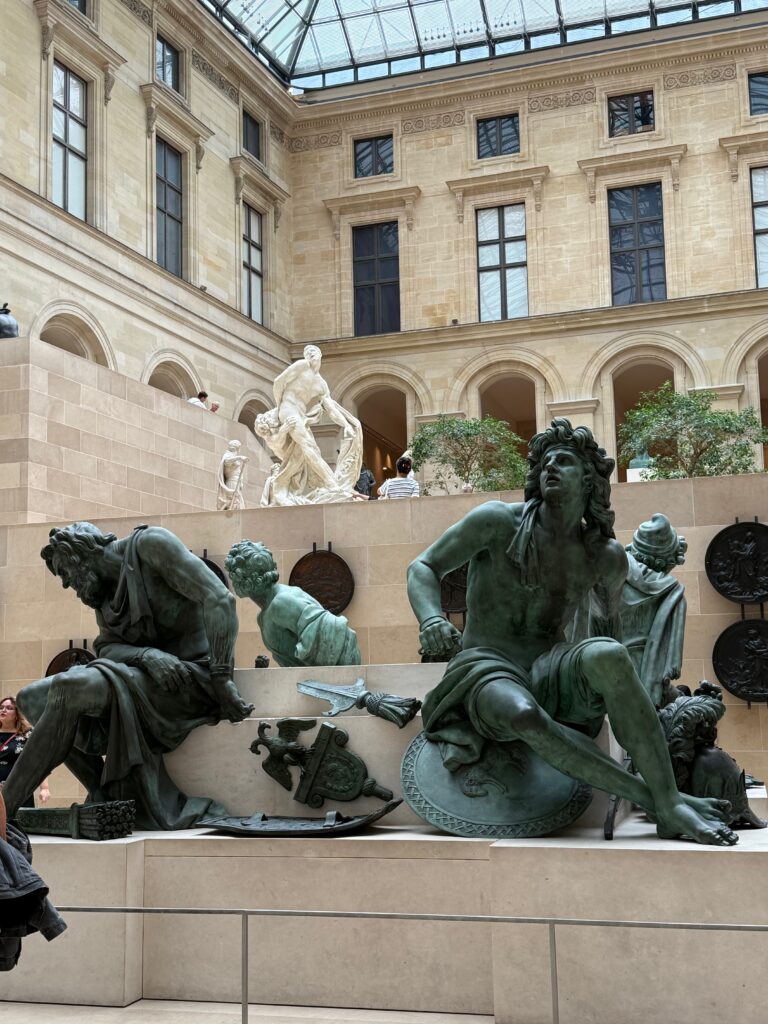
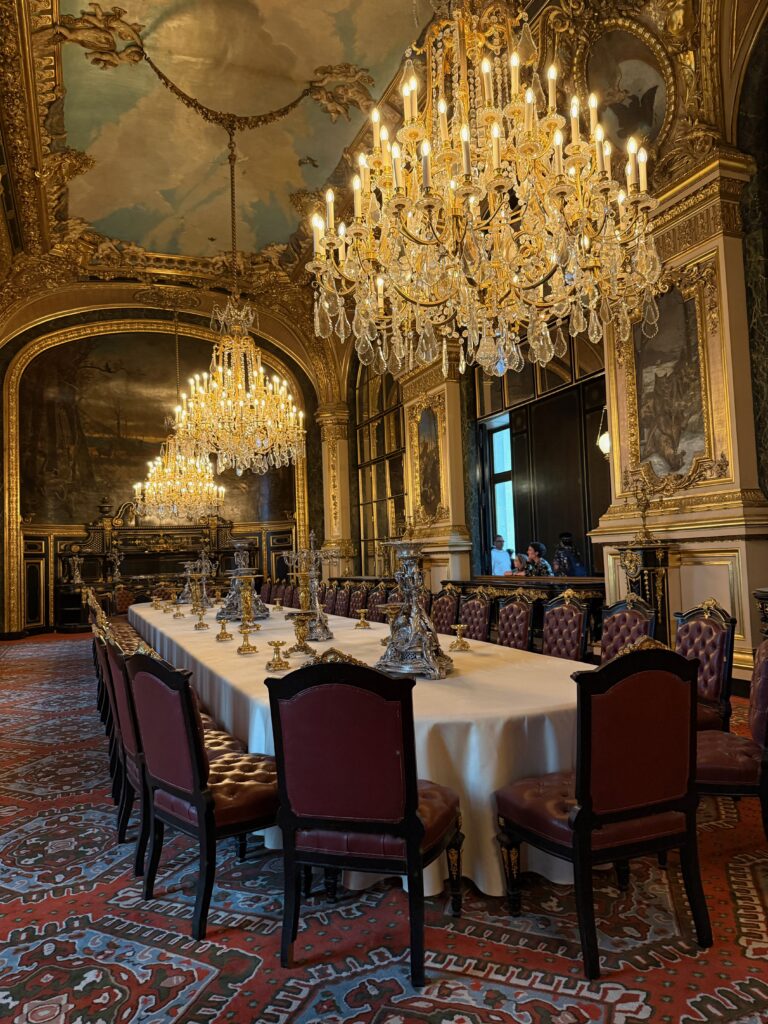
 A quick lunch around 11 am (while people watching), we then briefly checked out part of the Richelieu Wing. Saw some amazing French sculptures and some European decorative art.
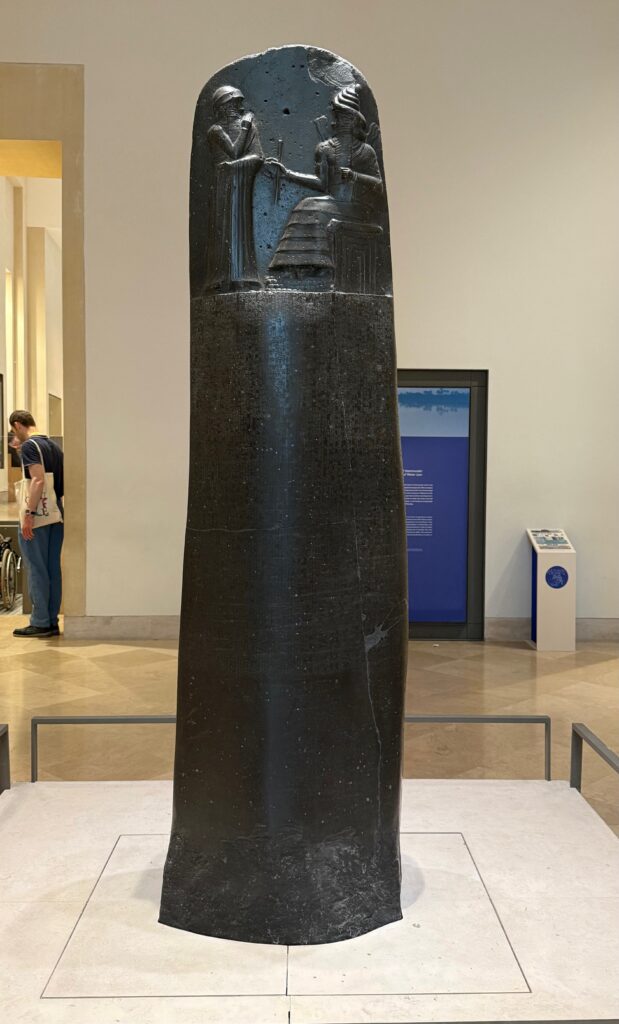
 One of the most iconic monuments of the ancient Near East, the Code of Hammurabi, which contains 282 legal judgments was also in this wing.
To avoid mental fatigue, after three and a half hours in the Louvre, we called it good.
Next on our list was to explore and enjoy the Tuileries Garden (Jardin du Tuileries), to the west of the Louvre. When we came out from the museum, heavy rain and strong wind greeted us. Despite the bad weather – after all we were from Seattle and couldn’t be bothered by some rain – we walked through part of the garden. No good photos though, sorry.
The garden felt peaceful. We didn’t see too many people. Not until we reached the Orangerie Museum (Musée de l’Orangerie). We wanted to see Claude Monet’s large Water Lilies murals. No luck. We didn’t have a timed entry ticket, and the lines were too long.
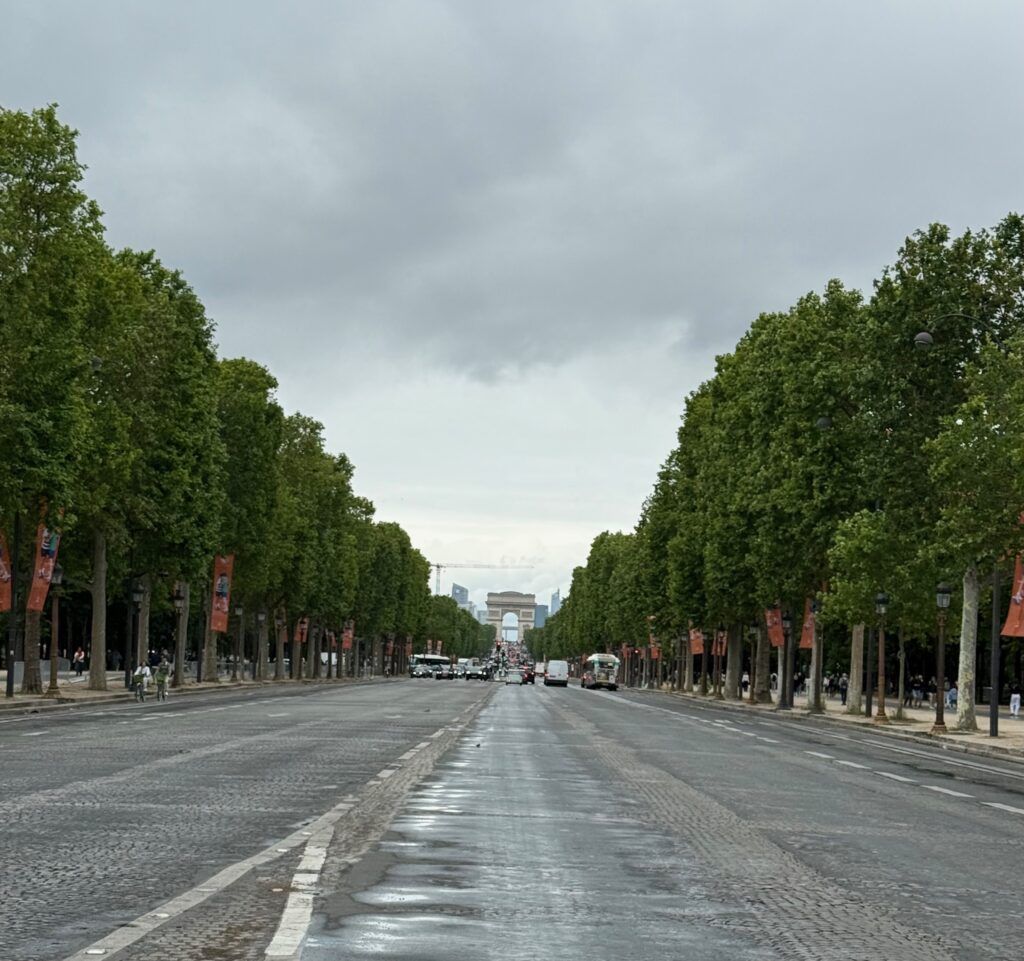
The rain eased a little bit, so we started our slow walk along the Champ-Élysées.
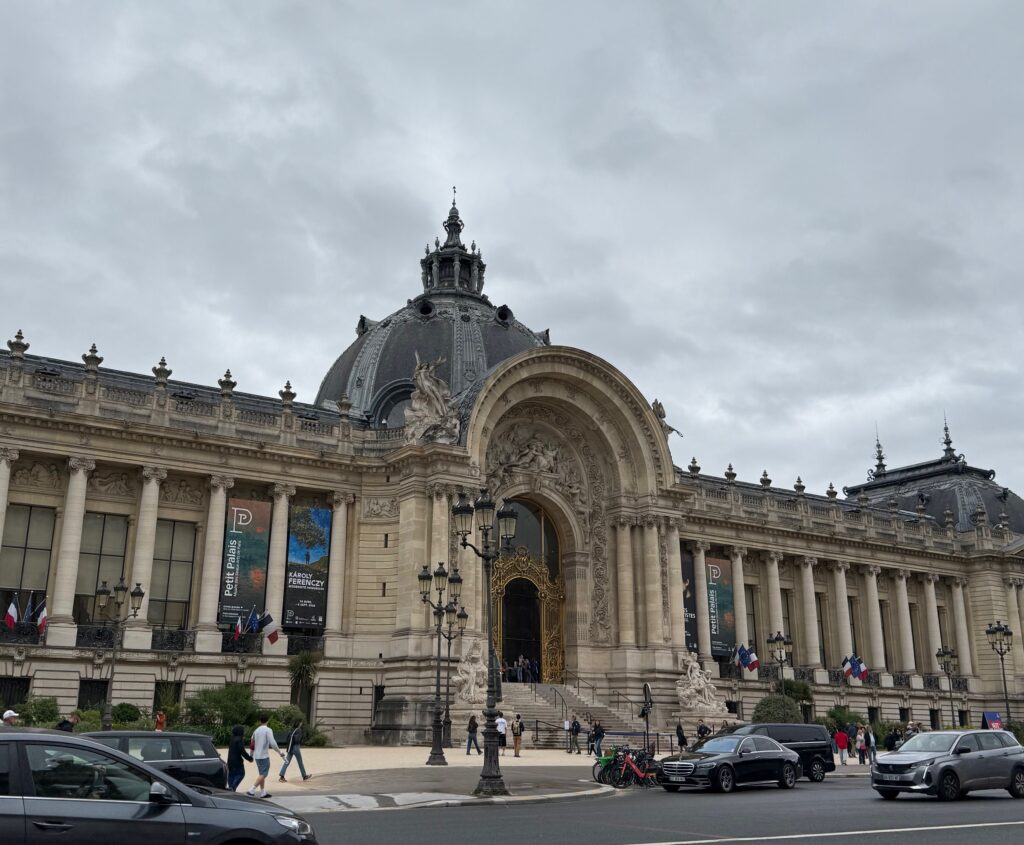
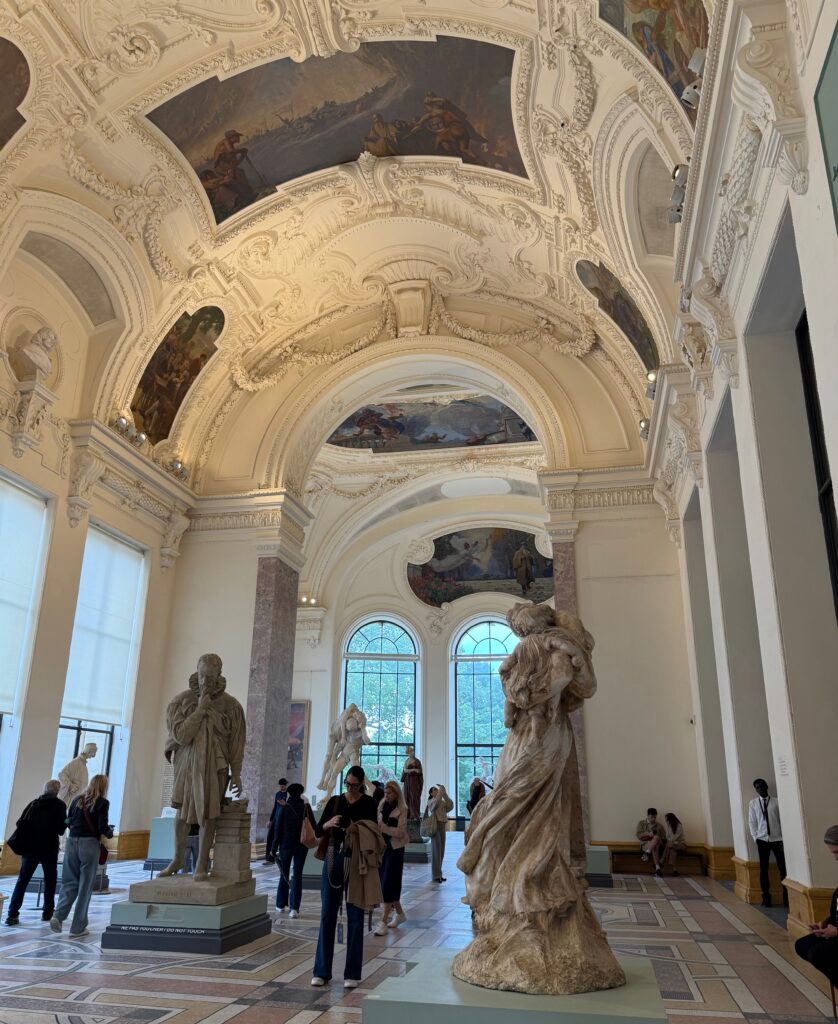
 Along the way, we took a detour into the Petit Palais, but unfortunately didn’t feel enough energy to check their recent exhibition of the works of the Hungarian painter Károly Ferenczy.
 Mid-afternoon, at the western end of the Champ-Élysées, we reached the Arc de Triomphe (L’Arc de Triomphe). The impressive 50-meter tall arch was commisioned by Napoleon in 1806 and commemorates his victory in Austerlitz.
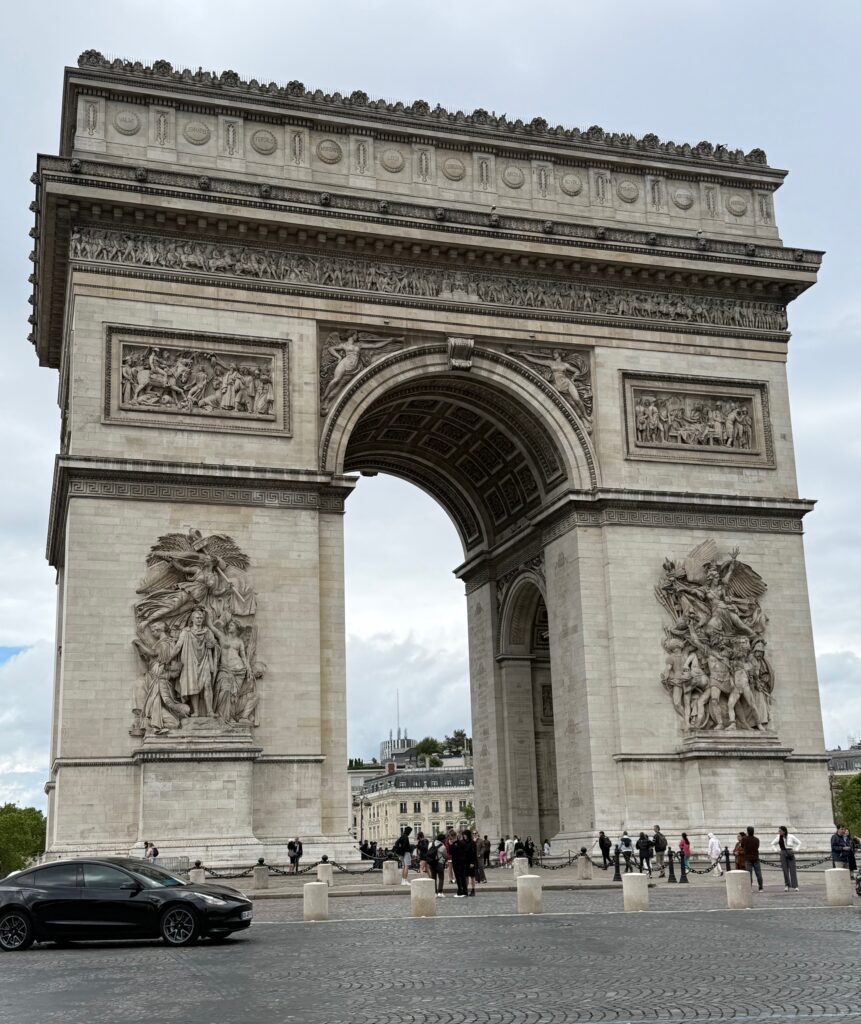 Through an underground passage we got to the arch (which was otherwise surrounded by constant traffic). Underneath the Arc de Triomphe is the Tomb of the Unknown Soldier that honors the French soldiers who died in World War I and World War II.
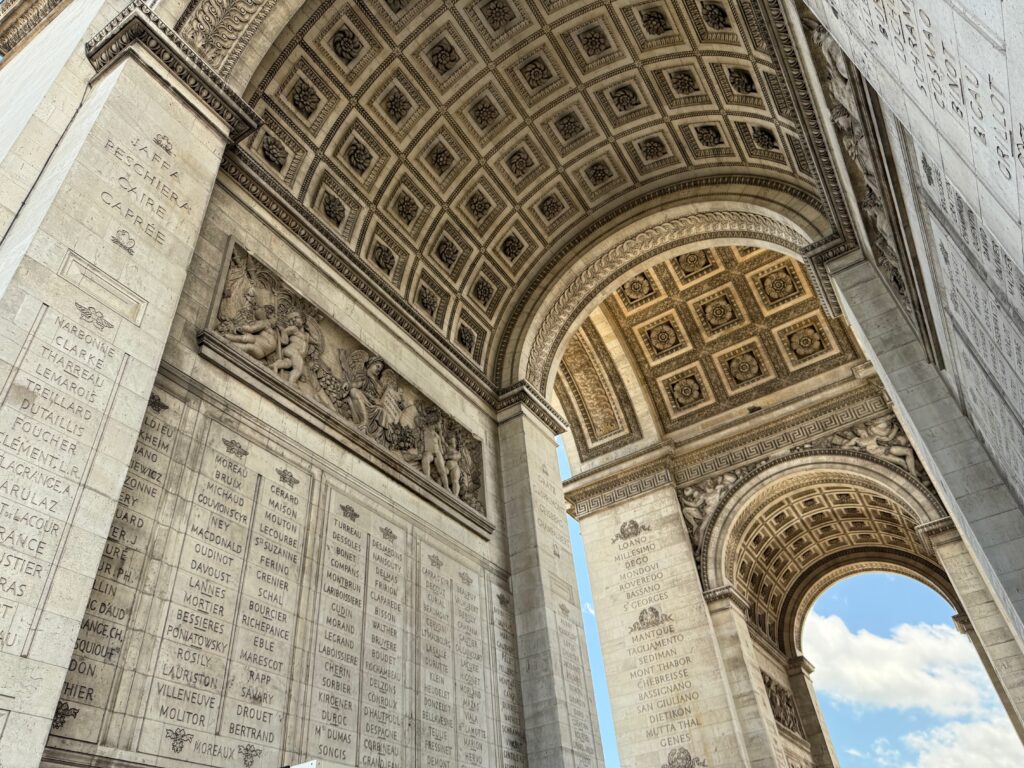
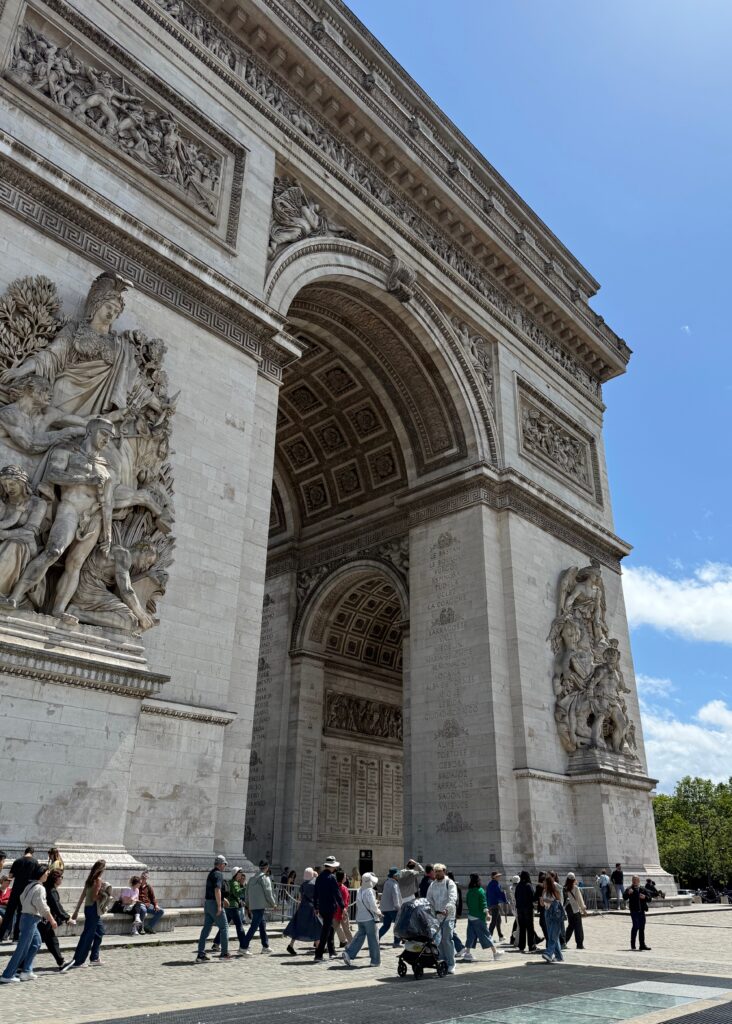
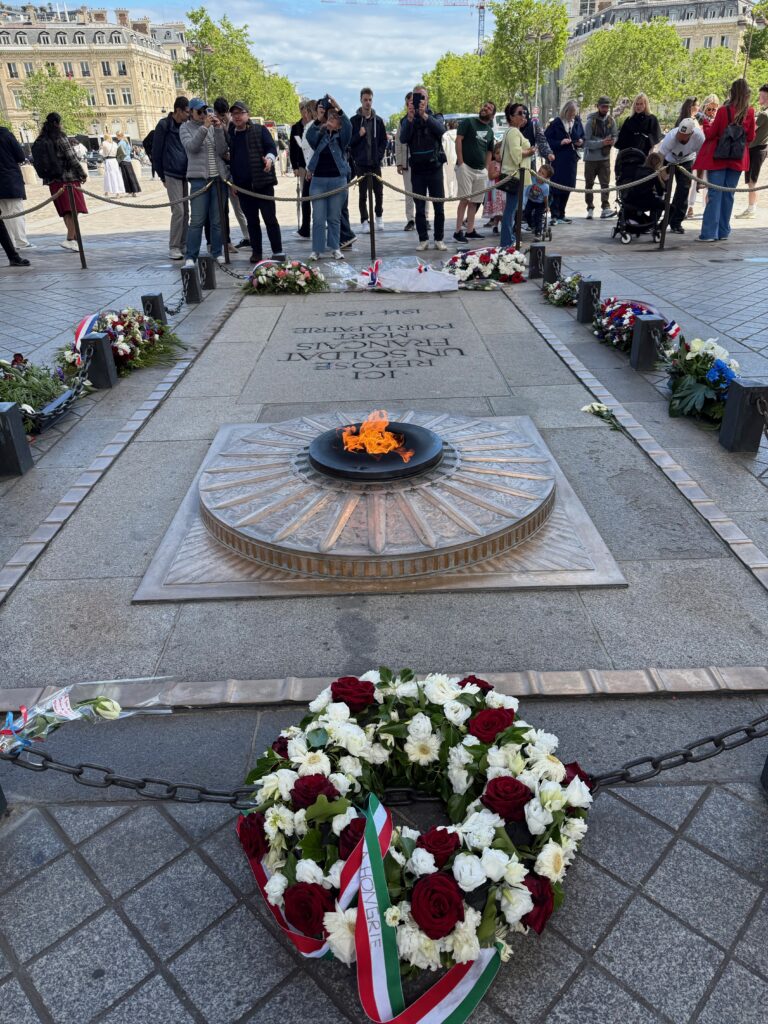 From the Arc de Triomphe we even got a view of the Eiffel Tower.
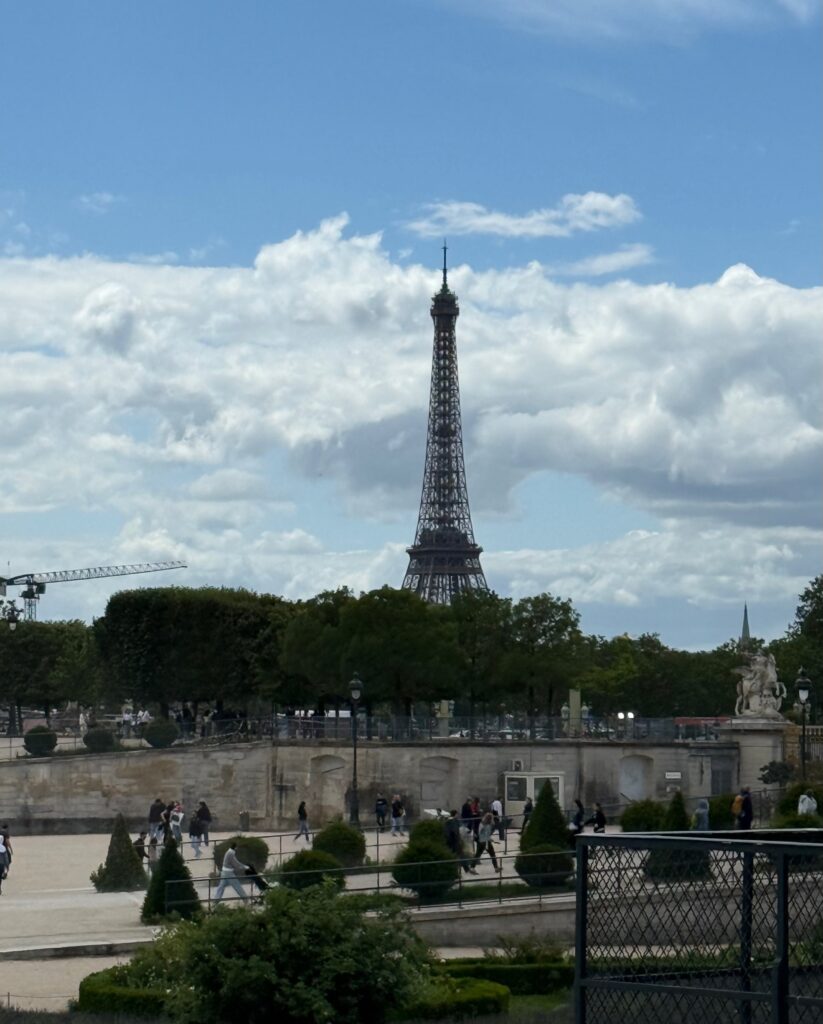 Since it was only around 3 pm, we decided to see whether we could get into the Orsay Museum (Musée d’Orsay). Took the metro (Line 1) to the stop called Concorde, and from there we walked through the Tuileries Garden to the museum. This time we saw many people and some unique sculptures in the garden.
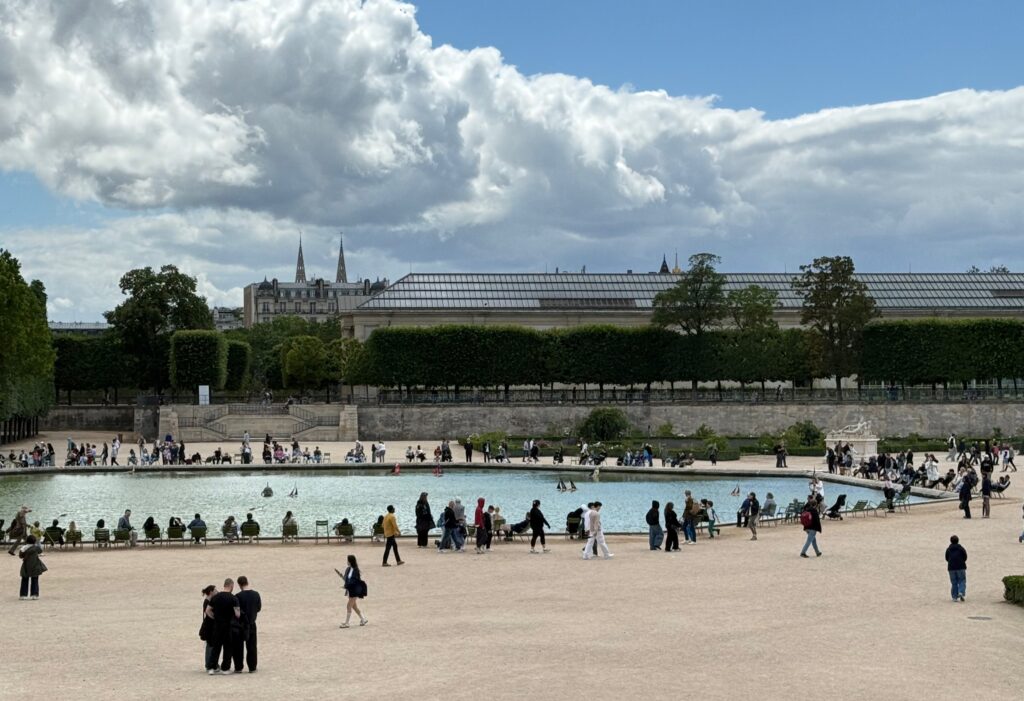
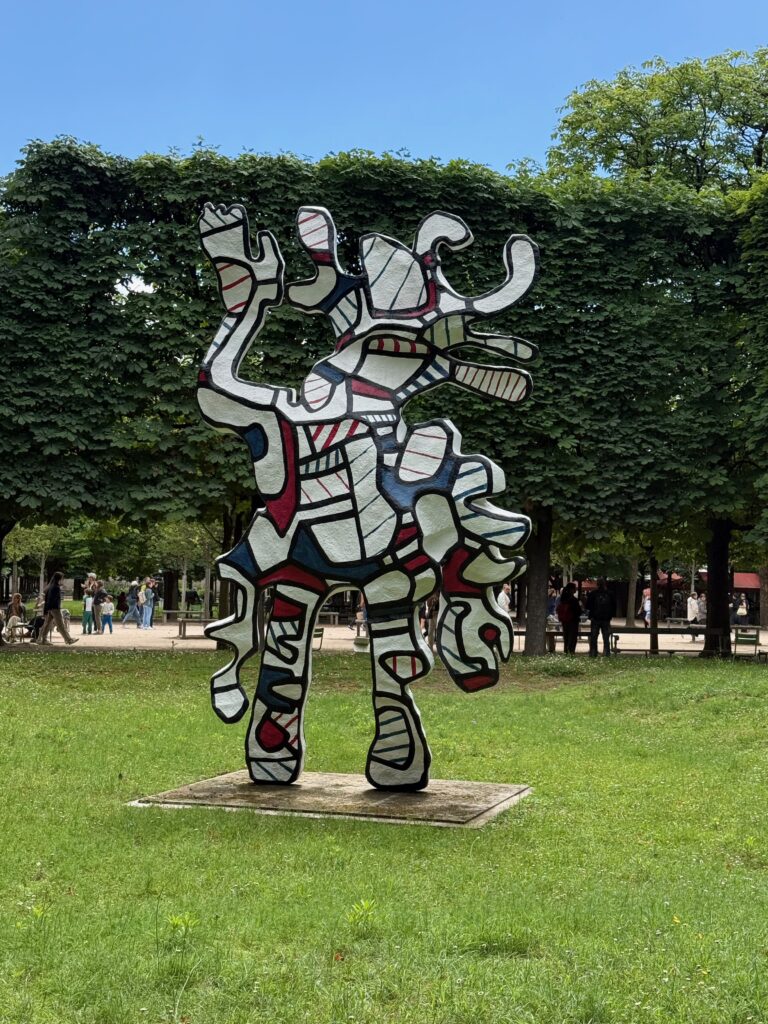 We got lucky, bought our tickets, and spent a good hour and half enjoying France’s collection of 19th century paintings.
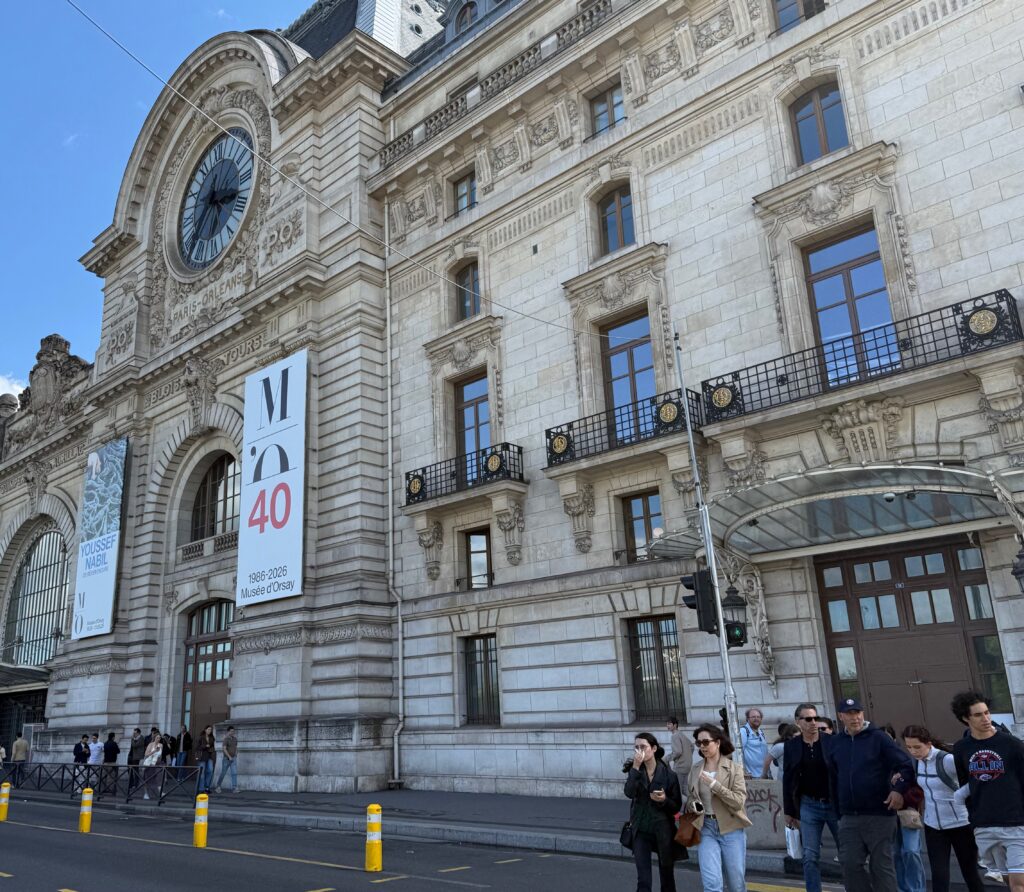
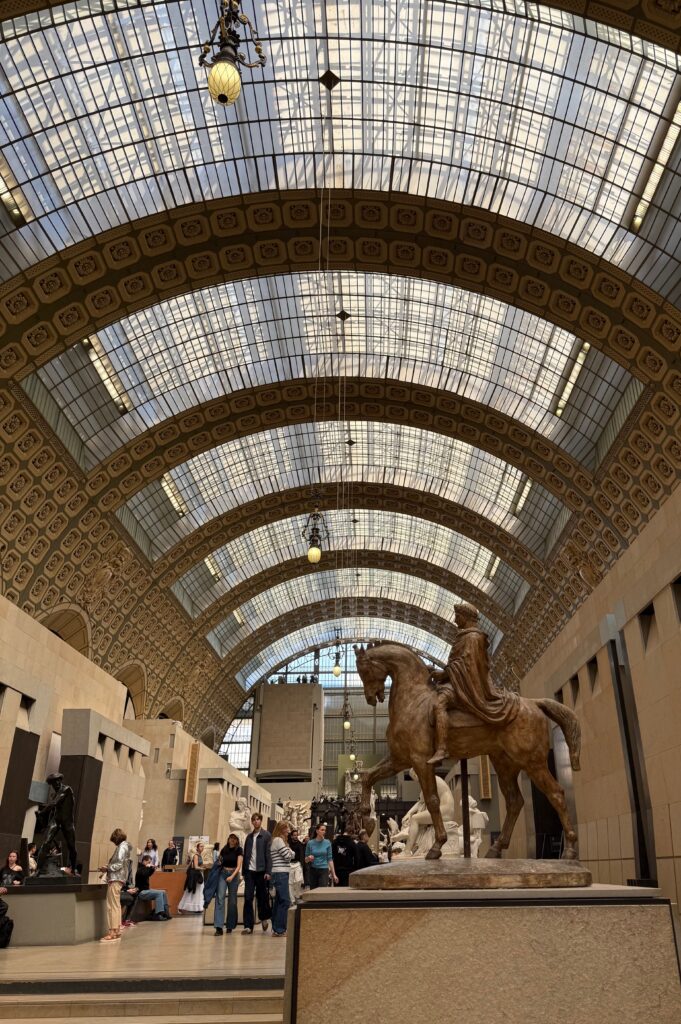
The Orsay Museum is so unique; it’s housed in an old train station. Entering it we immediately saw some very nice sculptures, then checked out a special exhibition devoted to Renoir’s drawings, largely unknown.
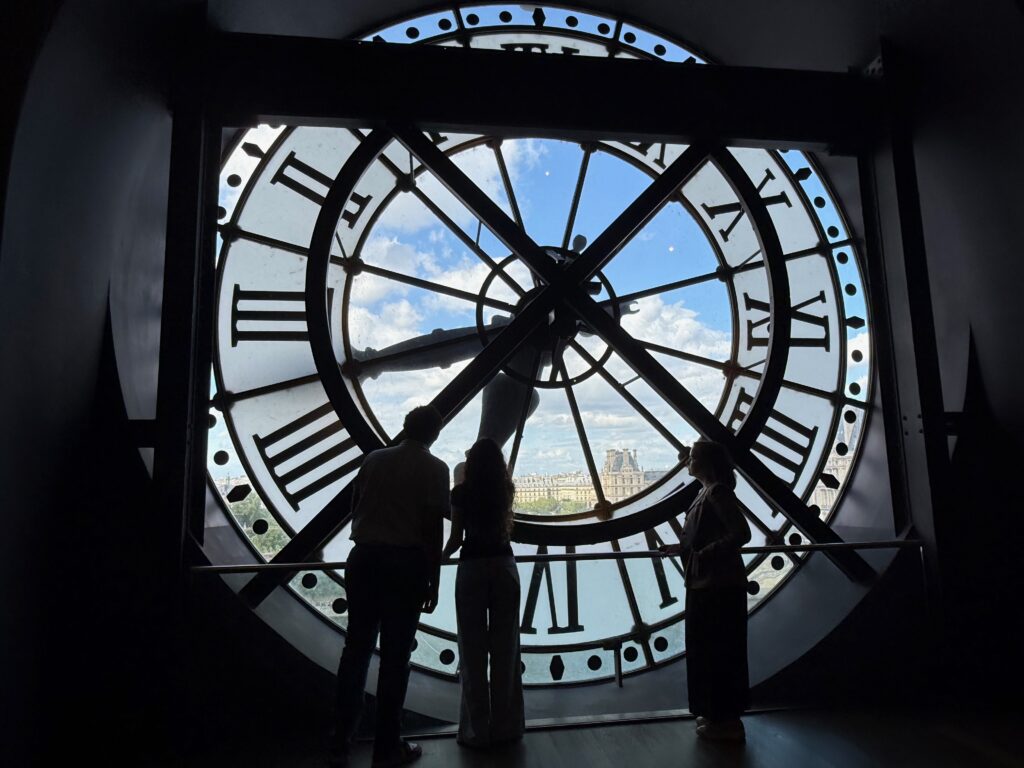
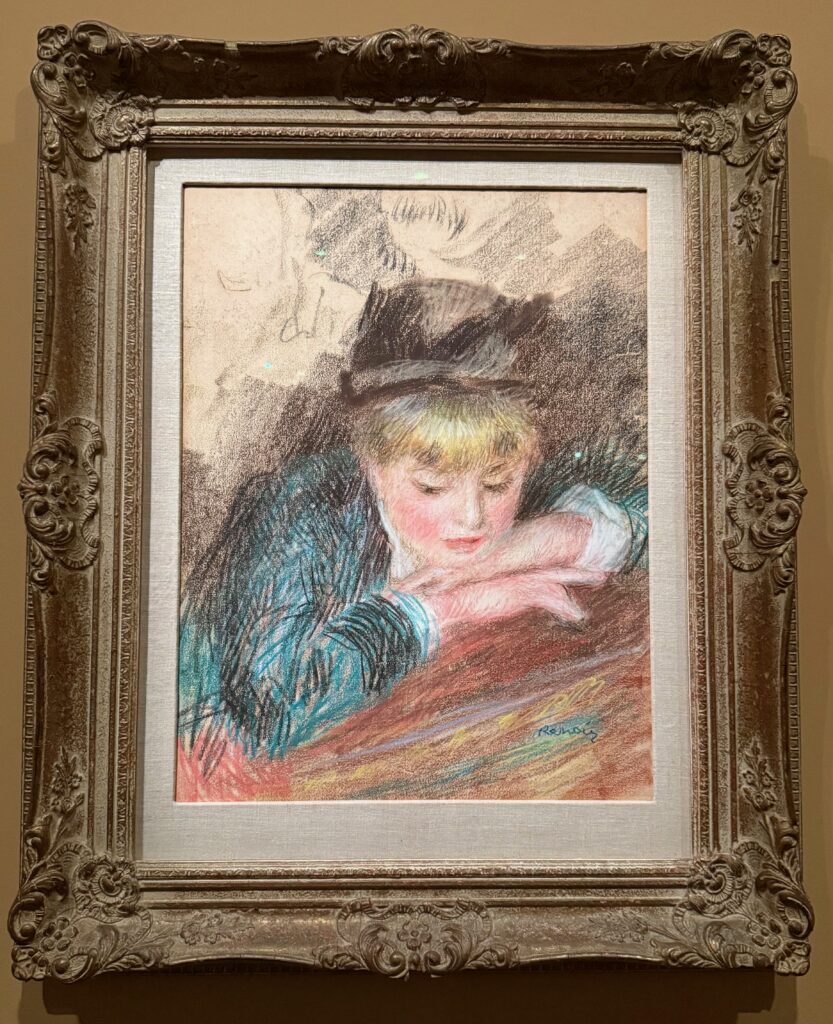
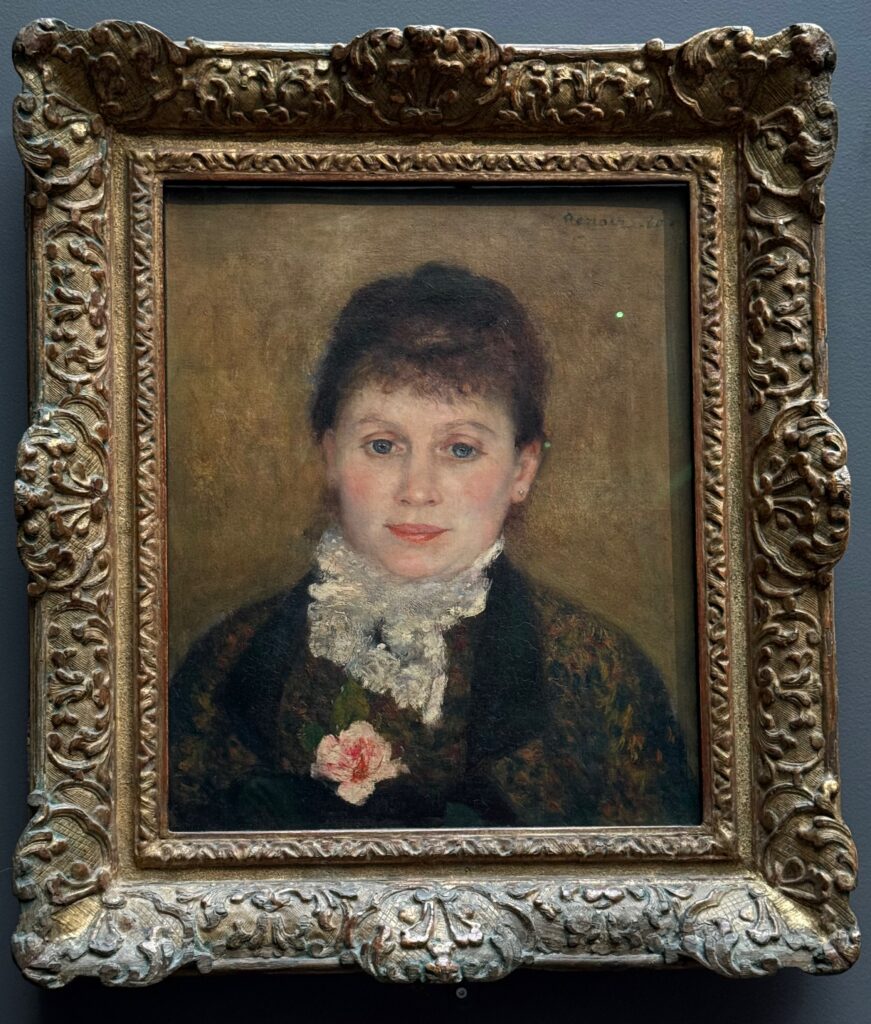
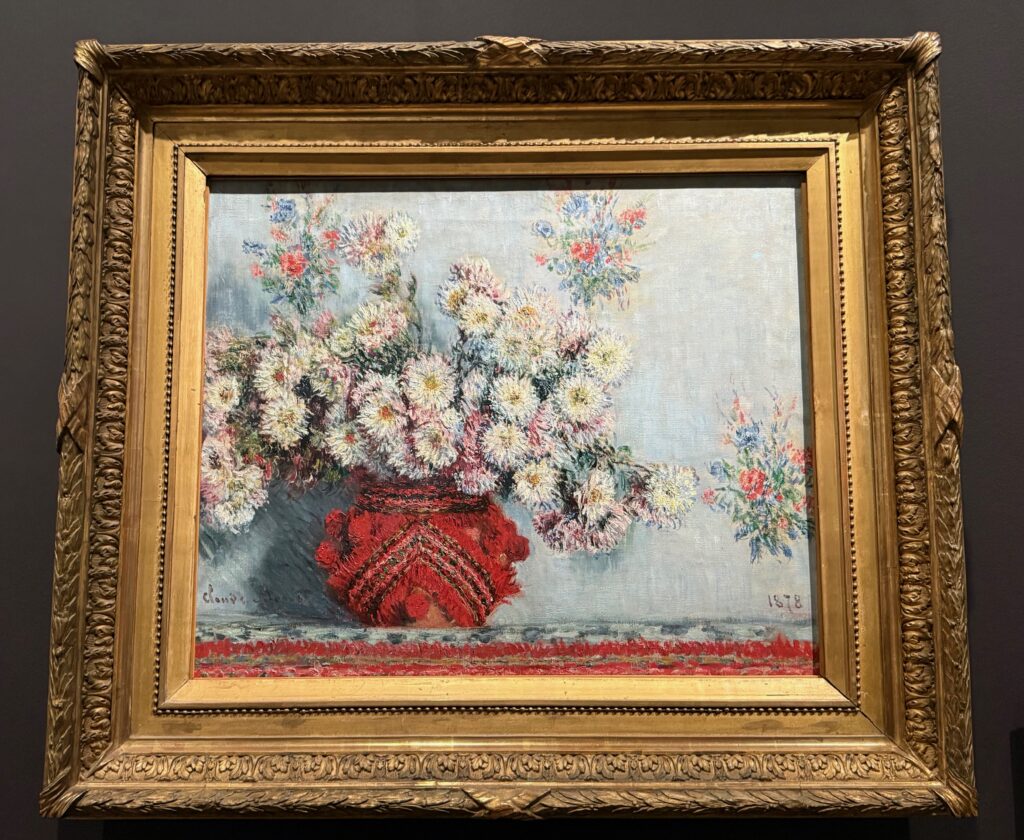
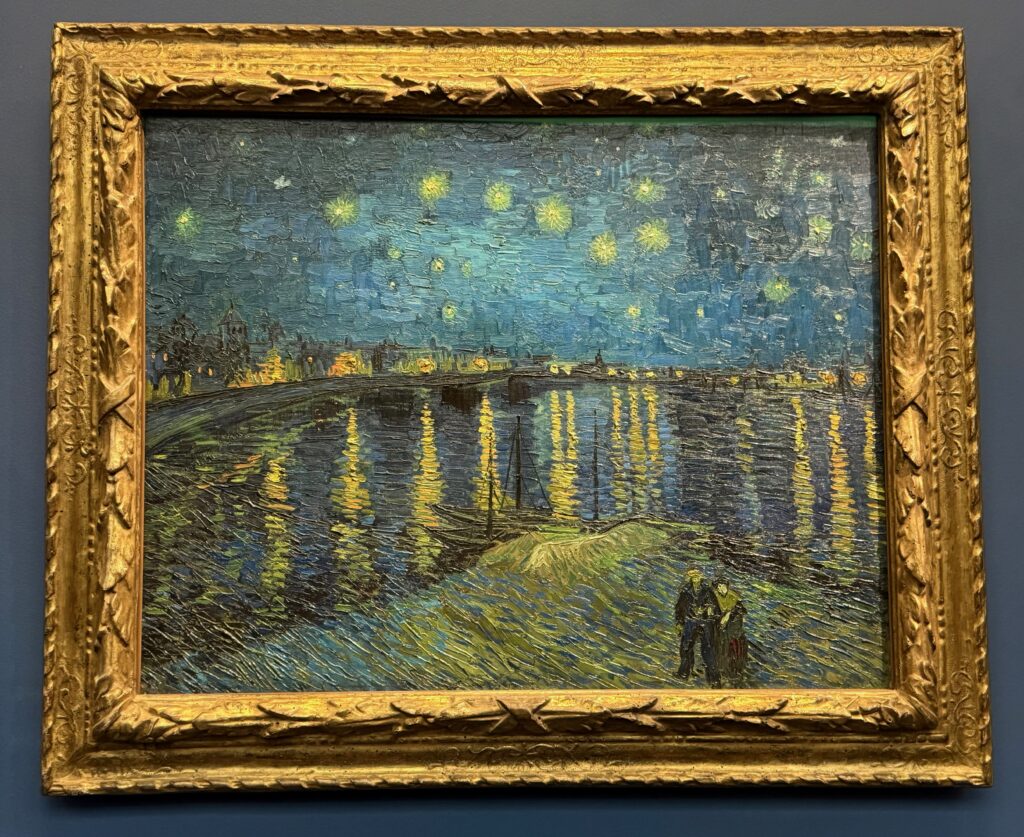
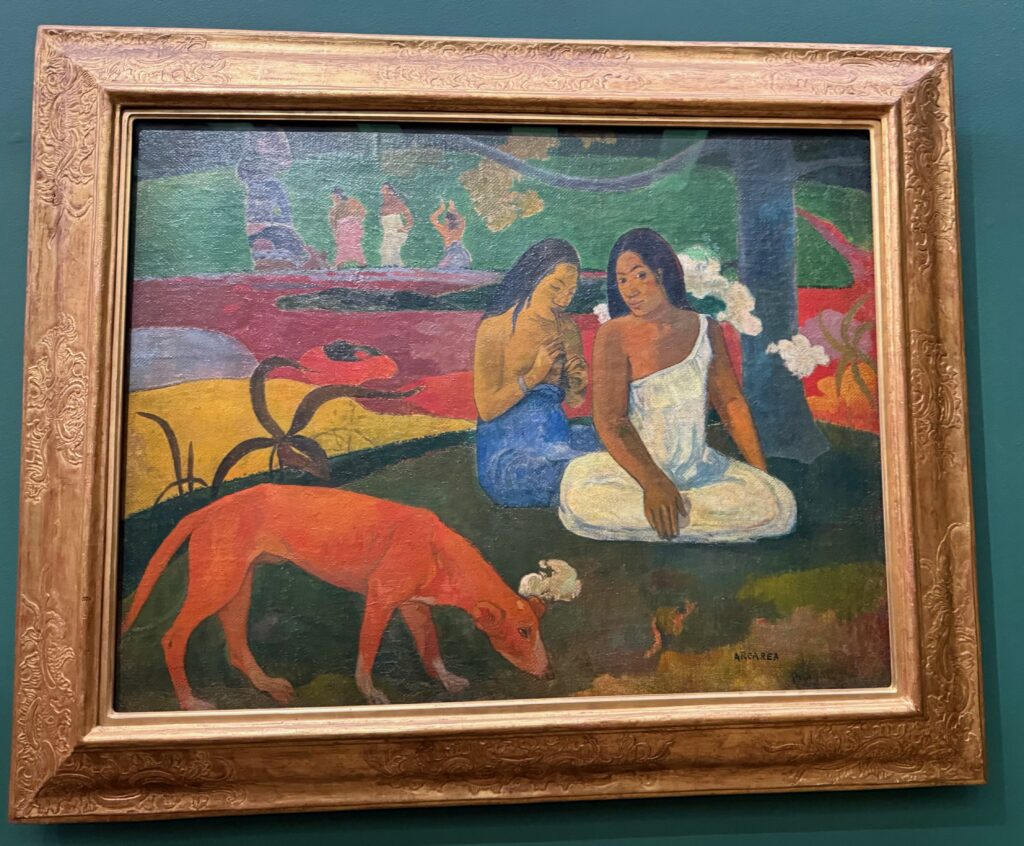
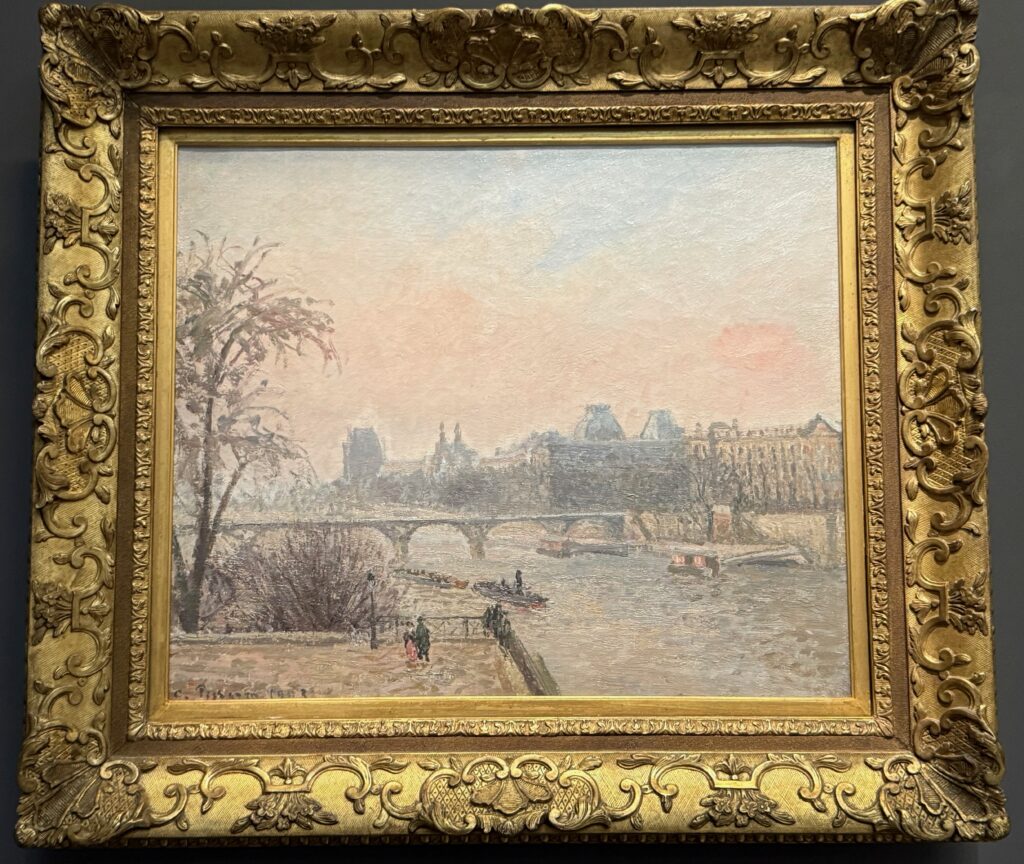
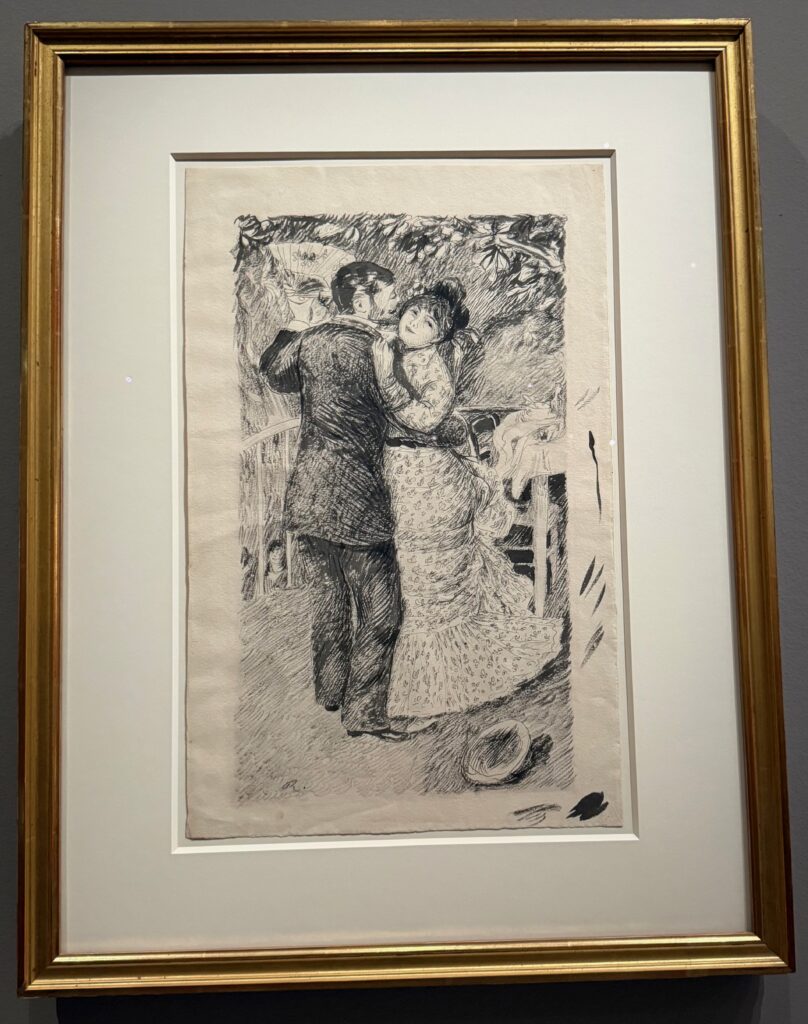 I always loved the impressionists. Now I was delighted to see so many great paintings of Renoir, Monet, Van Gogh, Cezanne, Gauguin, Manet, Pissarro, and Degas, all in one place.


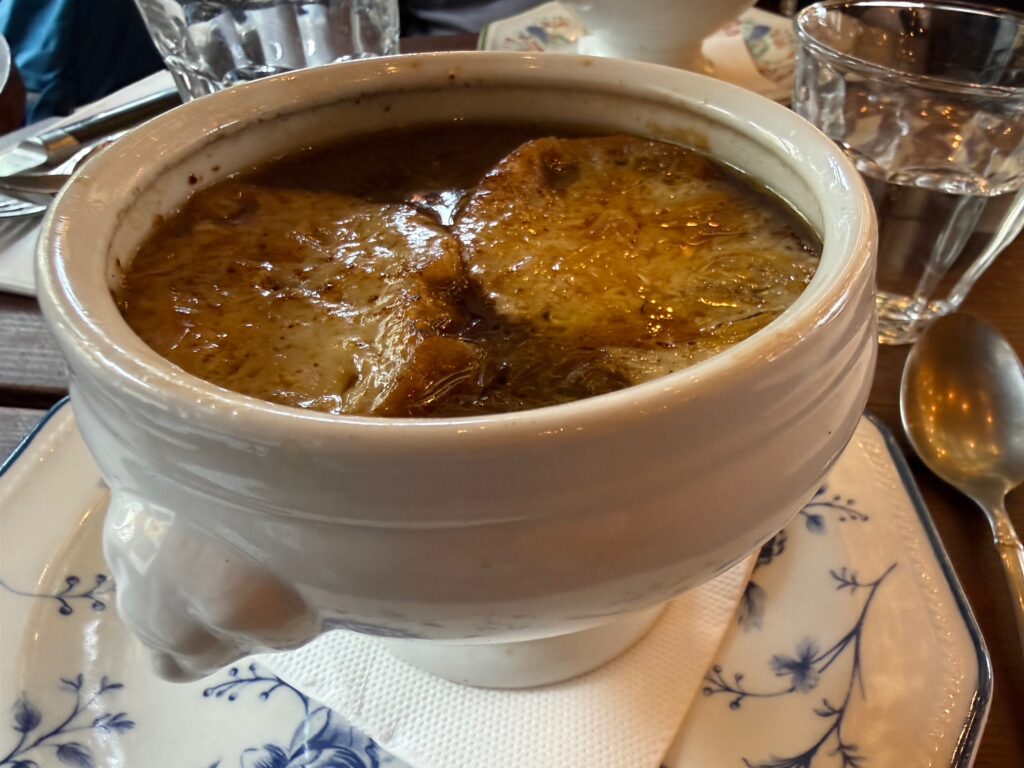
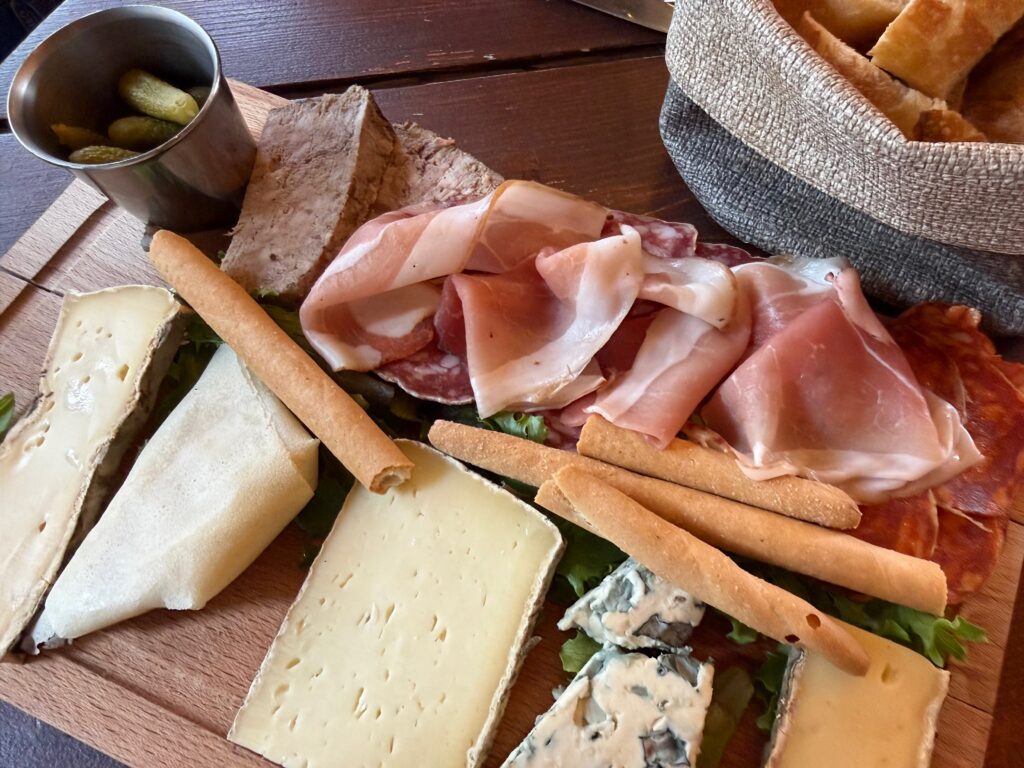
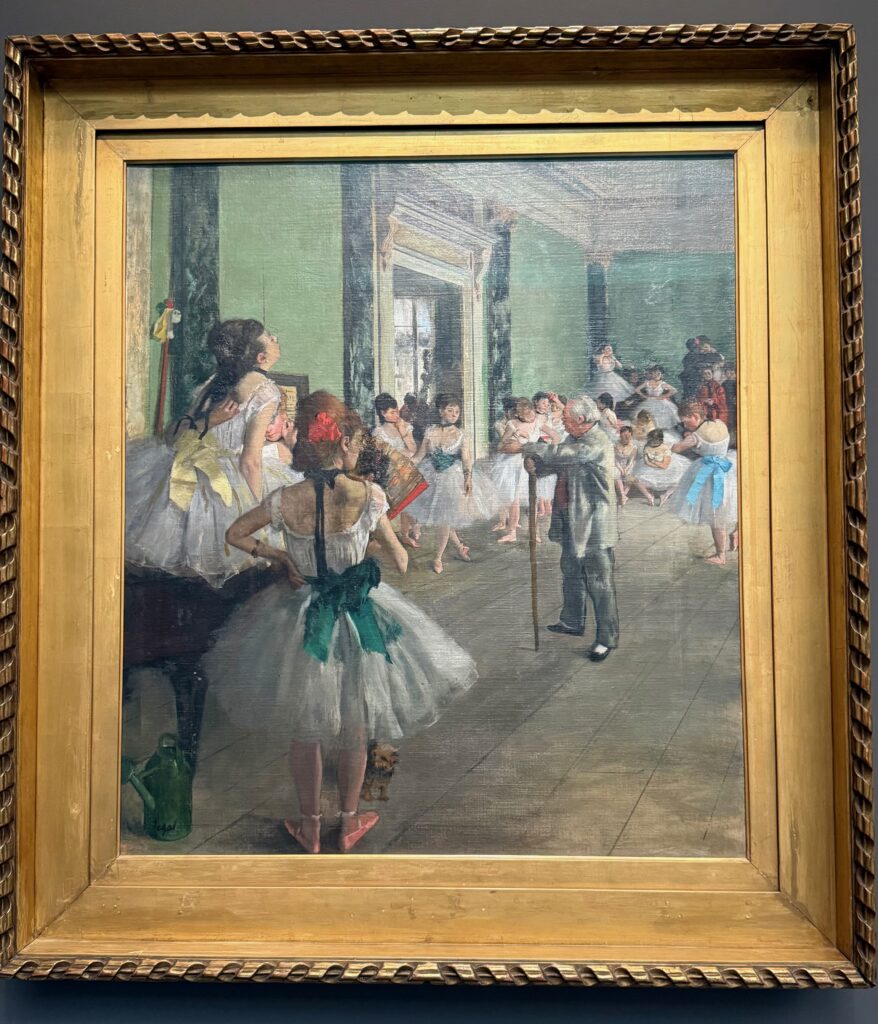 At 5:30 pm, we hit the road again. A slow walk back to our hotel, stopping for a dinner at a cafe Le Petit Paris) – each of us had a bowl of delicious French onion soup, and we shared a platter of typical charcuterie.
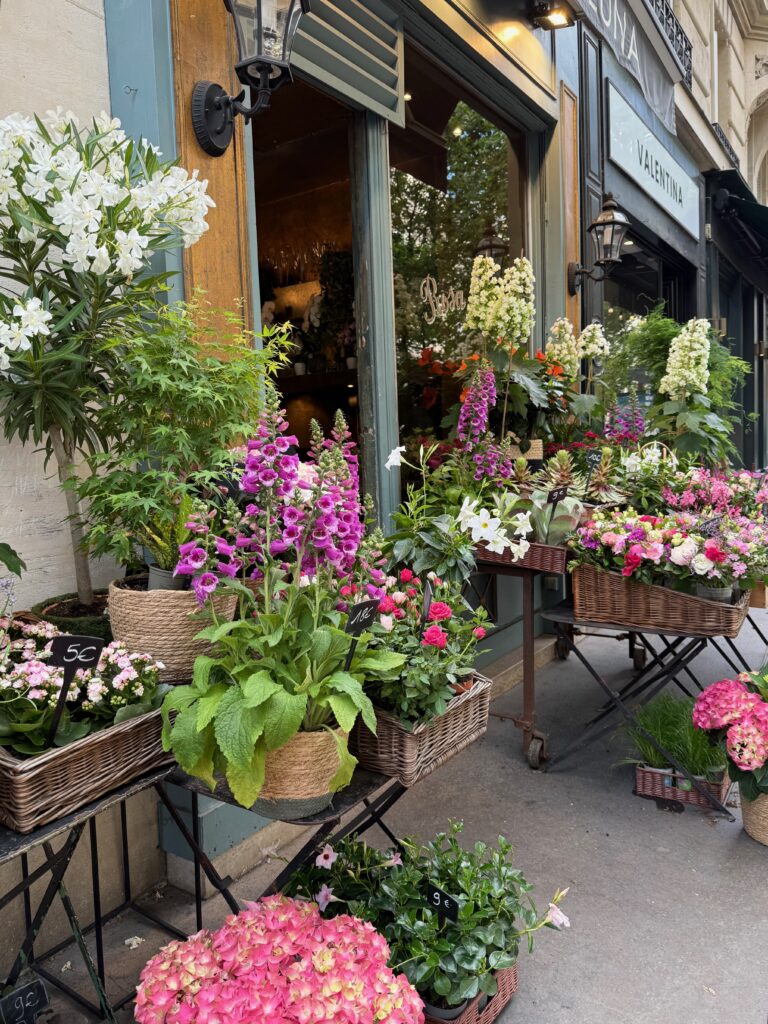
 Were the adventures of the day over yet? Not at all. We were not even surprised that they couldn’t fix the water leakage in our first room. Because we didn’t want to stay in the second night’s small room with the tiny bathroom, they gave us a third room. This time we moved to a different floor. We truly hoped that room 408 was going to be the last one for us in the Hôtel du Parc.


