Written by my husband, Steve:
One of the most satisfying aspects of our lovely house is the amazing garden that came with it. The previous owner was a landscape architect who designed the garden as a showcase for prospective clients. We were the lucky inheritors when they decided to sell.
The centerpiece is a large courtyard and water feature. The front of the house sits at the opposite end from the garden entrance and the other three sides are surrounded by garden. All are enclosed by a six-foot cedar fence.
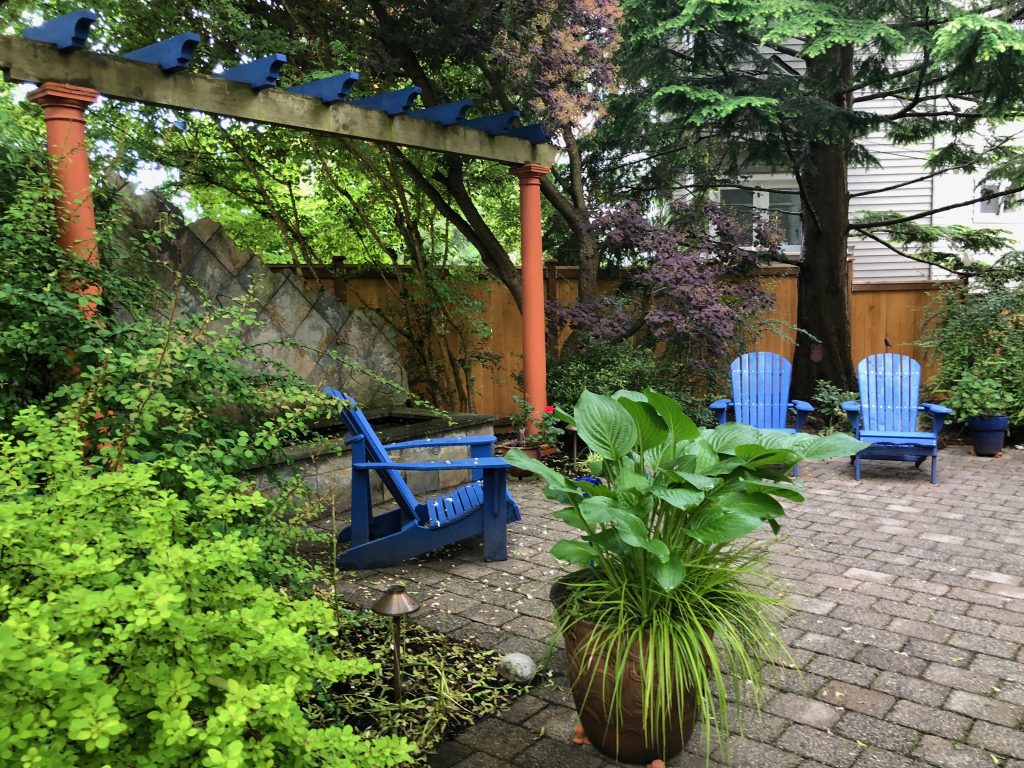
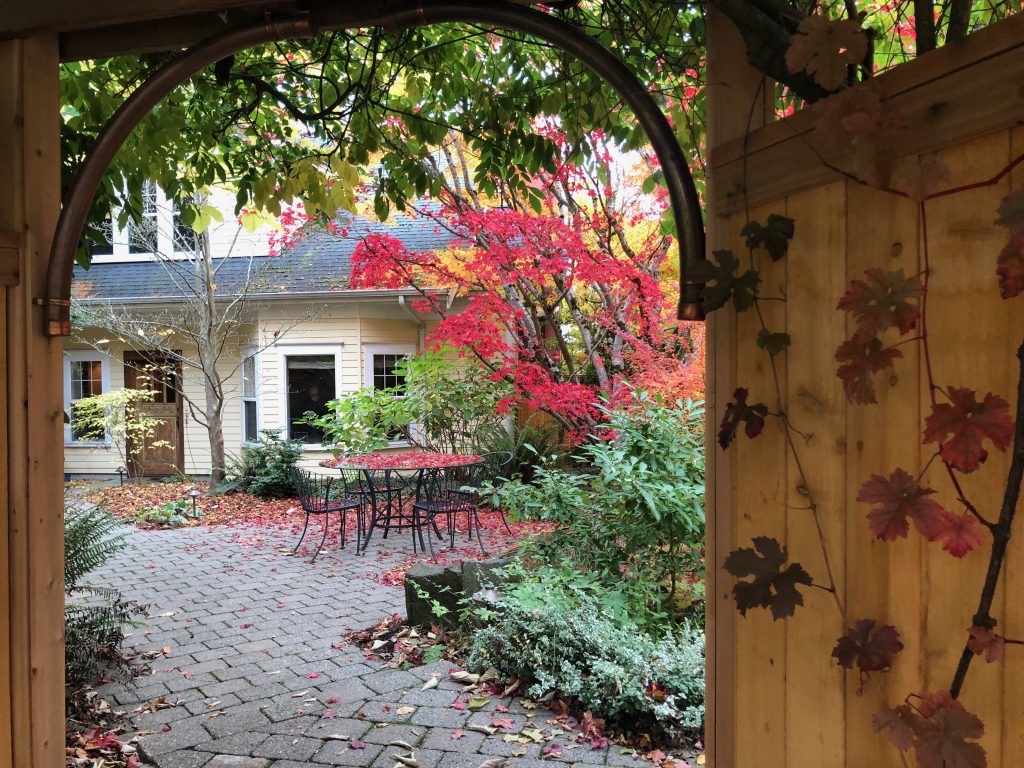 The garden is comprised of a dizzying array of plants, over 100 species! They range in size from a mature western hemlock and aged cherry, to Japanese maple, Japanese snowball tree, and Japanese stewartia, to smoke bush, dogwood, and many shrubs, flowers, and ground cover. Put together, they result in multiple miniature ecosystems. Aside from the obvious aesthetics, the complex structure of our garden also acts as an invitation to a wide variety of urban wildlife and, specifically for this post, birds.
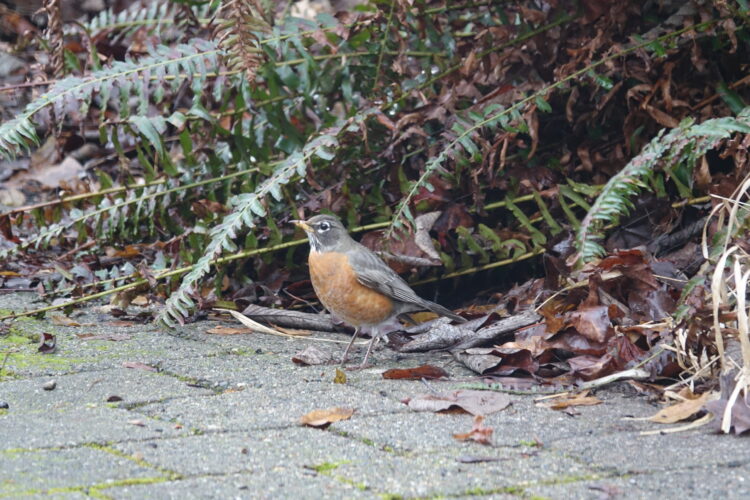
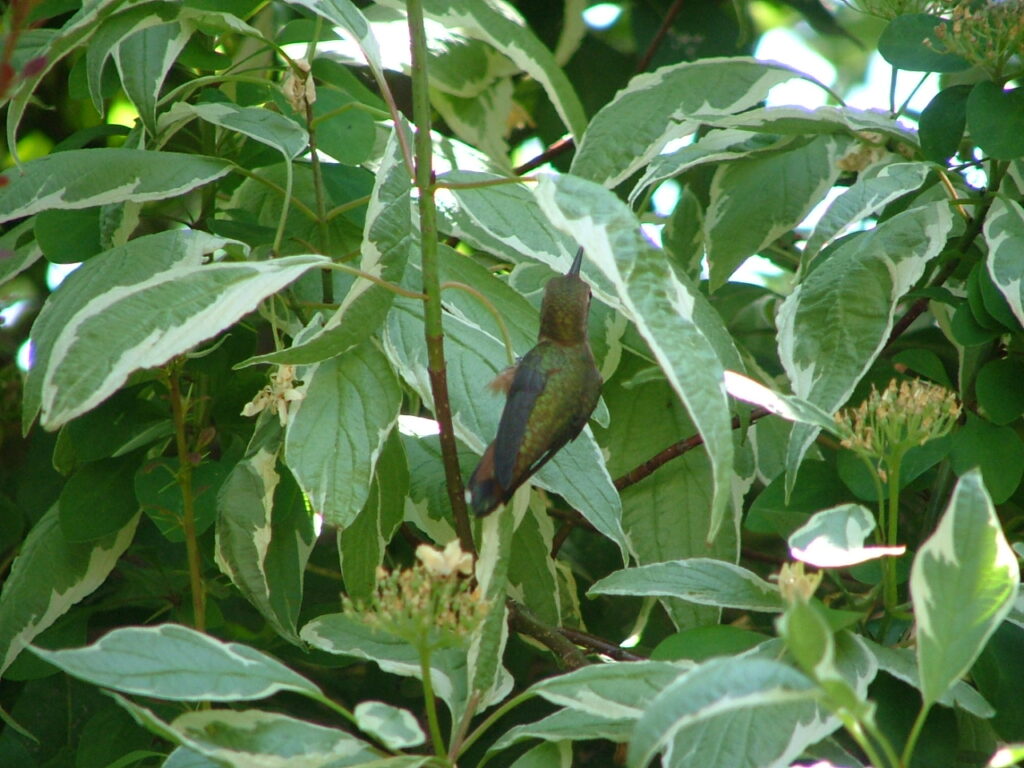
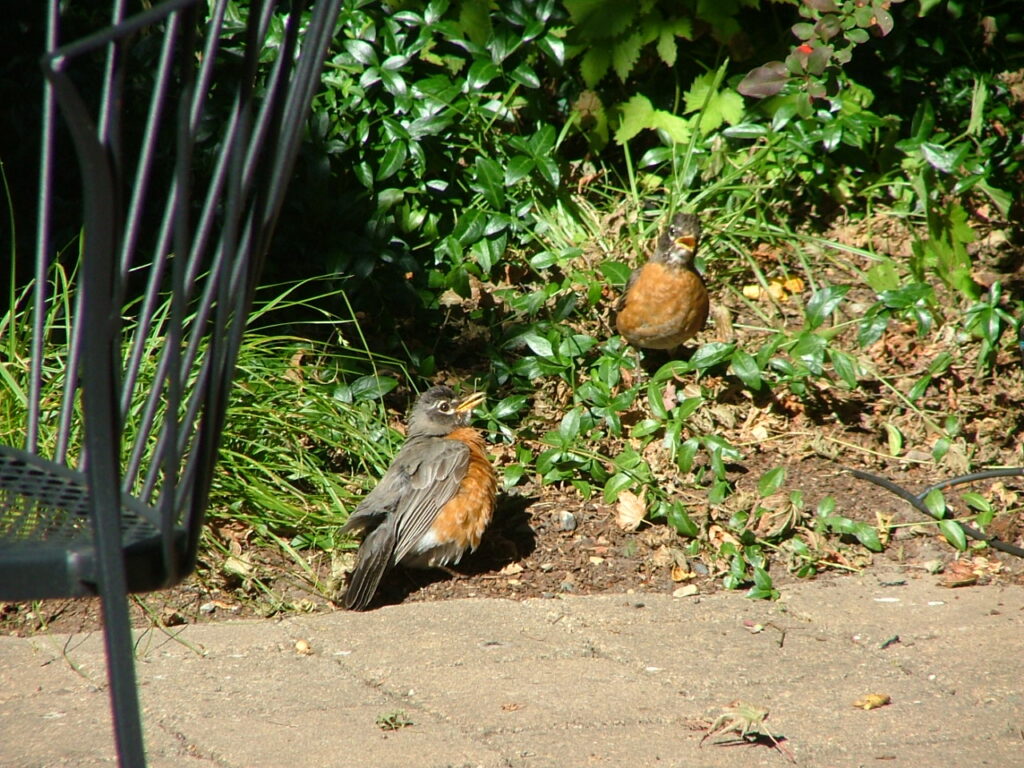
Our garden allows me to indulge my birding proclivities on an almost daily basis. I never tire of the predictable visits of the most common Seattle birds: robins, juncos, black-capped and chestnut-backed chickadees, bushtits, kinglets, hermit thrushes, house finches, and Bewick’s wrens. And when a less common visitor or transient passes through, out comes my camera and I start snapping away!
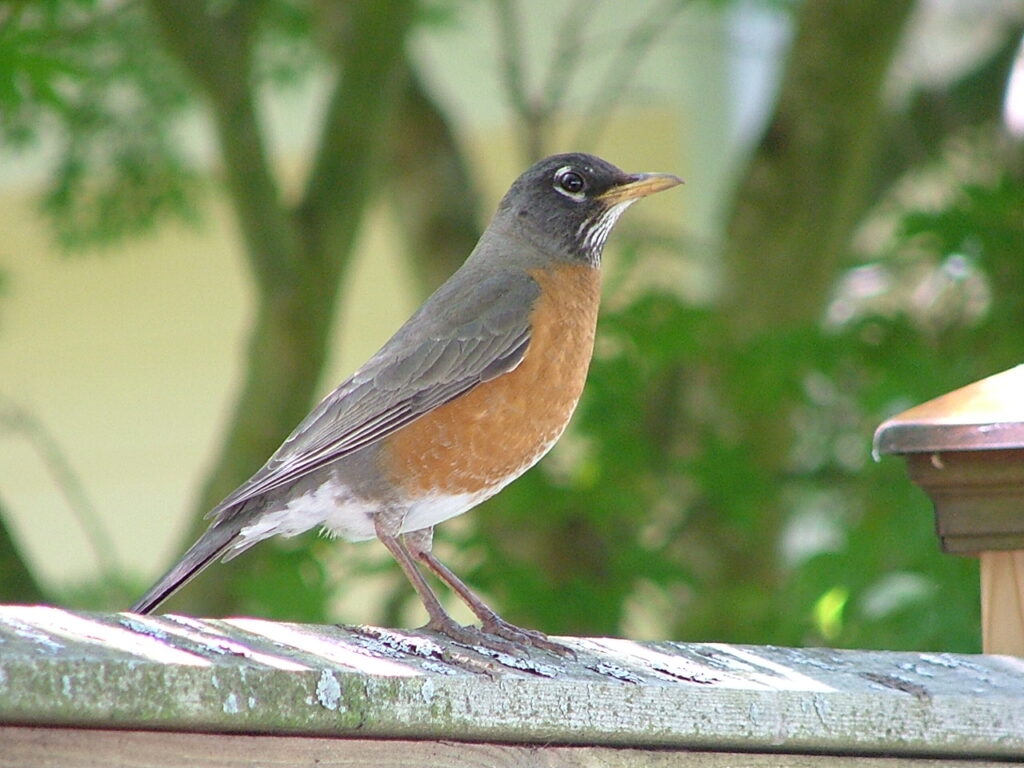
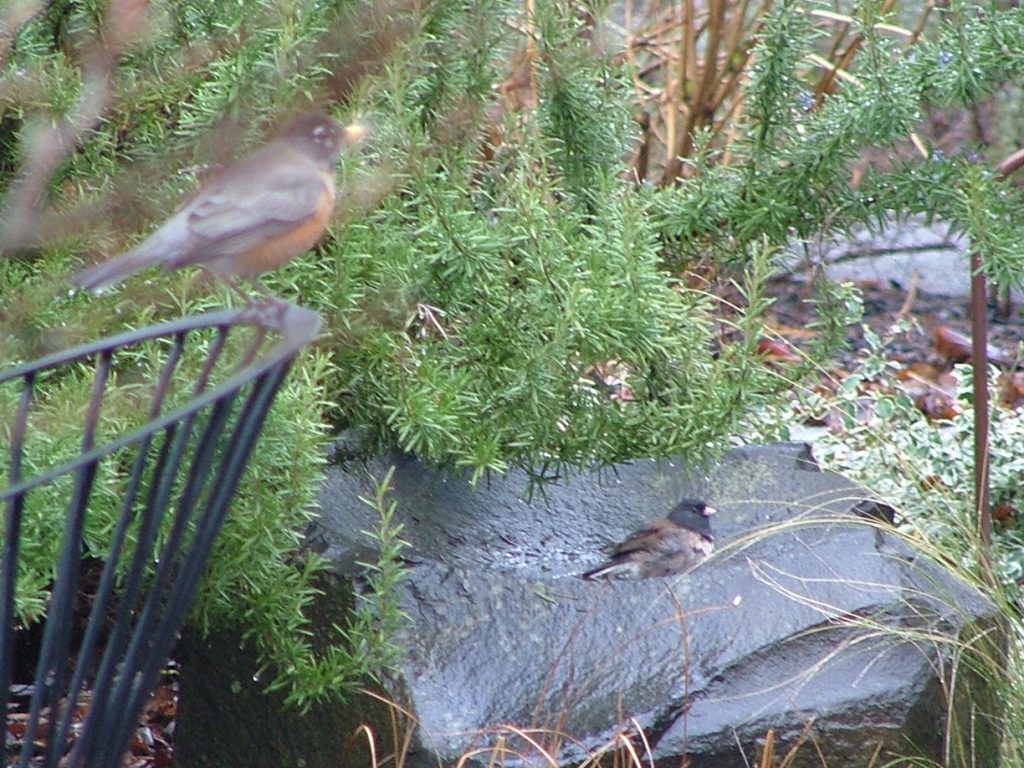
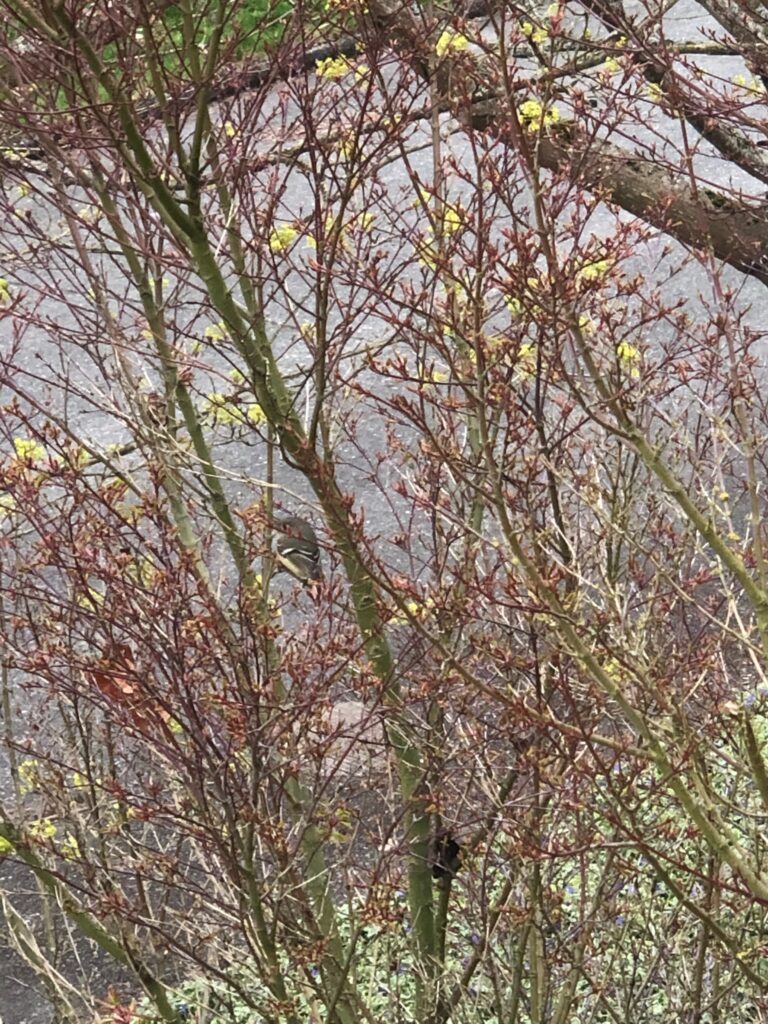
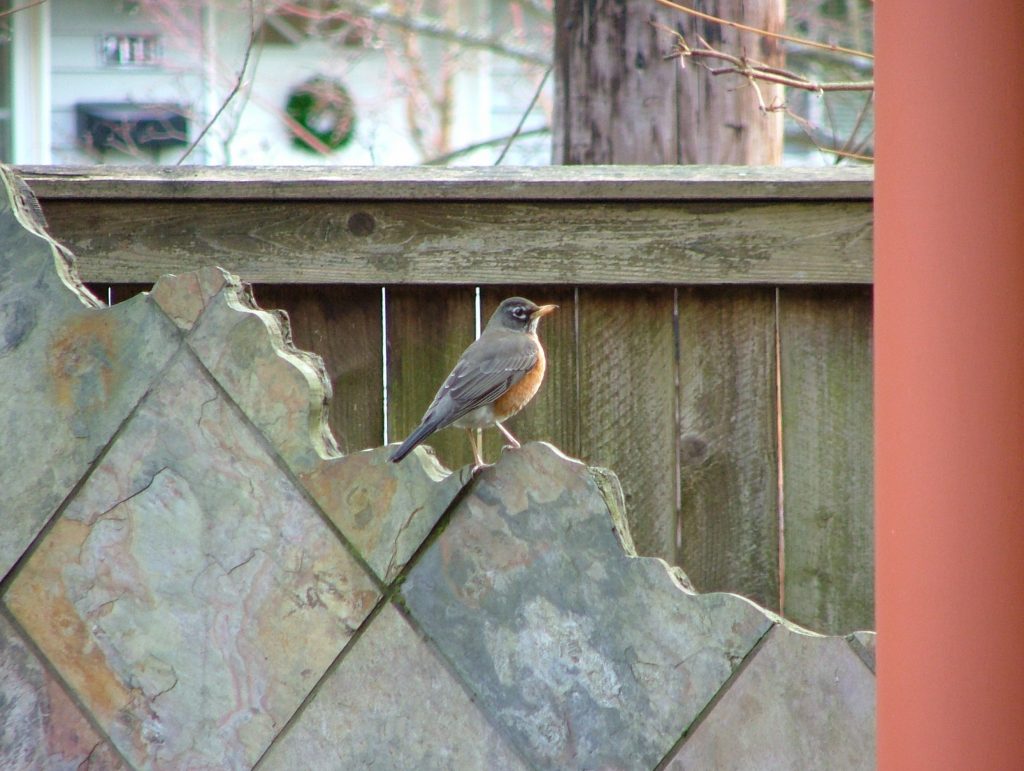
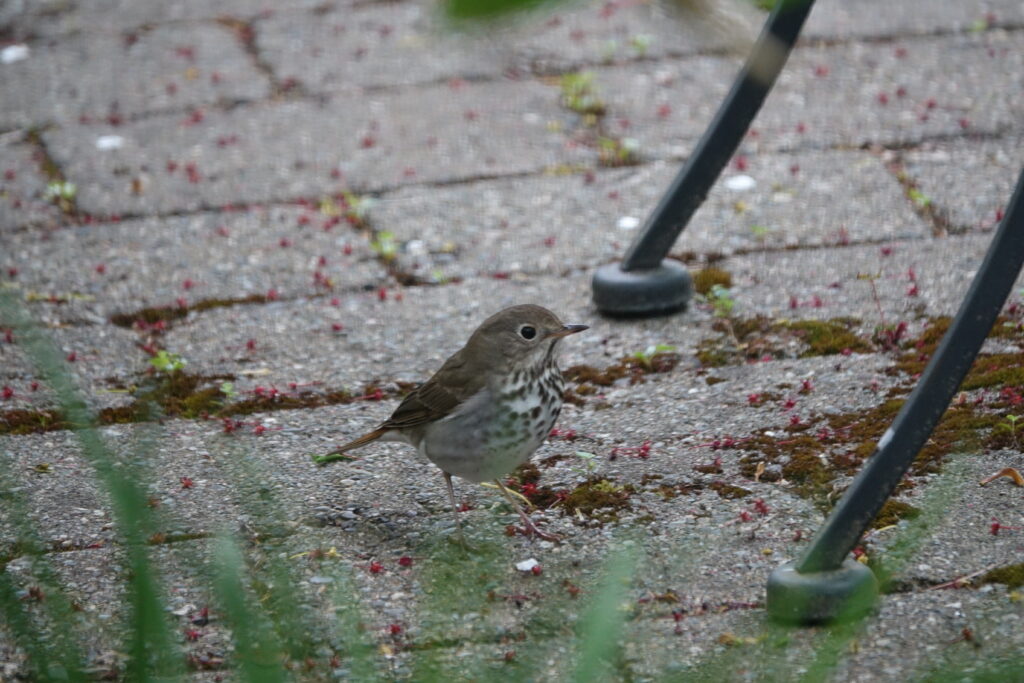 Perhaps a robin, varied thrush, or spotted towhee flipping leaves looking for worms and other juicy tidbits; maybe a red-breasted nuthatch, brown creeper, or vireo gleaning bugs from a tree or branch; or maybe a family of northern flickers just stopping by to see what all the fuss is about.
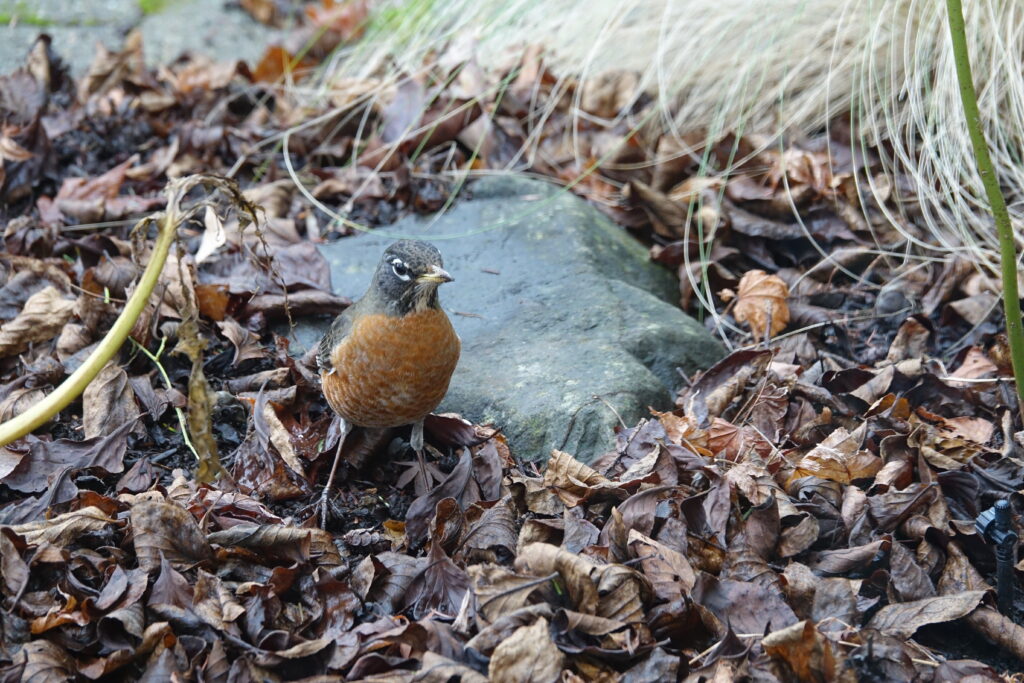
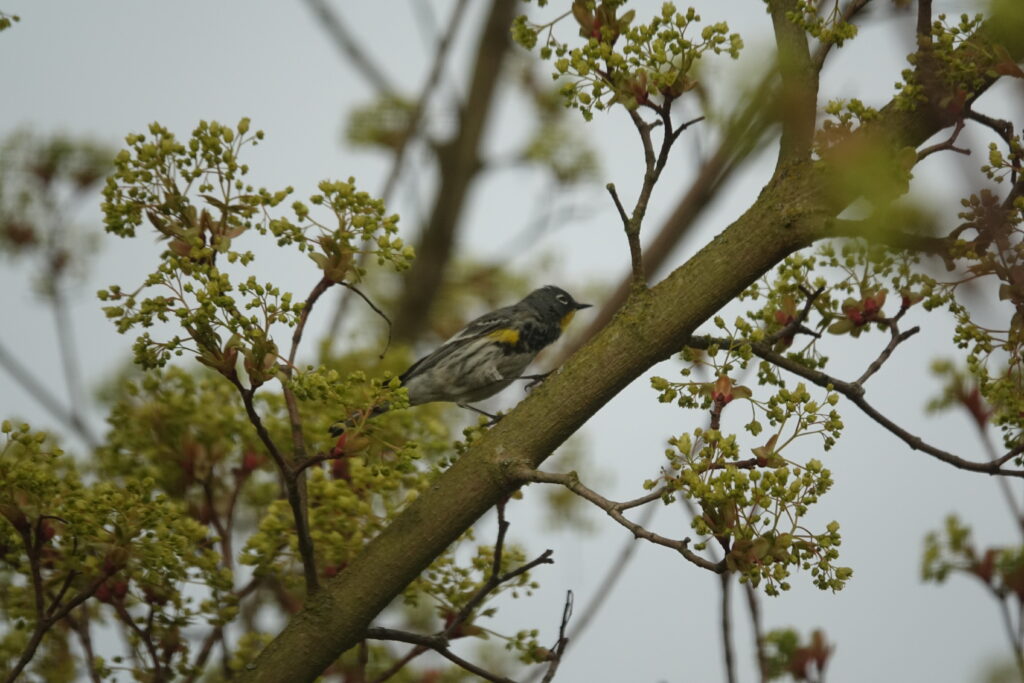
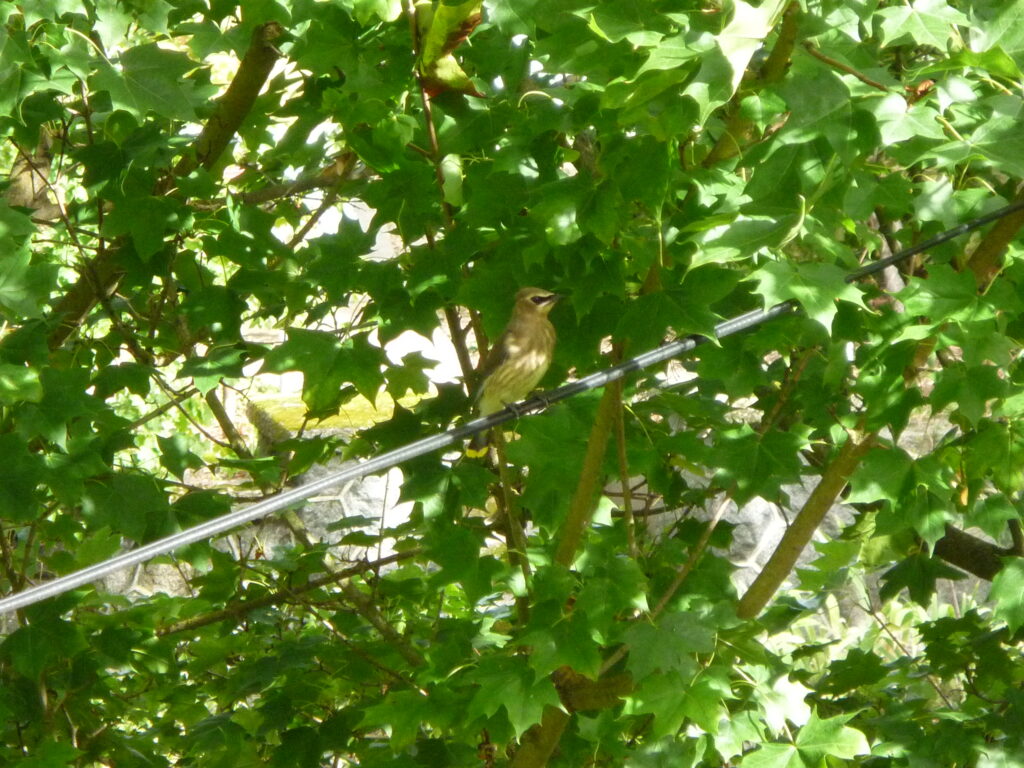
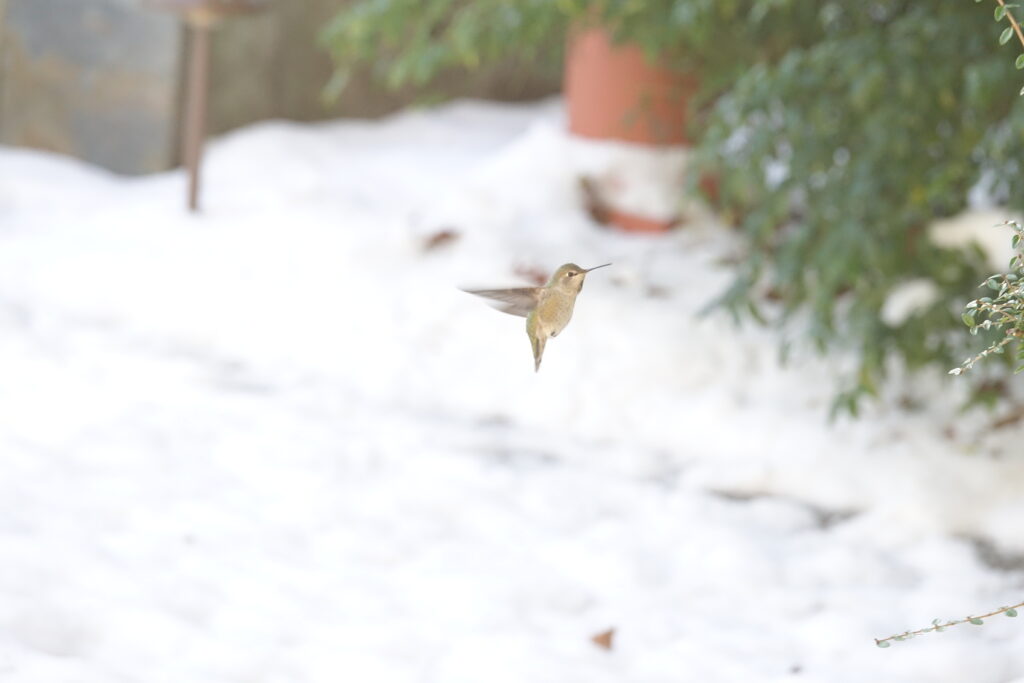
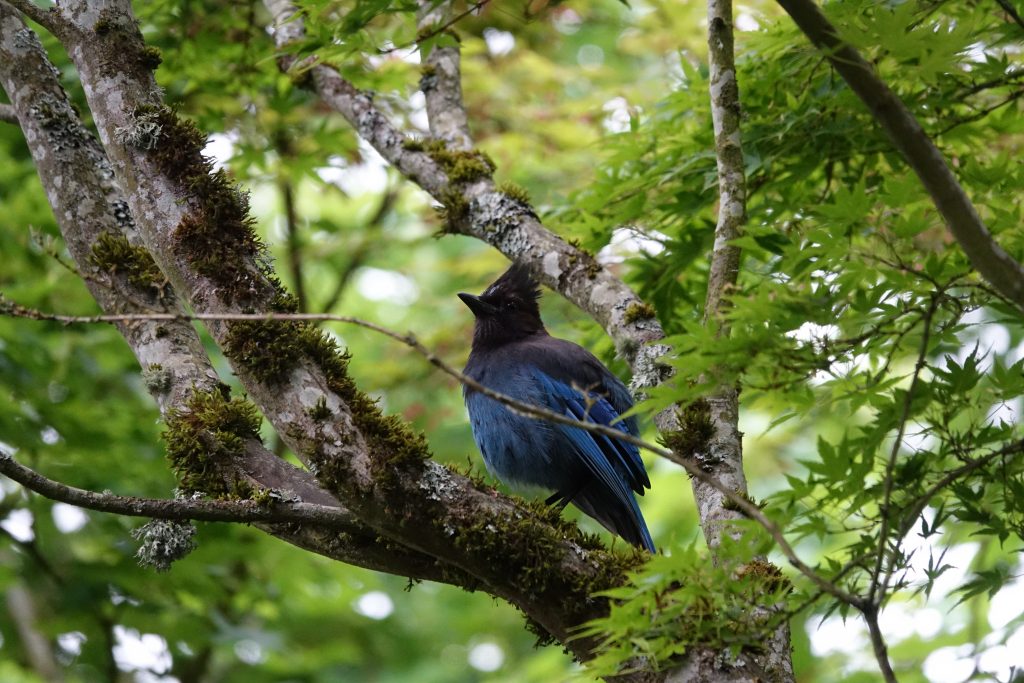
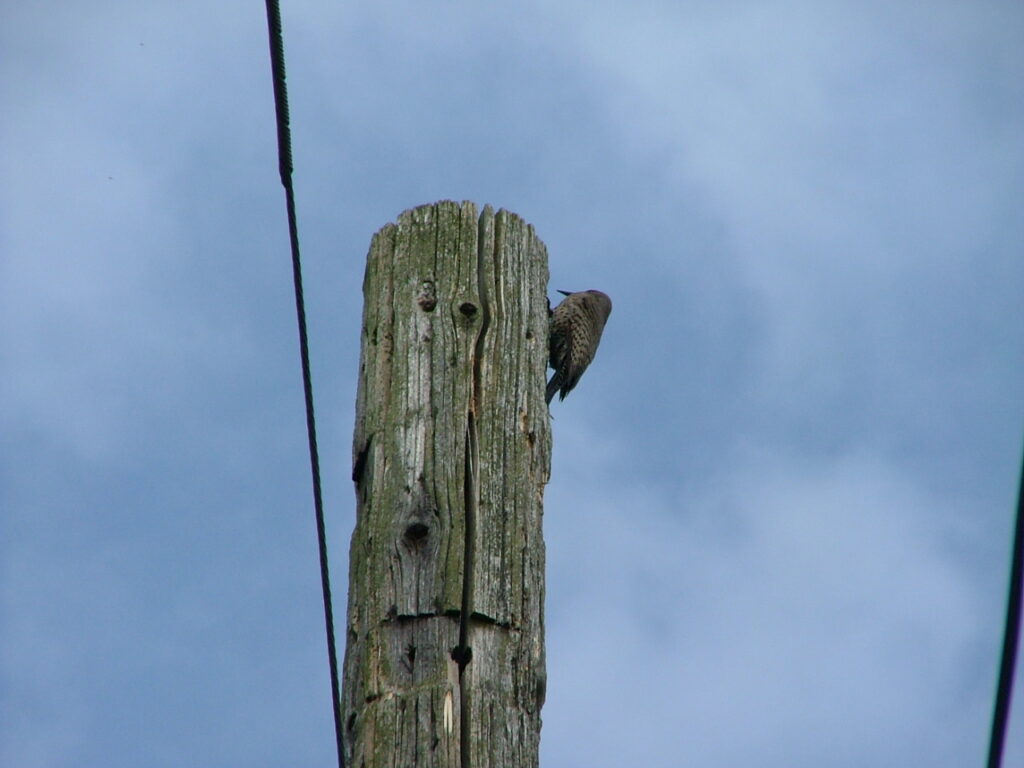 I might see a yellow-rumped or yellow warbler in May, an Anna’s hummingbird in January or June, or a marauding Steller’s jay any time of year.
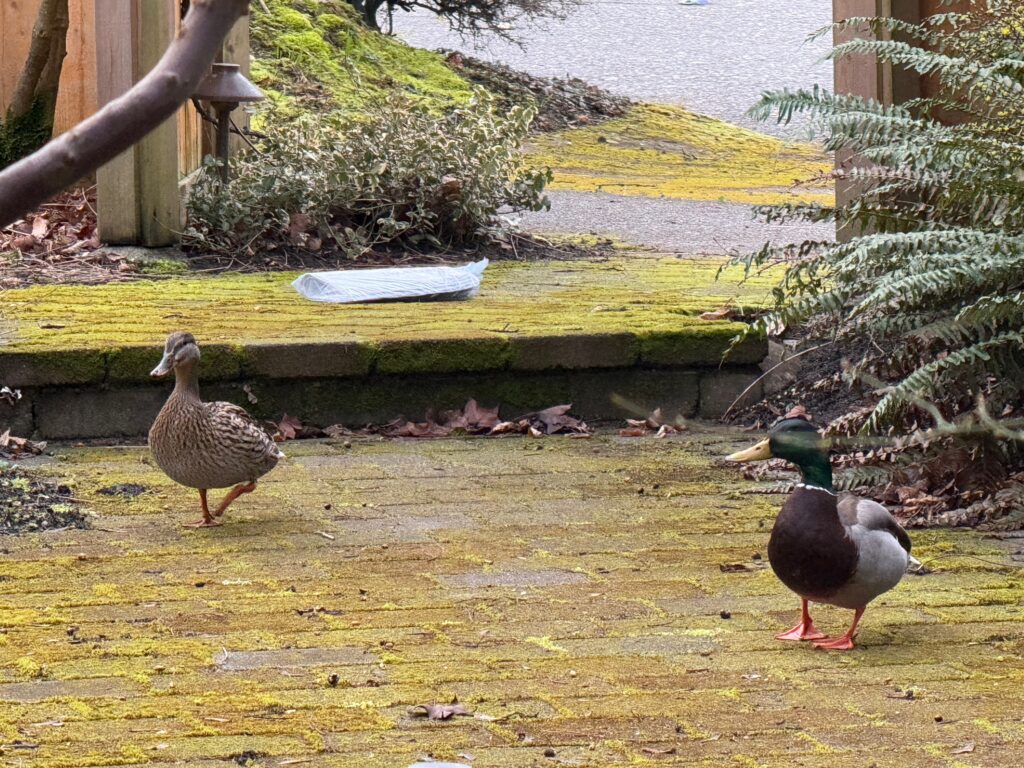
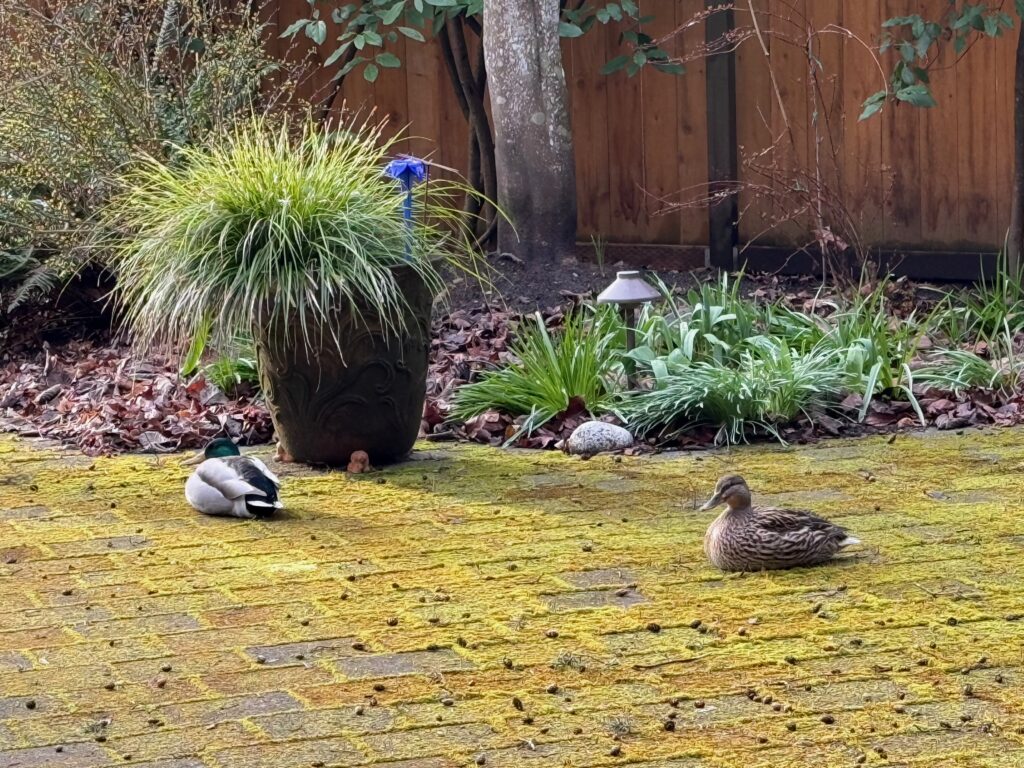
 Just the other day we awoke to the presence of a pair of mallards checking out the garden! After a leisurely hour sitting in the middle of our courtyard, they slowly ambled out to the street, took off, and headed back towards Green Lake a few blocks away.
 A very surprising aspect of our garden is that it appears to be reasonably impervious to visits from our less-enchanting avian neighbors: the raucous crows and the three most famous introduced species: European starling, English sparrow, and rock dove (pigeon). All are present in the neighborhood, but they never seem to make it past our fence (although the crows often sit and loudly proclaim their presence in the silver maples growing on our median.) We do not miss them.
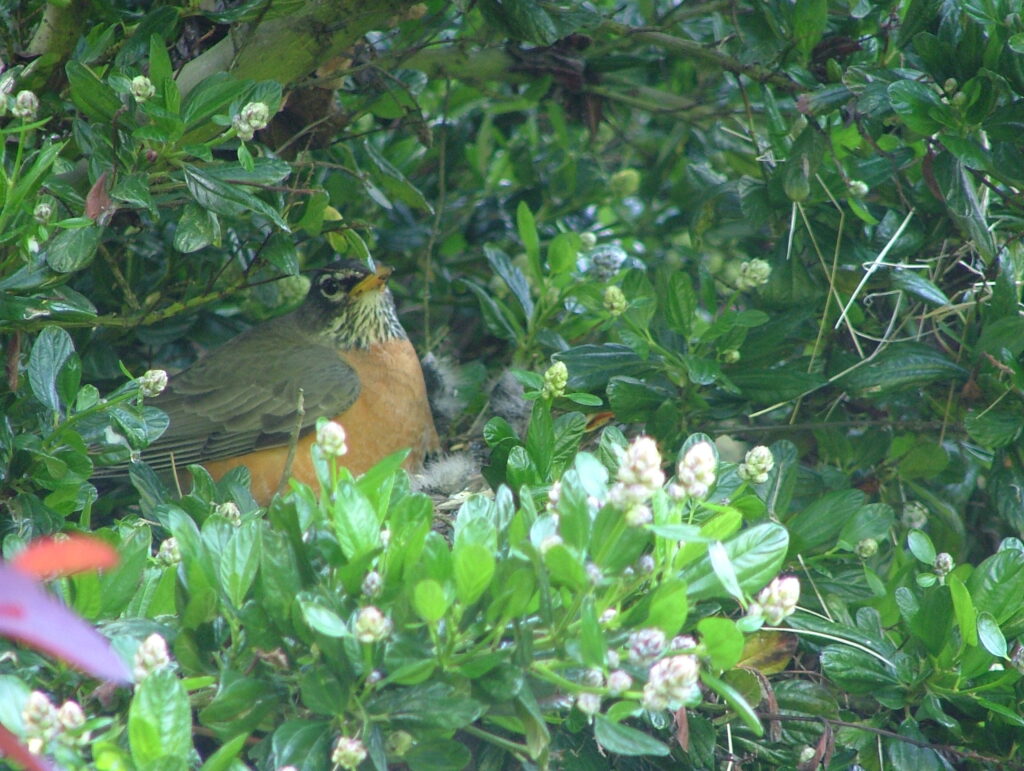
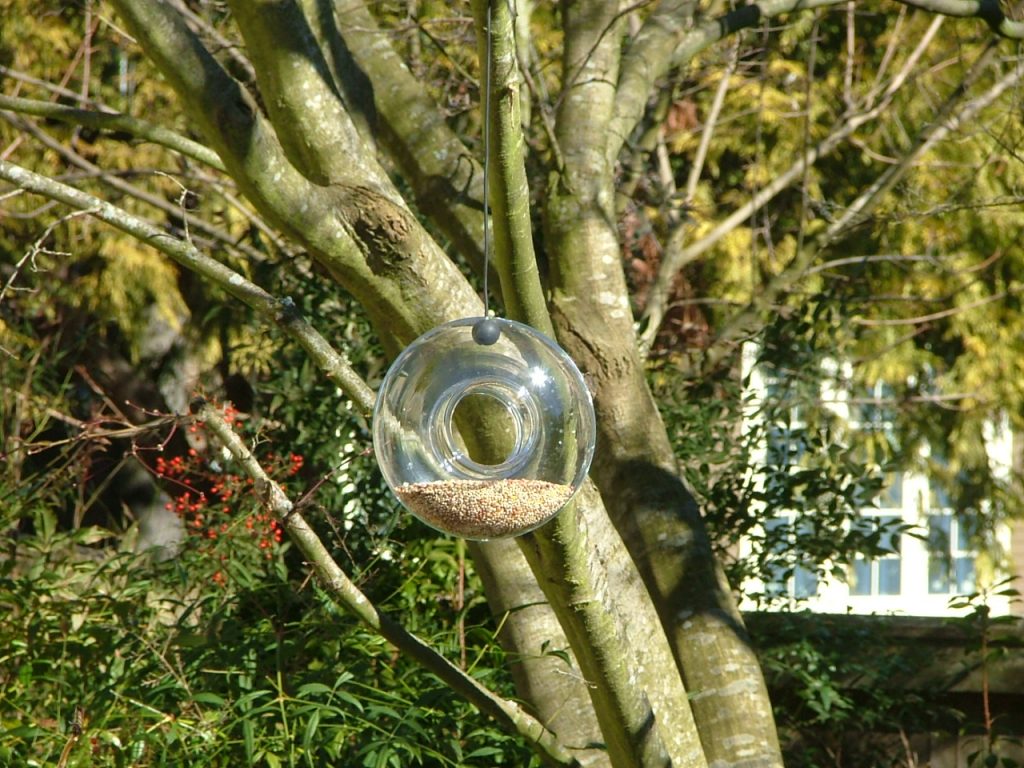
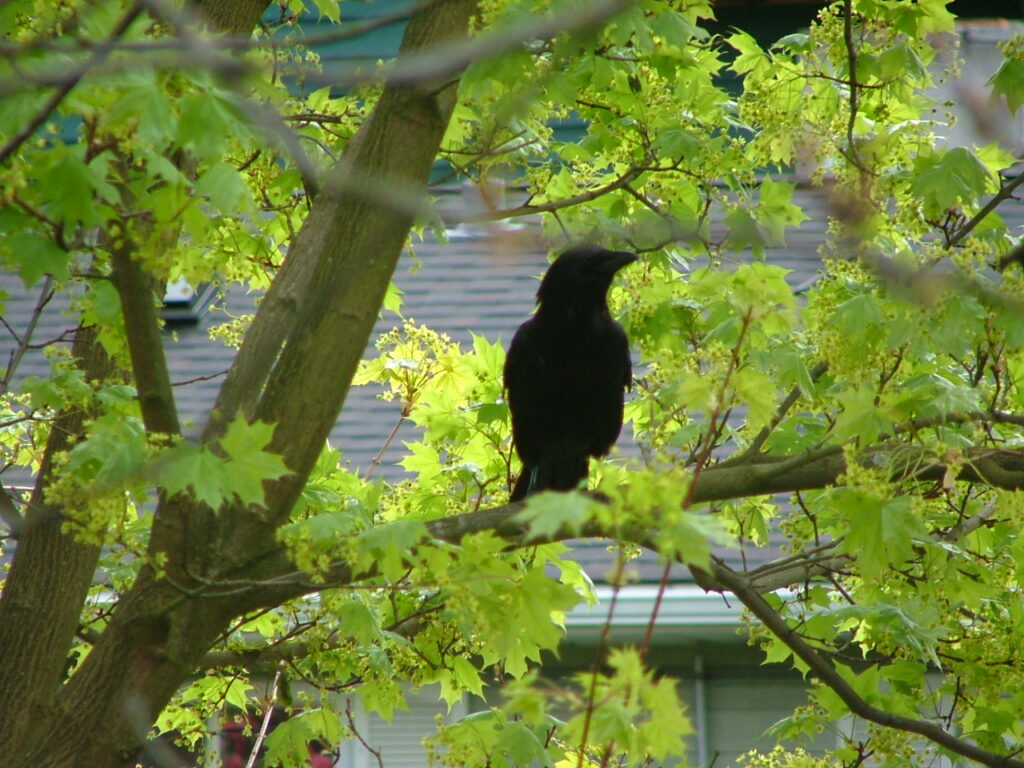 On occasion, we have attempts at nesting, most recently from robins and Bewick’s wrens. But the aforementioned Steller’s jays destroyed the robins’ effort and a number of free-roaming felines (neighbor’s cats) defeated the ground nesting wrens. Perhaps one year we’ll have a successful effort. We have also given up on feeding the birds as our resident population of Eastern gray squirrels (yet another introduced species) has successfully defeated all previous attempts. No matter, we have a veritable smorgasbord of native foods to offer!
 Spending a leisurely afternoon reading or sipping tea (or a cold beer on a hot day) in the Adirondack chair is a wonderful way to pass the time. But when a mixed flock of feeding birds or an unexpected visitor decides to drop by, it elevates the experience to the sublime. Catching a glimpse of a Wilson’s warbler checking out the foliage in the Japanese maple, an Anna’s hummingbird feeding on the snowball flowers, or of the Cooper’s hawk that flashed through one summer, both calm and excite me at the same time.
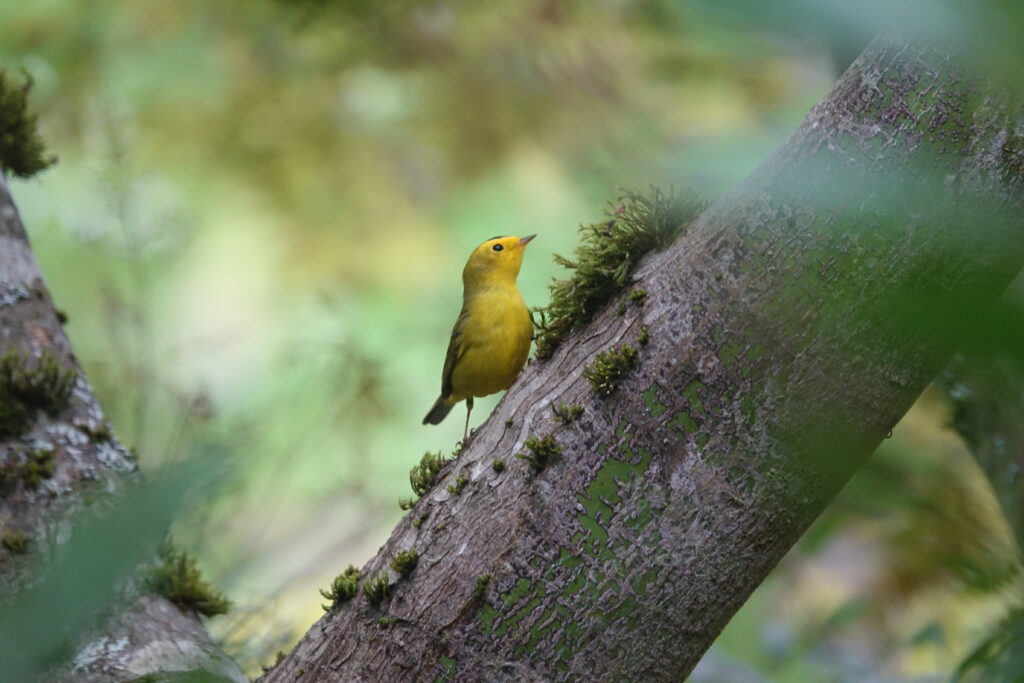 There are not many better things than an urban oasis.


What a lovely photo essay! Very well done, Steve!